Author: The Spiritual Social

  • Lilith & The Wounded Anima: Cinematic Female Power & Romantic Madness

    Should women chase men romantically and sexually with the same intensity that men are allowed to (and in most cases expected to)? Why is it that female sexual obsession is still sickly romanticized and taboo? Is it because it tends to emasculate men? And is it really emasculation of manhood or simply the contravening of a toxic and patriarchal form of masculinity, one that is expected to dominate and control sexuality? Would nurturing, progressive men appreciate being desired and sought? Usually women who seek their own pleasure and end up emasculating men are called Jezebels, Jolenes or Liliths, all fantasy-interpretations of our collective fears of female empowerment and its unbridled limits.

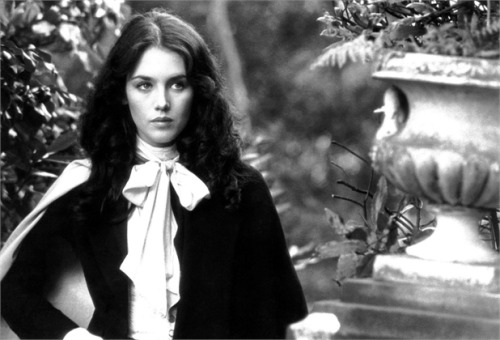
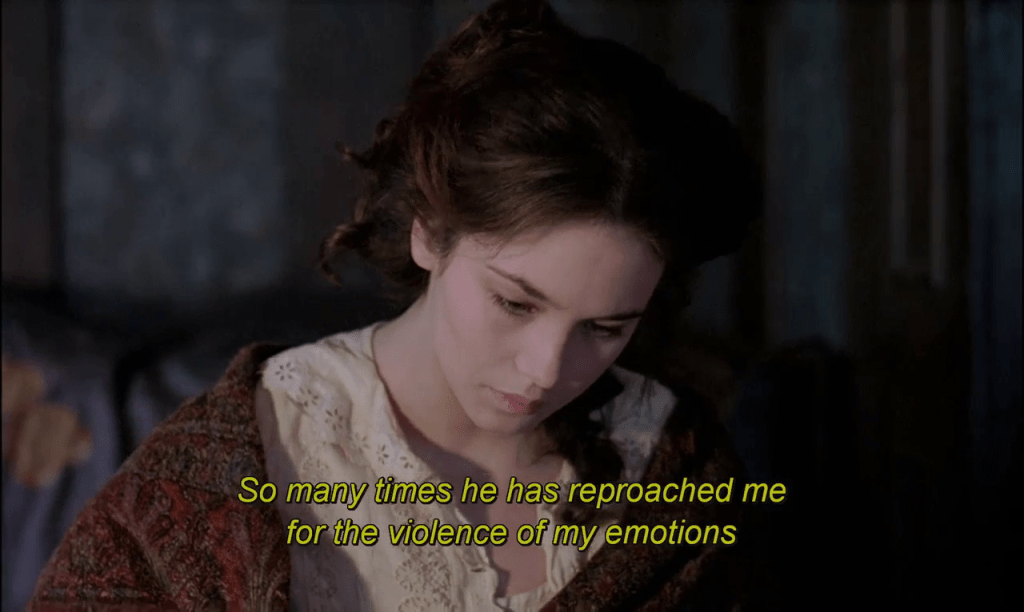
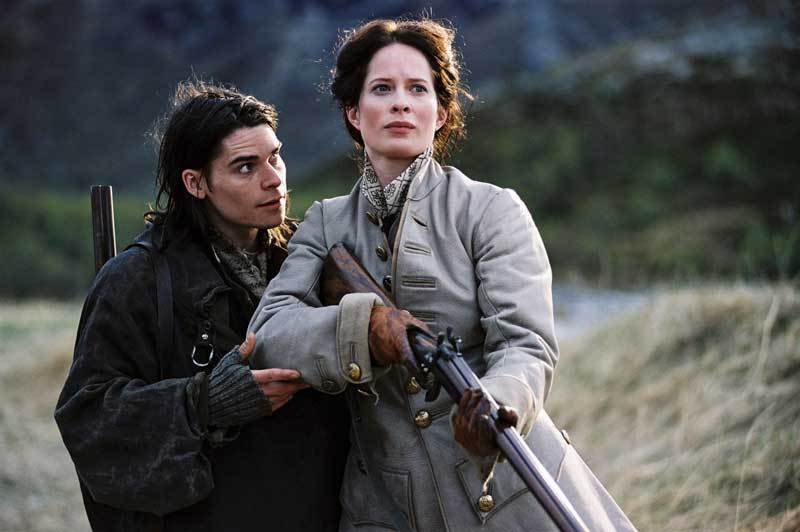
    Let me tentatively reflect on these questions in this post, by focusing on two film representations of feminine desire that to my mind depict Lilith-like romantic obsessions: Isabelle Adjani playing Adele Hugo in The Story of Adele H (1975) a movie by François Truffaut, and Maria Bonnevie as Dina, in I am Dina (2002) directed by Ole Bornedal. I enjoyed watching these movies but they also feel provocative and as I wondered about what made them so intense, this article was born.

    Isabelle Adjani – a Cancerian French actress

    I spent a lot of time while growing up, watching tons of movies and avidly reading books, and it is there that I learned a lot about male-female relationships. Sure, you could argue that these are not real depictions of gender relationships but they do touch upon core concerns that the collective has with certain gendered topics. Only later, once I actually started dating and having sex, did I realize how removed from reality where these Hollywood portrayals of ‘cardboard’ masculinity and femininity. I met men of different cultures and interestingly in many situations I was placed in the role of the confident chaser. Then as I continued to watch European movies, I encountered two that resonated so deeply with some of the female romantic and sexual power I often had mirrored in my own life (although in my life it was less epic and it never reached obsession, as I easily tire of relating, preferring to return to my cozy solitude). These fantastic portrayals of female madness and intensity stuck with me for a long time, not necessarily due to the fact that I support madness in any shape or form, but that when you are a passionate woman yourself it is refreshing to finally witness the passion of other women unleashed onto the screen with such a devil-may-care attitude.

    Excerpt from ‘The story of Adele H’

    One thing I found delightful was how aware these two female characters are of their madness, and how they owned it and questioned it, even as they allowed their strong feelings to overcome them. There is a sense of freedom in acting on intense emotions in life, although the consequences in both cases are disastrous. Dina for example lets us know that “Kindness isn’t exactly what I’m best known for” and her story ends on a memorable cliffhanger. Adele, on the other hand feels that she is descending into a completely distorted version of reality, but compared to the domestic alternatives she was offered (limited in that century for women), she relishes in this intense and made-up love story that keeps her emotionally bound to the emotionally unavailable, social butterfly represented by a young English officer called Lieutenant Pinson.

    When I was younger and I saw these movies I instantly loved not only how they seemed to take feelings to such an extreme (which I identified with) but also the freedom that these women enjoyed – these were women who travelled freely, were beautiful but not confined by decorum, managed their own money, and challenged men. Dina especially also sleeps with whomever she pleases and even rejects her husband’s advances on her wedding day (in a really funny scene played together with Gerard Depardieu). Dina also owns her own property and marries an older man, has a child with another (a stable boy) but falls in love with a third man, a Russian revolutionary poet. The melodrama increases the more you watch this film, which is why it is so mesmerizing. Decisions made impulsively, driven by instinct and emotion, one would say…almost like living as freely as a man, sacrificing consequences for the pleasure of the moment. Call me strange but I’ve always associated women with reason and calculation and men with impulse and pride, but maybe it’s just my Eastern-European upbringing. So it’s refreshing to see an unleashing of emotion, instinct, desire and emotion onto the screen which is led by women.

    In astrology, one asteroid in particular carries this mark of instinctive female chaos, of deeply sexual magnetism paired with wounding and suffering and that is Lilith (asteroid number 1181). Astronomically, she lies in the asteroid belt between the orbits of Jupiter and Mars, but mythologically Lilith was the Bible’s first woman, forgotten by (patriarchal) history because she refused to cater to Adam’s spousal needs and preferred to roam through the desert copulating with wild beasts than to serve her man. In lieu of her depravity, Adam had Eve created for him, a much gentler and docile version of the primordial woman. Some writers argued that Lilith became Lucifer’s counter-part, having in common with him the fact that they both led gilded lives in Heaven but their Divine disobedience angered God who banished them into the Shadows. Lilith is associated with infanticide, emasculation, intense erotic dreams, and romantic ruin. But more recently feminist thinkers have rescued her from the crypt of mostly male-dominant historical writings to usher her as a heroine of contemporary female empowerment and independence. Is Lilith a Demon? Or a Feminist Liberator? I like her myth and what she now represents, but am also cautious when working with Lilith’s energy and invoking her or dedicating rituals to her, mostly because her wild energy is hard to negotiate with. It’s fascinating at the same time to see how much Lilith lives in the roles of Adele and Dina as they are acted out on the screen.

    Maria Bonnevie and Hans Matheson in ‘I am Dina’

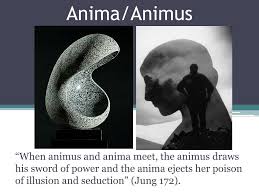
    Psychologically, one could interpret these two women’s actions and behaviours as unconsciouly searching for the displaced father figure within themselves, as struggling to reconcile with their animus and thereby they are locked into intense desire dynamics with the men in their lives. Dina desires her father’s love and approval, which she had been denied in her childhood due to accidental matricide, while Adele seeks the aproval and love of an emotionally unavailable modern-day version of the player.

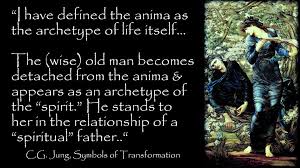
    For me personally, my attraction to them would be the opposite: reconciling with my anima, by accepting the image of the mother. But what is the anima actually? This term was coined by Carl Gustav Jung, one of the founding fathers of psychotherapy (and Freud’s colleague), who considered it to be something similar to a universal symbol, that resides in our collective unconscious, or what he called ‘an archetype’. Anima is together with the Animus, part of the ways in which we magnetically gender certain aspects of our life – when we say ‘Mother Earth’ and ‘Father Sky’ etc. Here’s in a nutshell what he was referring to:

    Ok, so how can Jung’s psychology lesson can be adapted to practical experience? I’ll illustrate by using my own experience since it’s the one I know best and it’s something I can share in this space. I grew up with a mother I perceived as cold, stressed and erratic, a mother who exerted power and negativity rather than warm, nurturing mothering. I therefore took in from an early age, an anima that reflected these characteristics. In in my life, I feel drawn to tough & powerful women on some level, because unconsciously I grew up experiencing the love of a tough, powerful mother who was emotionally withholding and dangerously envious of me. Not coincidentally, I find myself continuing on this path of working mostly with female bosses, in relationships of authority, with whom I constantly have to negotiate my boundaries, control levels of envy, and clear out toxicity through how I speak with them. By encountering and working through these karmic relationships, I discover my inner strength and develop spiritually as I heal my relationship to the distorted feminine within (and indirectly, I heal my relationship to my mother).

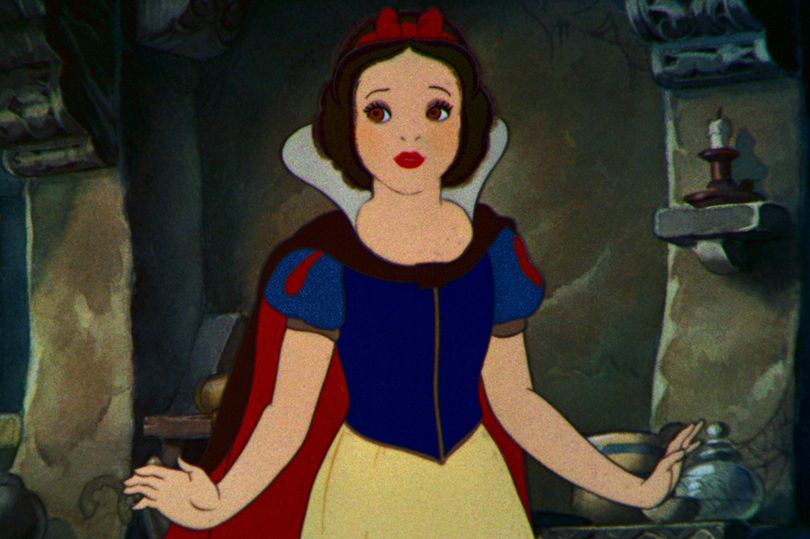
    A still from Disney’s ‘Snow White and the Seven Dwarfs’ movie

    The myth of Snow White applies very well in this case, just that in this situation the step-mother is actually my birth-mother. When I became aware of this sad truth, it hurt a lot to acknowledge it – that the person who is supposed to nurture you and care for you was keeping me in a state of low energy, bound and controlled, and even made me sick quite often, so she could feel good about herself. As I grew older, I see these patterns very clearly and I can emotionally detach from them and to accept them. I now observe rather than react and feel pity rather than anger. And why? Well it’s because I’m learning to love myself, in spite of all the hatred, envy and vitriol I keep having thrown my way. I’m learning on my spiritual journey how to alchemize the vitriol inherent in toxic relationships into the golden clarity of wisdom.

    Nonetheless, I keep the hope that one day, I’ll encounter my soul tribe and not have to lead this battle alone. Each challenge helps me grow stronger in the awareness that I am worthy and valuable and unique. Healing in my case takes the form of writing and analysis much like for Adele, while for other characters such as Dina, healing her connection to the ‘wounded feminine archetype’ and surpassing the guilt of having killed her mother, took the form of playing the cello, using music as a way to make herself whole again. Having said this, an interesting exercise would be to check if your own natal Lilith placement is compatible with your mother’s own Lilith natal placement, and this can be easily achieved by exploring a synastry chart.

    Marie Bonnevie – a Libran Swedish-Norwegian actress

    Being truly feminine does not need to feel like giving into false modesty and learned helplessness (two practices I actively try to control in my own behavior, even if they are so deeply ingrained in feminine socialization practices), and I enjoy these movies because they remind me of these things (also, they feature very good-looking actors, so it’s a pleasure to watch them). I guess my experience is one example of many that show that change is possible, even one that occurs at a deep, psychological level.

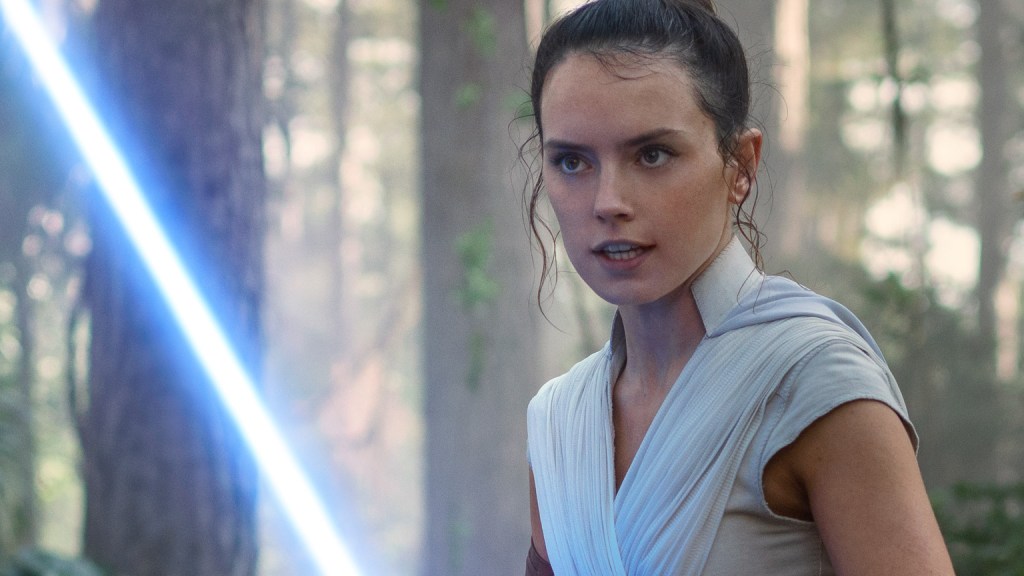
    In connection to the two characters above & Lilith as a female Archetype, the current Star Wars series also spoke volumes on a soul level regarding how we perceive female empowerment, as shown in Rey’s character. I was so happy to see how female power shown here through courage, healing and mirroring others’ destruction to themselves, was exemplified in the Rise of Skywalker. Symbolically Rey Skywalker was also costumed in white throughout the whole movie, which to me represents her role as Lightworker. So could we envision female power as something pragmatic, brave and not necessarily soaked in darkness? Do followers of Eve always have to be docile & obedient in order to be the good ‘gals’?

    I mean Rey is not only spiritually linked to a dark male character (Kilo Ren), but she foregoes her weapon, a lightsaber, for the power of her spirit. By training her mind, her intuition and her body as she telepathically connects to her opposite (in what felt like a deep twin flame reference), Rey manages to turn Kilo Ren back into Ben through her perseverance and conviction of ‘killing him with kindness’. She also takes Leia as her Jedi mentor and not Obi Wan Kenobi or Yoda (two previous male representations – although, to be honest, I’m still not sure what gender Yoda is), and she heals the serpent-monster in the desert cave through touch rather than chopping its head off by displaying violence. Rey also cares more about her friends and her life-path goals, rather than her love life and in some way, this is how she is different than Adele or Dina. I enjoyed the ending to the George Lucas-created saga, because of how it shifted female representation in a blockbuster.

    Daisy Ridley – an Aries English actress

    I enjoy working through my past and childhood wounds with the help of movies and literature, and perhaps this post might inspire you to see associations as well between silver-screen projections and themes that are taking place in your own life. It’s almost like a form of self-therapy, which I think increases self-love (and the more loving we are with ourselves the better our reality becomes and the more our relationships improve). My only regret is that there aren’t more movies I could include in this post – if you know of others, please recommend some (and also let me know why do you think they are unique representations of femininity on film).

    With universal love,

    Lexi ❤
  • On Mercury Retrogrades & Healing Playlists

    Photo by Annie Spratt on Unsplash

    Photo by Annie Spratt on Unsplash

    A Mercury retrograde is an excellent 3-weeks period for going on a vacation or taking a couple of days off from work, for visualizing and creating art or music, for doing deep healing, resting, reflecting and re-evaluating. This is because the rational mind is temporarily submerged in a state of creative moratorium, so it is best to not push for logical explanations where there are few to be found. Check where your Mercury is placed in your birth-chart, which house it is in and if there are any neighboring planets or asteroids there, or get in touch with me for a birth-chart reading by sending me an email at macht.alexandra.georgiana.pfa@gmail.com.

    Your Mercury placement can affect your energy differently according to the placements: whether it is your body and the social opportunities you attract (your Ascendant), your goals in life and your vitality (the Sun), your unconscious patterns and ways of nurturing yourself (the Moon), communication and processing speed (Mercury return), your relationships and sense of self-worth (Venus), your sexuality and desires (Mars), your structures and boundaries (Saturn), your connection to spirit and the divine (Neptune), your capacity to heal and transform (Pluto), your individuality and sense of freedom (Uranus), or your sense of growth and luck (Jupiter). Make sure you also read this article I wrote which describes each of the 12 Mercury placements: https://spiritualsocial.wordpress.com/2020/02/09/502/

    During a Mercury retrograde it is also an excellent time to do some healing cleanses, some energetic replenishments and some chakra balancing tune-ups. Here is one I swear by:

    In addition, I keep updating my list of tips and tricks to stave off negative energy & one thing I learned recently is that rose oil and rose essence are excellent against negative entities. This information floated in the ether for a while now but it was this current Mercury retrograde that really made me pay attention. You can use roses in your home either as potted plants or freshly cut flowers (but make sure to throw them away as soon as you see the first signs of withering, because otherwise dead flowers are harsh energy for your home’s Chi & can attract bad luck). Another way to use them is that you could burn some rose-scented incense sticks or use essential rose oil in your bubble bath and even in your tea (I’m currently passionate about a brand of Romanian black tea scented with Jasmine and roses). Alternatively, and for a deeply sensual sleep, sprinkle some rose oil drops on your bed sheets as you can sniff their essence as you slowly drift to sleep. I also like to put some rose oil in my hair, for a more naturally perfumed experience. If oil is too much for you, you might want to try a rose-water mist for your body or to cleanse your witchy work-space before you divinate. And you can even use rose water in cooking, here is a beautiful recipe: https://mynameisyeh.com/mynameisyeh/2017/5/saffron-cardamom-and-rosewater-tiramisu

    For centuries roses have been associated with femininity and love, the fulfillment of one’s own deeply intimate wishes. Which makes me think that perhaps there is a link between ‘being in our feelings’ and getting in touch with feminine energy and protecting ourselves from toxicity, negativity and low vibrating relationships. It is femininity that protects and not the male savior complex…hmmm. It’s a highly romantic retrograde because Mercury is in the emotional and poetic sign of Pisces, so I guess roses of all kinds come to mind 🙂

    And just to complement this romantic and dreamy energy of the current Mercury retrograde in Pisces with the focus on rose essences, I offer below a list of some of the songs I consider to have deeply healing messages, songs that spark emotions within and can help guide you into a different world for a while. I’ve collected these songs throughout the years and they have helped me get through some very dark times, times when getting up and going about my life was nearly impossible, when letting go and moving on proved more difficult than I thought. My heart was broken only to be renewed again by the healing and universal power of music. I hope these songs serve you & remind you that in spite of everything, life is beautiful.

    You can return to this healing playlist every time you want to get into your feelings, during this deeply spiritual Mercury Retrograde in Pisces and beyond:

    Jeff BuckleyHallelujah

    The NationalVal Jester

    The AntlersKettering

    Doris DayDream a little dream of me

    Nils FrahmPromises

    Massive AttackProtection

    Fka TwigsCellophane

    WarpaintBaby

    A Silver Mt Zion 13 Angels Standing Guard Round the Side of your Bed

    Lamb Gabriel

    Ólafur Arnalds ft. Nanna Bryndís Hilmarsdóttir Particles

    Bon IverSkinny Love

    The Everly BrothersAll I have to do is dream

    RadioheadThe Pyramid Song

    Rihanna feat Mikky EkkoStay

    Glass AnimalsCocoa Hooves

    MadonnaTake a bow

    Cat PowerI found a reason

    My Bloody ValentineSometimes (best with headphones)

    TindersticksDick’s Slow Song

    The XXOur song

    BushLetting the cables sleep

    With universal love,

    Lexi ❤
  • The Number 6, Distorting the Feminine & Venus-Pluto Aspects

    Recently, I uncovered that Nr. 6 is an ideal number for your home, as it is represented by the planet Venus, the ruler of the finer things in life, beauty and love. This was brought to my awareness only when I moved into my new flat, two weeks ago and felt curious about the apartment’s numbers which added up to a 6. Since then I find myself reflecting on 6, 66 and 666 as numbers which in the collective unconscious are usually associated with the Devil, fornication, bad luck and unfortunate events, and yet occult teachers who dabble in numerology tell us that 6 is a number deeply connected to Venusian energy.

    How did we get it twisted for so many years ? Well apparently, Christianity had something to do with it, and the bad rap that this number got went hand in hand with most things that suppress the Divine feminine and have distorted how we understand femininity in two unimaginative and extreme polarities: either the Maddona or the Whore, the weeping mother or sex-starved, fallen woman. Due to my sociological education and training as a feminist thinker, I am highly critical of the religious background I was born into, one that seems to continue to infiltrate common sense thinking and propagate the same tired clichés regarding what it means to be a woman (the man’s so called subordinate, a mere ‘rib’) & a man (i.e. built in the image of God).

    Fortunately, some aspects of reality are far removed from popular thinking beliefs, as both men and women live their lives at varying degress of strength and capabilities and vulnerabilities, but these beliefs continue to hold water, and for some unreflective and unaware people, they continue to represent ‘the natural truth’. Life would be easier if there would be one obsolete truth that we could all follow, but things don’t function so neatly in practice.

    So, to counteract the trend of distorting femininity, I keep reflecting on Venus and the meaning of 666, and I find that this number represents nothing to fear and everything to consider. Since I moved into my 6-themed new home, I spontaneously created a shrine to Venus in my bathroom one night when I was feeling depleted of energy. I drank some Weissbeer and took a bubble bath. Slowly, I regained my energy, and got into a routine of self-care: eating well and drinking water, doing morning yoga, putting on make-up and feeling inspired to write and share ideas.

    At the moment, I feel a very strong Venusian presence in my life, and I am not entirely sure if this came with the place or if I am entering a period of my life where with age came the wisdom to simply accept my femininity, to be kinder to myself as a woman and accept that taking care of myself does not mean that I am subordinate to men, just that society chooses to see me this way (and well to see women, in general). I like to live in this discrepancy between what I think and feel about my gender and what society tells me I should feel and think. I am aware that it would be easier to blindly give in and conform to social norms and traditions, but the cost is to live within a sado-masochistic relationship with myself, one in which I hate myself for the things I want, for the skills I have and the personality I choose to express. So I’ve decided to let go of pain in my life, to slowly shed learned helplessness and compulsory modesty since I’ve no longer been able to lie to myself like I used to.

    In astrology the suppression of the feminine is tied in with Venus-Pluto aspects. Venus represents our way of loving someone, how we earn money, how we value ourselves. The astrological sign in which our Venus falls and the house into which it is placed, determines our relational worth. A Venus in Scorpio or Venus conjunct Pluto would show an individual who represents soft power under external duress, a person who constantly transforms their value and loving patterns. So thinking of the symbolic dance between Venus (the bright) and Pluto (the dark) inspired me to write this post.

    To offer some guidance, if you have strong Venus-Pluto links in your chart, the combinations, can be the following:

    • a square: this represents explosive sexual tension, the kind that builds up in time and one day finds an unexpected outlet, also the person is perceived as sexual and lusty and attracts a lot of unsolicited sexual attention from others, heated arguments, power struggles)
    • an opposition: an aspect of imbalance and excess, either too much sex or too little, too much money or none at all, a lot of personal worth or feeling dejected by others, a game of hiding the true Self or coming out with an uproar, keeping secrets or engaging in overt healing, one is empowered through beauty and a personal sense of style or feels awkward and disempowered.
    • a trine or a sextile: these are harmonious aspects, they bring a lot of dignified sexual partners, tantric sex, being a really good secret keeper and confidant; if money is earned through sex there is a sense of quality and respect about it, of luxury and it is kept hush-hush; natives with such placements are also excellent artists.
    • a conjunction: which works the same way as having Venus in Scorpio, since Pluto rules Scorpio – and makes the person a center for power and sexuality, for secrecy and smouldering good looks; this aspect imbues the native with strong intuition and keen analytical insights, as well. In my interpretation of this natal aspect, Venus-Pluto conjunctions are creators of sexual and healing karma, rather than karma receivers, which means they have a lot of power to change people’s lives as long as they become aware of their intense magnetism and use it for good and healing (otherwise it backfires on them and involves them into Ego-scenarios were they believe people ‘hate them for being beautiful’)
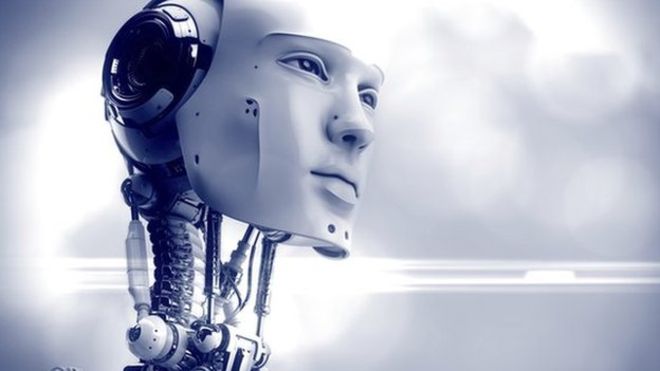
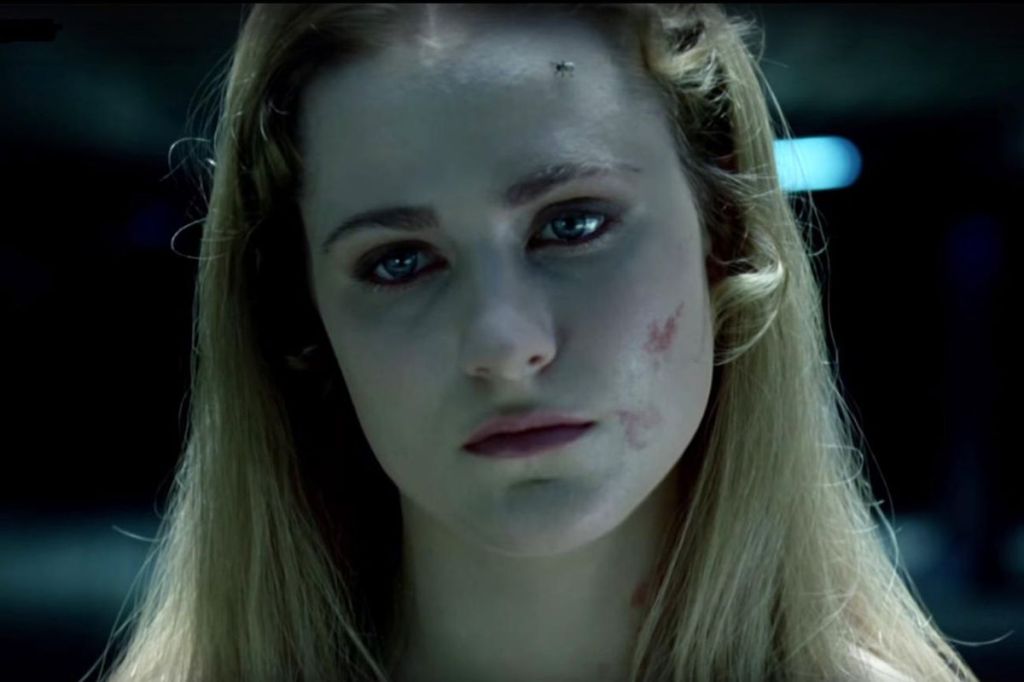
    The HBO show Westworld deals with the technological distortion of the feminine

    One way to deal with this energy is to accept your vulnerability rather than act from a place of constant defense and embodying aggressive, macho power. This means that one could encounter violence in life and respond with soft power, by drawing from the power inherent in the feminine archetype. Examples can be found in the amazing book of Leymah Gbowee, inspired by the events of the civil war in Libya, which details how groups of unarmed, vulnerable women of all ages, together with their children, used their vulnerability to counteract toxic, militant masculinities through comming together to pray and help each other. In one episode even, when threatened with sexual aggression from military men, Leymah described how she managed to disempower men by getting completely naked and oferring herself up, treating the sexual exchange not with fear but almost as a business exchange. When faced with this dignified surrender, men lost the capacity to draw pleasure from domination – which unconsciously lies at the root of sado-masochistic sex, the kind of sex that is used to control women’s bodies and is considered manly and normal in some cultures – and in some cases, men gave up using sexuality as a way to punish their victims. By meeting this soft power, they felt momentarily emasculated and lost the incentive to gain power through exploiting others’ weaknesses. This experience reveals the dynamics of gender intimidation and offers a soft strategy of overcoming Venusian power challenges.

    The problem is not that women are the weaker sex, but that they are taught repeatedly to think they are weak, so that men psychologically can feel they are stronger by dominating them (this is what psychologists have coined as the ‘learned helplessness’ complex or in more popular terms, being a damsel in distress that needs a hero). This power dynamic brings nothing but tension between genders, and while it might lead to sex and procreation, it does not lead to fulfilling and respectful relationships where both partners can grow, because there is an imbalance of power which constantly has to be measured against human worth and dignity (which continues to be problematically gendered in society). Releasing this tension means that women need to let go of ‘learned helplessness’ and the pervasive idea that they are weak and frail and thereby ‘feminine’ and men need to let go of ‘machismo’, and the idea that they are real men if they drink hard, fuck hard and work hard. No. We can all drink, work and have sex, we can all build muscles and have feelings, we all eat and argue and cry and create. We can all be moral, peaceful and loving. Both men and women have estrogen and testosterone in their bodies, and just the simple fact that we have it in different quantities shouldn’t be the defining pillar of how we structure our social relationships. Well the upcoming 22-years long transit of Pluto in Aquarius is going to bring this point home to most of us, as we will see the collective transformation of the social fabric.

    Indeed, some do some of these things better than others, but gender does not have anything to do with it as much as we traditionally thought – it is just the ideas that we attach to gender and we believe to be ‘a natural & inalienable truth’ because thinking along such stiff lines gives most people a sense of comfort; these ingrained beliefs about femininity end up perpetuating a string of boring, unimaginative comments on women’s plight. And this is where Pluto comes in: to disrupt what is stagnant in our psyches, to transform what is suffocating and does not help us all grow on a soul level. Even if Pluto has been demoted from the rank of a ‘planet’, it continues to pack an energetic punch and because Pluto transits are so long (it takes the planet aprox 248 years to complete its movement around the Sun and through the 12 zodiac constellations!) this transform happens slowly and in bursts which are usually triggered by the aspects Pluto is making to other luminaries (the most infamous ‘detonator’ being Pluto squaring Uranus which represents a period of intense, extreme, often violent, rapid social growth)

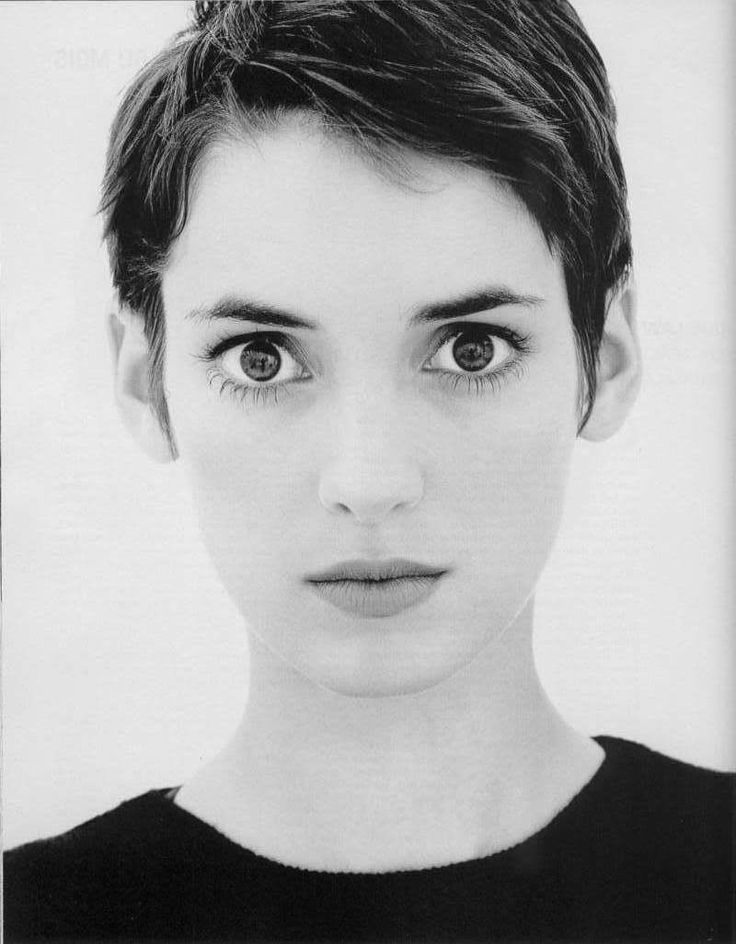
    Individuals with strong Venus-Pluto aspects often exert a fascinating power of seduction over both genders, and project outwardly an unforgetable androgynous look. Some examples include Kurt Cobain (Pluto in the first house, Venus conjunct Sun & opposite Pluto) or Wynona Ryder (Sun conjunct Venus in the sign ruled by Pluto, Scorpio):

    So how is the number 6 then integrated with Venus-Pluto aspects? To sum up my initial analysis, I would say that individuals who have a Venus-Pluto imprint in their chart could live out their soft power by experiencing moments of disempowerment in their personal connections which shame them and urge them to rise into their own self-control and empowered thinking. These tough lessons happen through the intermediaries of money, sex and personal agreements, and through how their body, style and beauty is perceived. With such an astrological signature, they also have to negotiate their trust limit and adapt it in order to build strong bonds of intimacy with others. So, if Venus-Pluto people go through a life-long process of bringing to their conscious awareness more and more of their self-worth in the world, this can increase their distorted self-image which usually stems from toxic relationships from their childhood or inter-relational trauma (usually of a sexual kind) experienced in the process of growing up. The Devil then becomes Venus again, as strife and anger is symbolically converted into peace and harmony in their personal relationships. So in a way you could see this symbolic process of the Venus-Pluto person as a reclaiming of the original meaning of the number 6’s energy. I think the number 6 can also be reshaped and rescued into our collective awareness, since it carries Venusian energy and Pluto can purge its bad reputation throughout time and helps us collectively reappreciate the number 6. The 6 can be transformed, or rather returned back to its original, pre-Christian meaning, from the number of the Devil to the number of Venus and Love.

    Numerology is useful and wonderful, because it does exactly this, it rescues the numbers 6, 66 and 666 from a dogmatic meaning to one purely focused on the vibration of the symbol. By stripping away the religiously uptight and judgmental understanding of Venus – seen as something ‘amoral’ because of her association with pleasure and prosperity – and by celebrating her as the Goddess of Love, Beauty and Pleasure once more, we could collectively learn to heal one aspect of the Divine Feminine and perhaps begin to value soft power again, to prize intuition together with courage, and strength together with vulnerability. That is my hope.

    With universal love,

    Lexi ❤
  • Your Mercury Placement & Post-trauma Healing Self-talk

    Have you ever wondered if your Mercury placement can affect the quality of your self-talk? It took me some courage to finally write about the act of talking to myself, mostly because this is one of the first symptoms of an aggravated mental health condition. Then I started searching the web with ‘Dr. Google’ (obviously, the normal thing to do when you consider ‘accurate’ self-diagnosis) and I found some resources which brought me a sense of solace:

    And especially this podcast which was informative and sweet (and I agree with the speaker that our inner narratives can often feel like court hearings, depending on how we use the inner critic):

    I enjoy the fact that the first article mentions the work of Jean Piaget, who was one of the first psychologists who described the mental stages of development for children. Piaget found that there were largely 4 of them: sensorimotor, preoperational, concrete operational and formal abstract (or formal operational). In his view, there is a link between the development of our mind from childhood onwards, and moments of intense emotional upheaval. Terapeutic stories depict how in moments of intense emotional upheaval and trauma, adults could regress to a younger version of their Selves, a less sophisticated one, a version of their Self usually experienced during childhood. Or in Piaget’s terms, when we grow up we develop naturally from stage 1 to 2 to 3 to 4 so we could operate at the level of abstract thinking (even if many psychologists following from Piaget onwards, debunked this neat linear development of the mind). However, in situations where we experience trauma – with its strong emotional content – some of us could overload the cognitive system and momentarily inhibit our capacity to think at a formal level. Thereby, a life event could get an adult to move back from stage 4 thinking (formal operational) to stage 3 thinking (concrete operational), and that’s when internal talking could become externalized self-talk or thinking out loud.

    This image has an empty alt attribute; its file name is jean-piaget.jpg
    Jean Piaget

    At the same time, and at the level of language, adults also revert from what the sociologist Margaret Archer called ‘our inner conversation’ into its predecessor: the explorative loud-talk of children. Little known, is that this regression is helping the wounded Adult Self to heal from the shock of the present situation, by temporarily escaping into the past. The real problems appear if the adult escapes completely into the past or in a world of illusions and is incapable of reverting back to mature forms of relating, or to act on the principle of reality. Part of the process of healing from trauma is getting an individual to reach that stage of formal mental development (and there are many others such as Erik Erikson’s emotional stages of development etc.)

    I think there is something profoundly beautiful about how we return to our inner child, when as adults we experience trauma. Of course, I am not supporting traumatic events, nor do I say that there must be the condition of trauma in order to access your inner child – you can easily do so by playing with other children, by enjoying yourself and having fun in the present. It is just that during situations of trauma, one facet of our inner child usually pops up – the wounded aspect. What I find beautiful is that the Self seeks solace in a previous version of ourselves, one that was more open, and more vulnerable to the social world. Psychologically, the mind attempts to learn again and heal, and this is a unique function that demonstrates the plasticity of our brain, and the hunger to learn and to improve. As the old saying goes, sometimes you need to go two step-backwards in order to move forwards in life.

    In such circumstances, talking to oneself becomes like the Freudian ‘talking cure’, just that instead of lying on a couch talking to a paid professional, you carry these conversations with yourself as you go about your day. Sometimes these self-talks can produce some funny and quite embarrassing situations, such as when someone else notices how passionately you might reprimand or guide yourself in the supermarket or on the street. This happens to myself relatively often, since my Moon sign is in Sagittarius and I get some of my best ideas when I move, when I walk and roam around the city streets.

    One way in which I managed to escape embarrassment, was by recording my thoughts into my phone with the audio recorder function; in this way, talking to myself looks like I am keeping an audio diary or talking to someone on the phone and it appears less crazy (or so I hope 🙂 I also speak quite silently when talking to myself, almost as if I am praying, which again lessens the mad aspect of this peculiar behavior.

    One one hand, talking to ourselves shows once again how social we are as human beings – even by ourselves we long to connect to something, to discuss, to relate to someone – just that in moments of deep solitude this relating means we only can socialize with our-Selves. For some of us, being alone means being yourself, and being protected from judgement, harm and criticism, while being near someone who doesn’t understand or accept our self-talk could feel like one version of a personal hell.

    Solitude can be a fortress into which we retreat to ‘lick’ our social and emotional wounds (and sometimes even actual, physical wounds); we share this behavior with animals, and how they act after a fight. Solitude can then be a way of coping with running away from toxicity and a way of coping with life’s struggles. The downside to such an approach is that, if it is prolonged, it can end up alienating us from others and ultimately, from ourselves. This is why solitude has to be temporary (and regression as well) so that the link to reality is somehow maintained. So that we may find our way back to the present moment, if we lingered a while in the past.

    In astrology when we think about the mind, we would usually think of Mercury, the planet associated with communication, speed and fast processing. While, Neptune would be the planet associated with healing, the past and any form of emotionally-rooted communicative problem. Neptune rules the sign of Pisces, while Mercury rules the signs of Gemini and Virgo. The Piscean world of escape, fantasies and dreams can heal. But if you spend too much time alone in a Neptunian haze, you might not be able to find your way back to reality, or the secure, stable ground of Virgo-logic. I understand the energy of Pisces to exist on a continuum with that of Virgo – in spite of the fact that these are two very different astrological signs, and are placed opposite from each other on the astrological wheel. Piscean dreams need Virgo practicality, and Virgo’s extreme sense of reality needs encouragement from the fantasies and rosy-eyed scenarios that Pisces usually spin out of thin air —> Sidenote: I made a series of videos about the dual qualities of both of these signs on my Youtube channel, for those interested in knowing more:

    Neptune is about the splendors of liminal experiences, of in-between states of mind & being; it is about learning to love uncertainty and the unknown in life. The center of all creativity is this foggy territory of doubt. In connecting astrology to psychology, I would argue that Neptune governs over post-trauma recovery. Regression as well is a very Piscean strategy of coping with the harshness of the social environment. And Virgo, as its opposite sign and a sign that is ruled by Mercury (the God of communication), influences how we process self-talk as a protective psychological device (or what Freud would call a ‘defense’, and said in more common terms ‘building walls around you’).

    But I want to switch now from the depths of this discussion to each astrological signs’ communication style, based on their Mercury placements. After all, the way we think and speak affects how others relate to us, and in learning about your Mercury placement, there might be further healing clues for how to handle post-trauma energy.

    Since I am writing this article during the weekend of the Full Snow Moon in Leo and right before the first retrograde of 2020 (which takes places across the sign of Pisces starting from Feburary 17th for 3 weeks), let me briefly break down what each Mercury sign is about:

    Mercury in Pisces (or Mercury conjunct Neptune) gives the native limitless creativity. Your strongest point is your capacity to imagine and quickly download ideas from the ether. You also make many associations between elements which people overlook. Your weakest point is the tendency to repeat yourself, gloss over details and speak with doubt and lack of authority.

    Mercury in Aries (or Mercury conjunct Mars) gives the native a quick, sharp mind. Your strongest point is your capacity to be direct, funny and concise with your speech. Your weakest point is that you come across as curt and impatient, and a bit of a bully in how you give indications.

    Mercury in Taurus (or Mercury conjunct Venus) gives the native instant authority. When you speak, people listen, and what you say tends to stick around for a while, so choose your words carefully. Your strongest point is your capacity to clearly state what you think and to perseveringly back it up. Your weakest point is that your communication tends to be one-way or inflexibile, and you find it hard to explore alternatives (the ‘horse blinkers’ effect).

    Mercury in Gemini (domicile placement) gives the native a brilliant mind for communication! You are excellent with verbal, written, audio-visual or online transmissions and you have a knack for flexibly moving between all these different mediums with ease, speed and grace. Your strongest point is being a PR powerhouse since you understand speech and thinking in many different ways and you are very adaptable. Your weakest point is your tendency to distort the truth and reality to the such an extreme that these disintegrate into nothingness and you could be pessimistic about outcomes.

    Mercury in Cancer (or Mercury conjunct the Moon) gives the native a depth to their speech that is incomparable. You can soothe people emotionally through how you speak. Your strongest points are emotional healing and poetic tendencies, you are also a very good storyteller. Your weakest point is that your mind and speech are driven by emotions, so you can also be mean and emotionally explosive when angry. Nonetheless, you make a great storyteller.

    Mercury in Leo (or Mercury conjunct the Sun) gives the native a mind that is focused on having the best and being the best. You speak of your work, your life and yourself in a positive light and are able to encourage others and coach them into action. Your weakest point is that if someone does not give you attention or disrespects you, you cut off communication with them immediately and burn all bridges. Give people second chances and ample opportunity to discuss things with you, since no one is perfect.

    Mercury in Virgo gives the native a well-balanced mind, but often a nervous one as well. You are more connected to your senses than any other astrological sign, so you could be clair-sentient or clair-audient, for example. The downside is that this mental sensitivity needs a lot of care, so that you don’t veer into pettiness and small-minded thinking. You speak by crossing your T’s and dotting your I’s, and you are excellent at details. You process new information slowly and only in an organized way, so give yourself time to get accustomed to new facts.

    Mercury in Libra (or Mercury conjunct Venus) coats their speech in beauty. You have the mind of an artist, and when you speak you are fair and detached, but can also think of funny things to say to lighten up the mood around you. Your weakest point is that what you say today might not hold tomorrow, as you tend to speak to please others and hold ideas that are approved by many. However, you have phenomenal abstract-thinking skills and can be a good strategist.

    Mercury in Scorpio (or Mercury conjunct Pluto) does not waste words or thoughts. This is the mind of an ultra-sharp thinker, who understands what lies beneath people’s words and their actions. You can get gloomy & silent, but you always match verbal speech to non-verbal elements in how you understand someone, and you keep a mental score if a person is telling you the truth or not. This is why you’re not so good at written communication, texts, DMs, emails (on a daily basis), but you could shine at short directives or sexting, for example. Deep & solitary analysis is your thing and you can unearth information that changes the way people think about a situation.

    Mercury in Sagittarius (or Mercury conjunct Jupiter) gives the native a sense of expansion in their thinking. They are as limitless as a Mercury in Pisces, but they speak from a more logical framework. You are often mystical in how you speak, since you are capable of grasping the big picture and connect this easily to ordinary thinking. You are in touch with the higher realms and think like an abstract painter. You love to discuss philosophical interpretations of life and to explore truth and meaning, but you are also impractical and you tend to not stick to what you promise. Tone down the fibbing in order to get others to trust you more.

    Mercury in Capricorn (or Mercury conjunct Saturn) is the structured thinker who enjoys mental effort. You are serious in how you express yourself, and use caution in your speech. Sometimes you speak deliberately, slowly and perhaps even monotonously. You might have speech impediments which stem from childhood, but you usually overcame these with effort and patience. Your thoughts and words produce karma, so you learn to discern how you use them. People seek you for advice the older you get.

    Mercury in Aquarius (or Mercury conjunct Uranus) is highly inventive. You use words in new and sparkling ways, creating funny and unexpected reactions in people. There is a shock-quality to how you think and how you express yourself. Sometimes you drop eff-bombs in the middle of a high-brow conversation, or you chit-chat superficially, and then expurgate a really deep truth. ‘Expurgating’ is certainly a word you would use, as well as many tongue-twisters and other witty technical devices. The downside is that you are often misunderstood by others who feel that they are being talked down to or that you are just too weird.

    In relation to each of these Mercury placements in your birth chart, Neptune (being currently in its own sign of Pisces, until 2026) communicates in either: a) trine (flowing, easy aspect of support), b) conjunction (it infuses your Mercury in Pisces with its energy), c) sextile (friendly aspect, with some benefits), d) square (tense aspect, frustrating) or e) opposition (with many highs and lows). For example, my natal Mercury is in Pisces and it is in a friendly aspect to my natal Neptune in Capricorn, which adds some structure and pragmatism to my dreamy mental energy. So make sure to check where your Mercury is placed (the sign as well as the house, since the house colors it differently; check also if your Mercury is retrograde, since this adds an extra layer of depth to your mind and communication). If you struggle to understand your natal Mercury or Neptune placements, feel free to get in touch with me for a birth-chart reading by sending me an email at macht.alexandra.georgiana.pfa@gmail.com

    With universal love,

    Lexi ❤

  • Self-love

    Image from unsplash.com

    To be honest, I don’t think I know what self love means. I try and learn about it each day and practice what I hope is self-love. But like a fish struggling to stay on land without breathing, sometimes the meaning of self-love escapes through my fingers and suffers a quick death.

    I come from a culture that values modesty in women and pretty much oppresses them, not as harshly as in other cultures, but there are social norms that distort femininity all while socially blaming women for not being patriarchally desirable enough (femininity in this context is seen as just being hot, while anything else associated with it such as grace, wisdom, tenderness and nurturing is usually parodied).

    I am trying to find out how to be confident without being arrogant, which is a tricky line to cross mostly because I lacked a personal model of female empowerment while I grew up – except those fashioned by the media and they were usually unidimensional. There were occasional exceptions, like Xena the Princess Warrior 🙂

    I think self-love can be tough love sometimes, which is not a very popular opinion. To me, tough love means being honest in your self-reflection, and having patience with yourself and admitting when you realized you made a mistake (not by rationalizing or explaining your mistake, but by accepting the truth: ‘You made a mistake, and I love you anyway’). And I think this also could be followed by ‘Let’s see how we can repair the situation/relationship’. So I guess self-love is about formulating accepting thoughts about your individuality and letting them transform into daily, compassionate actions.

    What puts the ‘tough’ in tough love is the fact that from my experience at least, self-love requires effort and work. To practice it, you often have to make difficult decisions. Such as leaving a well-paid, prestigious job because your boss is controlling and toxically obsessed with your every move, or leaving an even better paying job because the city where they sent you for research proved to be dangerous and isolating, or leaving a marriage because he couldn’t stop cheating on you etc. Imagine pushing the person you love away, because he couldn’t understand that you loved him no matter what. It’s taken me a long time to accept these facts of life, and not to feel ashamed for who I am, for whom I loved, and for the difficult decisions I took. Sometimes shit just happens and you simply have to get up off the ground and dust your knees (even if you repeatedly fall).

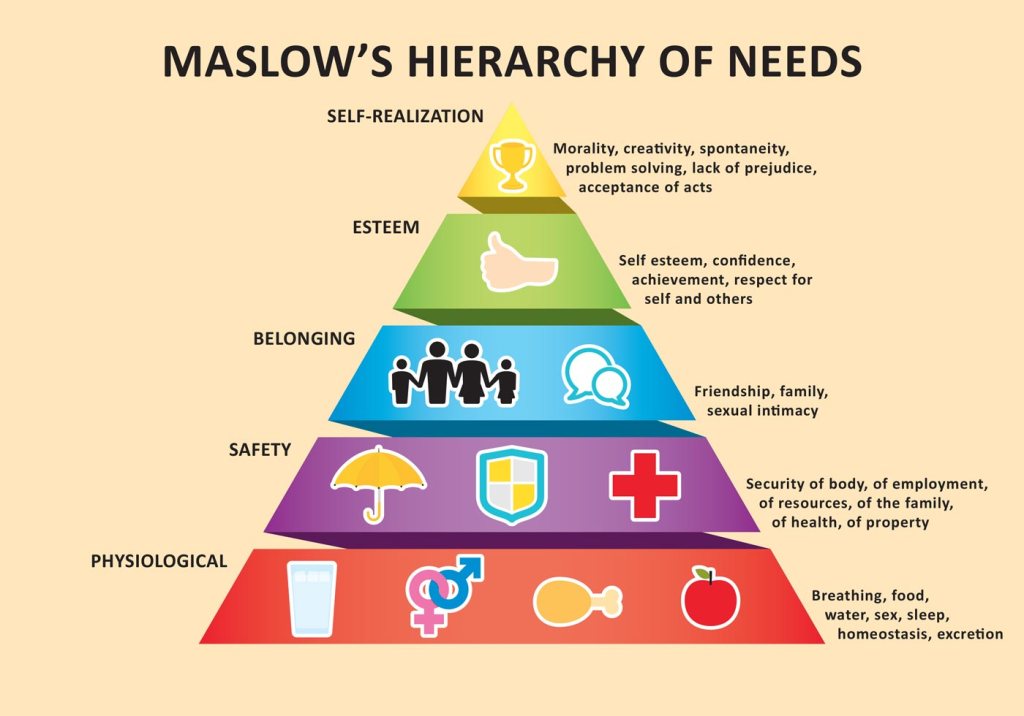
    If you are not openly vulnerable about such aspects people assume you’re OK and that you are strong no matter what. Even as time passes, they might also think that you might be cold, arrogant or that you lack a heart – but that’s not the case, again that is an illusion. Usually, emotional detachment is a result of PTSD, a self-protection strategy that psychologically tends to appear after dealing with diverse social relationships that just kept breaking down. Relational failures can cripple us mentally and emotionally, because one of our core needs according to Abraham Maslow is the need to connect, to socialize, and to share ourselves.

    Image from Vecteezy.com

    From my experience, people will naturally be more attracted to you once you start to show yourself some love & appreciation. When you understand that you don’t need to be in an unhealthy competition with someone, or that you should bend over backwards to please someone whose always morose, or that you are worth more than that awful job or relationship, or that sometimes you just outgrow certain relationships and places. Not everyone will simply feel inspired by your strength and provide only admiration. Oftentimes, envy sneaks its ugly head into your life. What takes you painstaking time to practice each day, could appear easy from the outside looking in, as if you received a natural gift. For those who do not comprehend the pains and pleasures of self-discipline, self-worth appears as a magical gift, one that someone has been unfairly blessed with; here’s the catch – it is not. Self-love comes about with equal doses of strength and emotional work, much like most real things which are worth something in life.

    So there is an amount of self-protection involved once this self-love is awakened. This is because accepting yourself as imperfect or better said as ‘perfectible’, and letting go of that defensive mask we are usually trained to put on in social circumstances, will make others angry. Self-love might not bring you the desired result immediately and even worse, it will trigger toxicity around you; the key is to persist in it (‘You do you’). I noticed that being honest and vulnerable infuriates people who do not have the courage or simply do not want to see themselves as worthy of love, or as good, kind and willing to change, as people who might work on themselves. In this context, when you have to deal with a toxic person (be it a parent, lover or a friend), practicing self-love is easier said than done, as often intrusive and self-harming thoughts show up to self-sabotage you. Following heart-break, your mind can become a bully, blaming you for every decision taken, that is if you repress your pain instead of releasing it.

    In tense emotional situations, especially subconscious ones, your inner critic can all of a sudden veer from giving you the usual, daily instructions, to shouting at you angrily much like a drill sergeant. When your inner critic becomes an abusive asshole, this means you have internalized the toxicity in your environment and are self-sabotaging your self-love process. As you are pushing your inner peace and stillness to the side, you begin mirroring the voice of an abusive parent or lover; ruminations over negative memories can appear, instead of a healthy focus on the present situation or sheer excitement for the future.

    The good aspect in all of this is that the past is behind you, the past is done and closed – no matter what we do, we just can’t go back there, except in our minds – and learning to control our mind in such situations is half the battle won (or so it felt from my own experience). We only have the present, and the excitement of planning for the future (which granted, can often feel overwhelming). So knowing this means that the only ‘enemy’ in the present moment is your mind. Self-love is then quieting your mind, talking kindly and gently with yourself exactly in those moments when, in the past, there was external shouting. I guess the trick is to deceive the expectation, which is created from a negative memory. For example, when I was little and tired, my mother used to stress me even more by shouting at me for making mistakes when I was doing my homework. She couldn’t empathize with me as child, that I needed some rest, that I had to take a break and distract myself with something fun for a while. This was my karma to bear as my mother has a natal Saturn in Pisces and I was born to her as a Sun in Pisces child. But we are meant to also overcome our karma and not just hopelessly give in to it. With self-awareness and year of astrological study, I finally understood our difficult mother-daughter, Saturnian dynamics.

    Fun was definitely not the word I would ever use to describe our mother-daughter relationship. And when I was young I didn’t have the awareness to challenge her attitude. I grew in time to the realization that it was also not my responsibility to challenge her. I was 7 and she was supposed to be the adult, the more emotionally mature person. This didn’t happen. And I learned to accept that my mother is simply limited in her emotions, due to a mixture of her own childhood trauma, societal pressures on motherhood and her own personal choice of not seeking help and healing. I do not even criticize her anymore since that activity would only make me angrier. I’m learning to accept now. Her behavior and my own. Because I’m learning to love myself and choose my battles. I seek inner peace so I am forgiving her by understanding her and setting my own boundaries in how I relate to her. I notice what it is that I can control (and I know that I certainly can’t control her, nor would I want to), so I move on without hesitation to do just that. I’m present-focused rather than past-obsessed.

    Now, I can give to myself the nurturing I should have received in such moments. For example, when I feel tired, now I rest. And I learned to talk to myself differently: From ‘Go, go go! WTF is wrong with you to be so slow!?’ to ‘Alright my love, stop. You are simply tired. Leave whatever you can’t accomplish today for tomorrow. There is time. Now rest’. Repeating this internal dialogue every time I feel tired, is very healing. Now, I have a new relationship with myself, based on acceptance of my flaws, and love for the fact that I am imperfect yet valuable, worthy of rest and aware that I do my best work actually when I break large tasks into smaller, daily ones and when I respect my sleeping schedule.

    Social and cultural norms also gender self-love, to some extent. I noticed that self-love is about not being stuck in over-giving as a woman (and I speak from a perspective in which I identify with my biological sex). As a woman then, you have to receive as well – you are not a machine that loves automatically and produces all the time, no matter how much the patriarchal economic systems love this cheap arrangement. Being willing to let go and trust is often a frightening experience, when you are aware that societal structures in many different regions do not prize, nor do they support vulnerability (and some even actively attack it).

    In the eyes of many, what counts instead are displays of power and stoicism, of winning and coming out on top. Bearing this in mind, as a woman then, self-love is simply listening to yourself and understanding your personal power after many tests of powerlessness or of being compared to ideals of power modelled after men. It is also the quiet knowledge that soft power and being soft and vulnerable does add value to life, as a more gentler way of existing in the world, and dare I say even a more eco-friendly one. Imagine if we swap all the guns in the world for home-made pillows or self-care sets, or if we rest more instead of taking pride in how we fight through life and over-work ourselves.

    It might seem like a banal example, but imagine the difference such simple and small changes would make, both to ourselves and to our natural environment, which at the moment is increasingly asking us for nurturing attention.

    Image from unsplash.com

    With universal love,

    Lexi ❤
  • Playtime in the Library – Medicine against Creative Writing Blocks

    A picture from my personal archive

    I write for a living and sometimes, I get tired. I look at the blank page and don’t know what to tackle next. It seems so pristine and not really in need of my Ego-driven desire to record my thoughts on it. Whenever I face this ‘blank paper wall’, I remember the blunt advice of my professor of critical psychology ‘Go deeper into the unconscious, Alexandra’. I’m not quite sure what he meant by that – I probably should’ve insisted more in class for clear answers. So I devised my own strategies, aware of the fact that therapeutically I need to nurture my inner child when I feel blocked or slow down rather that pressure her; so each time I get frustrated with my work, I play. Several bouts of burn-outs throughout my career brought this point out very clearly: don’t take yourself so seriously or you’ll collapse under the pressure of wanting to control uncertainty; perfection, if it exits, is elusive.

    What play means in this context, is that I visit the local academic library to switch up my writing routine. I go to the shelf of a completely different discipline than the one I am active in, and I select books with titles that draw me in. Then I open a book at a random page and place my finger on whichever page I feel guided to. I proceed to read and jot down the sentence that first appears under my finger. It won’t make sense initially why I would copy a sentence about car transistors or remote villages in the Pacific, but I trust my intuition and wait for the big picture that is created once I finish the exercise – it is also fun to discover other writer’ work in this spontaneous way, and writers whose work I wouldn’t normally read.

    So, I repeat this process with as many books as I want until I get tired. I then put together all these disparate sentences together in a Word document and read this whole new, randomly-pieced story to gain funny and creative insights. It works e.ve.ry.ti.me! I have fun, it breaks my routine and reminds me why I enjoy reading and writing in the first place: because it’s creative!

    To exemplify, below is the story I created today by randomly picking up books with titles I liked from the Philosophy, Arts and Biographies sections of my current university:

    • “Doctors also developed idiosyncratic relationships with machines and to technology generally
    • It’s the improvisation. With improvisation the great jazz musicians were just sort of …in the moment. They had no idea where they were necessarily going next, sonically.
    • It was in the loss of the Manufacturers and Liberal Arts Building, however, that Bancroft found both his “historical mythology” and its political theme
    • From this time on the true George Platt Lynes took form. As his finances prospered, so did his debts.
    • Imagine being forced from your home by government authorities and incarcerated in the stall of a prize racehorse, simply because of your racial heritage.
    • In passages that bear direct consequences for his students, Karpov championed an art that involved a “spatial extension” to entangle the participant, breaking with conventional painting, to an art more actively involved in ritual, magic, and life itself.
    • The transition from Piper to the Mythic Being is marked visually. As the artist’s identity dematerializes, he gets darker. In that way, Mythic Being overtakes Piper’s identity.
    • The effort to make art revert back into “life”, or to turn every aspect of life into “art”, simply emphasizes the vast gulf that exists between what has conceptual significance for a handful of people and remains business as usual for everyone else.
    • For the month that my daughter lay in isolation at UC Medical Center, struggling to stay alive after a bone marrow transplant, I sat with my husband either praying or drawing. When she had recovered enough I asked her to write her feelings into some of the drawings.
    • Disproportionately influential to the actual numbers who took acid and wore what could loosely be described as ‘psychedelic’ fashion, whether the decadent proto-hippie bohemian version of London, or the experimental glitter and glitz of the New York underground as typified by Andy Warhol and his entourage, the psychedelic and hippie style of dress ran parallel to the preoccupations of the mainstream sixties’ fashion industry based on the ‘Swinging London’ Mod look.
    • It is inconceivable to him that these close ties between art and society might in themselves constitute the equivalent of Western “aesthetics”, albeit in terms different from those in the West.
    • Vermilion’s ingredients were sometimes buried in dung-heaps to make golden pigments. So vermillion again bears comparison to the ‘vilest and meanest’, the ‘common’, ‘despised’ and ‘rejected’ Philosophers’ Stone – both we’re ‘amongst the refuse’.
    • It seems altogether likely that Cosimo wanted the three paintings, not so much because of his interest in the history of the city as because of the contribution they could make to what we might today call the “Medici image”, the reputation he was creating for his family, partly by means of architecture and works of art.
    • The journalist seems to have conflated de Loutherbourg’s faith healing and Hebraic interests; the former did keep him from his painting for a time, but the latter he incorporated into his art.
    • Soon Carr’s search took her increasingly into the forest.
    • To Albert Wolff, Manet had turned his young sitter into a ‘monster of a human nature’.
    • Family, probably the one of Jan Gerritsz – health and hygienic conditions in the 17th century are disastrous.
    • This Stone is of a great value if he be the great and fayre, and is equal for his bignes to anye Stone (Diamond and Rubye excepted) but is not so much harder then pearle, and Easley wearers rough/ ther is also another transparent Stone which we call Geratsolis which hath no cullors but a kynde of shining, and if the Sune or summer bright days light we are under it or within it.
    • “A seemly obscurantism” is Lowe-Porter’s translation of “eine ehrbare Verfinsterung” (literally, ‘a respectable obscuring’), which is also the title of this whole section, though she prefers ‘Drawing the veil’.
    • As far as business is concerned, there are booms and recessions; prosperity rarely lasts indefinitely. That is the nature of human society; that is the way of the world.
    • The victory should be treated as a funeral
    • An initiation ceremony into the Yoruba religion that I had begun during my fieldwork
    • To put it in a nutshell, heart-to-heart communication (xin yin xin) has long been an additional method by which spirit mediums can communicate with the divine in Wannian. It has been employed when spirit mediums are otherwise unable to interpret divine messages or need the deity’s immediate help. In the urban context, by contrast, heart to heart telepathy has gradually replaced vision interpretation as the primary way to communicate with deities.
    • First, it sees itself and then grows – only to destroy itself in harmony with the seasons and the cycles of time. But, just as with nature, the very fact that it destroys itself means there will never be a time when it is not about to return to bring a new sense of life back again.
    • Not to allow that the boundaries between the different parts of the whole are crossed, is a way to keep the cosmic balance and a task for the goddess Dike to supervise. Not only men, but also heavenly bodies have their dikes, which can be seen again as a balanced distribution of parts within a whole. For instance, in Heraclitus’ B94 the sun must limit itself to shining during the day, respecting the dike of the night
    • With Lu’s view of communication, bureaucratic paperwork took on a new significance. Paper work sometimes exasperated him.
    • I will make a road in the wilderness, rivers in the dessert – Isaiah
    • It is curious how in Guy Debord a lucid awareness of the insufficiency of private life was accompanied by a more or less conscious conviction that there was, in his own existence or in that of his friends, something unique and exemplary, which demanded to be recorded and communicated
    • I have noted that Suarez conceives of the voluntary as something essentially willed and subject to the will, whether reflexively in elicited acts, or as the object of a distinct act of will in imperated acts
    • What is the preeminence that each horizon claims for itself? We may first point out something it is not. My horizon includes, or contains, the totality I call ‘the world’; or as we have often put it, the totality I call the “world” is internal to THIS, to my horizon. Your horizon includes the totality you call “the world” (…) we do not share the same horizon, but we share the same world.”
    A second picture from my personal archive

    On a final note, if you are like me and hate re-reading your work (but nonetheless you have to read it for proof-reading reasons) I can suggest another trick offered to me by a friend: transform the font of your writing in Comic Sans (or some other equally silly font like Magneto or Showcard Gothic). I guarantee this will bring a smile to your face, as you see your ‘very important’ thoughts in an ‘equally important’ font. And you will laugh, laughter being the medicine of our souls and a relaxing way to unclench our busy (academic) minds. I hope these small exercises help you unleash those mythical creative juices.

    With universal love (& banter),

    Lexi ❤

  • The Inner Quest for Love

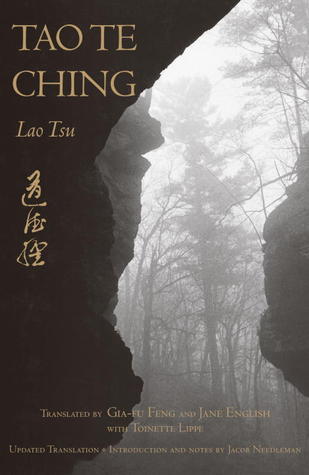
    I’m in a period of stasis. I reached a point where I somehow produce wealth and yet I am not working on the thing for which I have been employed. I am reading a translated version of the words of Lao Tzu and wondering what is happening energetically with me. Last week I quit my job but my boss avoids talking to me and I have to wait 2 weeks before I can leave the country were I was initially sent to do research. In the absence of any advice or support from my mentor, what I do is focus on myself, on my health, my sleep and work, on managing my inner uncertainty. An overwhelming feeling of ‘living in the moment’, followed by a larger ‘this was meant to be’, washes over me at variable moments throughout the day, like the cool waves of the sea. I live in a state of ‘calm turbulence’, I think this is how I would describe this period of my life. I’m in some sort of spiritual transition.

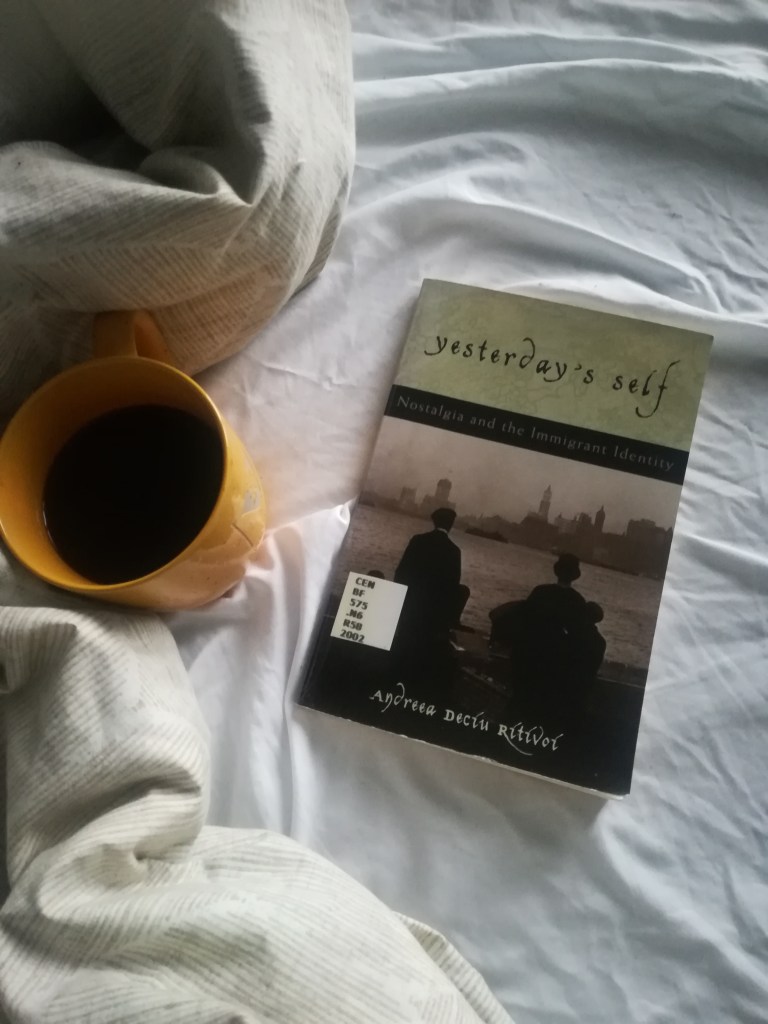
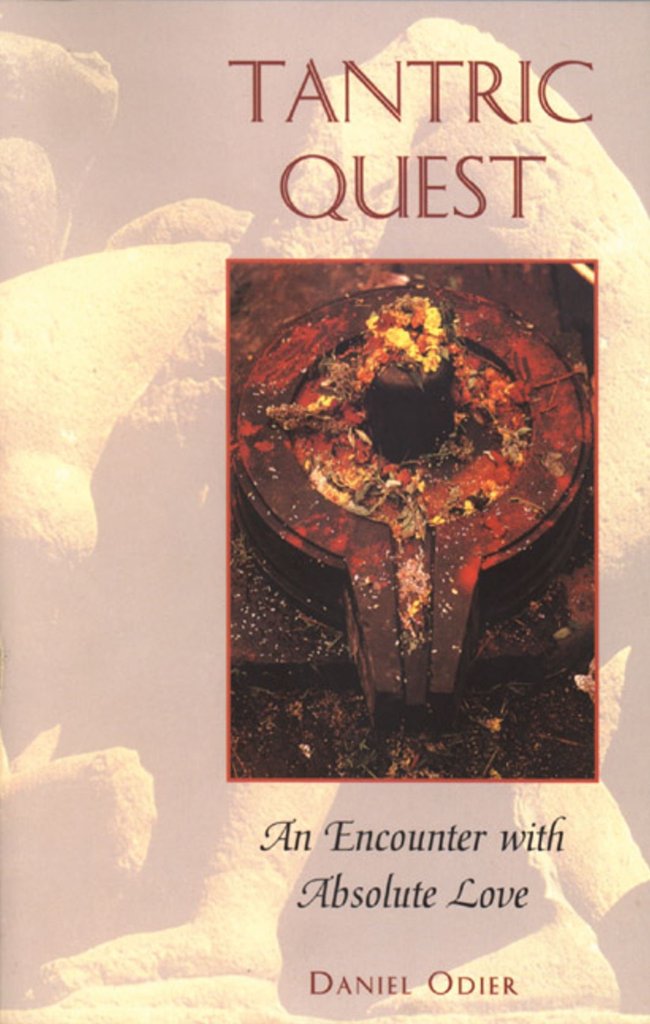
    A dear friend from Bangalore, whom I never met in person yet I feel a connection to, shared a book with me about Tantra and absolute love, over the holidays. I finally managed to read it and it felt like I had a tiny awakening. I also noticed in the postscriptum that the French author who wrote it, Daniel Odier was also working as an academic when he read the work of Lao Tzu and decided to leave his job and move to France to teach tantra.

    Book cover of Daniel Odier’s ‘Tantric Quest’. You can purchase it here: https://amzn.to/3CJw0lA

    I am wondering if it is actually true, that once you begin your spiritual journey, all your material needs are being met in almost magical ways. Of course, you don’t get an Ali Baba cave of riches all of a sudden at your doorstep, but you get just enough to keep you nurtured and healthy. You get what you need, as you relinquish what you want…or thought you wanted.

    I try to live still anchored in the present, but when I spend most of my days alone, with no clear goal to fulfill and inevitably waiting to leave a place that feels alien to me, I keep wondering if I am going through a spiritual awakening or if I am merely losing my mind? In the absence of an answer, I rest. And as I rest, the answers come to me.

    For two years now I’ve been in the process of commiting my time and energy to a lot of work, seeing it through and then merely leaving it behind me, while neglecting my personal relationships on this path for success. I thought that once I will become ‘established’, the right and supportive relationships will follow. I was wrong.

    I quit a prestigious teaching job in the UK and a researcher position that had me travel between Sweden and the US. During these job transitions, I returned home to Bucharest and got floods of awareness that helped me grow by leaps and bounds. I am maturing at such speed and yet I also have the feeling that I might be self-sabotaging my chances of success in life. Where does the truth lie? Am I following my intuition or am I simply not comfortable with positions of power? Am I escaping the constraints of rational-bureaucratic work in favor of the spiritual path, or am I lazy and afraid of commitment?

    From the outside looking in, my decisions surely must look bonkers. But from the inside-out I keep feeling that this is not the kind of work I felt I could do in this world when I initially began studying humanistic sciences. The younger version of me wanted to help people, to work in their service, while figuring out who I am. But the work I ended up doing alienated me from the very things I initially set out to achieve. The paradox is that working as a socio-psychologist keeps pushing me in isolation from the social. Unsurprisingly, I ended up supporting academic egos and projecting a false sense of self, repressing who I truly am.

    In this soul-searching context, when I read this line from Lao Tzu, I felt woken up:

    ‘proud of wealth and renown

    you bring your own ruin.

    just do what you do, and then leave:

    such is the way of Heaven’

    So is leaving this job, my way of following the Way (Tao)? Of being immersed in this beautiful philosophy of just being or is this a sign that I am shooting myself in the leg, metaphorically speaking? I could analyze the situation to death, but I prefer to let it be as I continue to exist temporarily in this state of nothingness, wondering how to fill my time while I wait for my flight back to Europe. It’s like waiting for Godot, but the international version. Helpfully, Lao Tzu has an answer for this dilemma as well :

    ‘presence gives things their value,
    but absence makes them work’

    So by letting go of this job, I might increase my self-worth, huh? In addition, and contravening the protestant work ethic that dominates so much of Western economic thinking, Lao Tzu writes:

    ‘When you never strive, you never go wrong’

    &

    ‘things rare and expensive make people lose their way’

    This feels true to my experience so far; all this movement between jobs and countries made me realize how futile the quest for material success is and how easily I can live without a lot of material things. Minimalism is somehow spiritually supportive, so I’m starting to understand the stoics and the ascetics. I’m also learning the rhythm and value of things, people and places because I am engaged in a state of constant comparison. The more I compare things to each other however, the more I realize how similar they all are.

    So am I becoming more aware of when to act and when not to act, while making a lot of blunders on the way? I am reminded of the principles of karma and dharma. Karma as action and its consequences and dharma as doctrine but also the principle of receptivity. As I write about stasis for my book and learn about Kashmir Shaivism and the philosophy of nonduality, I try to think of how action and inaction are blended in reality in how individuals perceive and experience them. I also try to reconcile this awareness of my personal power, my growing inner world and being emotionally open and vulnerable, by stimulating and healing my heart chakra to accept life and intimacy, after loss and trauma.

    On this path, I feel I am embodying both sides of the Divine Feminine archetype described in Odier’s book: one being Kali, the terrifying and destructive feminine force, and the other Devi, the balanced and harmonious feminine energy (two slightly more imaginative interpretations of the Western clichés of the Madonna and the Whore) :

    Kali-Ma, from the Keepers Of The Light Oracle Card deck, by Kyle Gray, artwork by Lily Moses

    With all these mysteries in mind, I feel that I am at the beginning of an interesting string of life events.

    With universal love,

    Lexi ❤
  • Howling Emotions, Vulnerability and Invisible People

    Detail of a painting, taken from https://detailedart.tumblr.com/tagged/paintings

    In the aftermath of the first full moon eclipse of this brave new decade, a full Moon in sensitive Cancer, I sit on a couch in America and pet my flat-mate’s fluffy cat while watching a video of a woman watering the burnt paws of a kangaroo in Australia. I cry because this cat is not mine and I will soon need to leave it as I depart from this place, and I cry without even realizing I am crying. But the mess on my chin and dribble on my T-shirt reminds me of this unavoidable fact: I have feelings. No matter how much my work – which is rational and emotionally suppressed by its nature – reminds me that feelings are useless in neoliberal capitalism, I still have them. No matter how much social media promotes a certain kind of affectionate display, one which is superficial and overly saccharine and positive, I continue to feel. Often, I experience an overwhelm of emotions considered by many to be socially-taboo: sadness and anger.

    My default is that I usually avoid watching clips with babies and animals as these get me in my feelings every time. But this time, I couldn’t look away. To distract myself from apprehensive news about the tense political situation in Iran, I look at Australia’s wild landscape and how it is set aflame for months now. It seems that everywhere you look as this year began, there is this mass fear and emotional outpouring. I’m also amazed that it still takes us so much to realize that what happens locally, affects us globally.

    Our world weather is rapidly changing and mostly due to the indifference with which we treat our artificial creations (cars, packaging, highways etc.). We could choose to let nature be but instead we persist in manipulating it, and in the current patriarchal ruling system we also continue to rapidly destroy it. Nature is not a threat to us; it nurtures us and keeps us alive. However, in the Anthropocene we seem bent not only on using and exploiting Nature, but also in neglectfully ruining it. And why? Nature supports us, it is part of us; we are as natural to this world, as it is to us. Maybe we hurt it because on some collective, unconscious level we became addicted to harming ourselves. Or maybe living in comfort, gives a certain meaningless to life, and we then start to randomly destroy just for fun.

    We are connected whether we like it or not. Its instincts are our instincts and no matter how rational and spiritual we are, we are also part animal. We exist in this World to experience it fully, and hopefully to exit it, in a much better state then it was when we were born into it. A kangaroo’s destroyed habitat today, will become the polluted and ashy rain sweeping over Pacific Islanders, New Zealanders and American West Coast cities, tomorrow.

    The transit of the North Node in Cancer conjunct this Full Moon in Cancer is about precisely those things: holding on, the wild environment, the Mother Archetype and the vulnerability and fragility that exists within us and beyond us. It is about treating the global as if it were our family, and realising that when we fail locally to protect those that need love and attention and care, we also affect the global chain of events.

    Another channel that gravitated towards me seamlessly in this period is Invisible People. I watched videos of homeless people from all over the world, struggling to survive and truly living out the spiritul credo to ‘live in the moment’ but marred by a hungry hope for a safer future. The ways in which these brave people cope and how they struggle to remain optimistic and continue to move on in spite of hardships is such a wake up call to our shared humanity:

    I cry with them and I cry for them, both out of fear that I might end up in their place since life is so uncertain, but also because they remind me that I have a heart and that I would love to do meaningful work, to help people like them that experience desperation, to offer them hope and shelter. I realise as well that someone else is crying with me, and that is my inner child, who suffered neglect and abandonement in my earlier journey.

    It took me a while to realize that tears are ok. That they are a release, a healthy reaction of our bodies to emotional overwhelm, a pressure valve that opens with heart-break, so that we can let the energy flow through us more freely. Feelings exists within us to alert us to how we give and receive respect and understanding. Feelings help us make memories, they work with thoughts to help us become more aware of ourselves and our humanity; they poi t towards how our personal and physical boundaries are being trespassed or reinforced. Because of emotions, we maintain a set of values that help us relate to each other, and can also protect us from each other and from complete obliteration. A sarcastic and rational world that just aims to be madly optimistic and cool on a daily basis, is a world that eventually will eat itself up. Much like a nihilistic world, devoid of meaning, pleasure or joy, can darken the horizon of our shared futures.

    Feelings and tears also come and go much like the cycles of the moon. Farmers in the past used to run agriculture based on the moon and women used to keep an eye out for pregnancies and periods according to its monthly movements. The moon controls the tides of the sea much like the Sun warms our Earth and helps crops grow – our Earth is linked to us and to the planets of the solar system.

    Image shared from this wonderful resource: https://themicrogardener.com/

    But the continuous influence of the patriarchy (Rule of the Father) and our collective obsession with the masculinist principles of strength, force, individualism, rational calculation and physical prowess is telling us otherwise. We see it with Trump. We see it with Boris Johnson. We saw it with every dictator that made a mark in history. In spite of progress in education, we can’t seem to shake off these masculinist principles which when taken to an extreme as they are now, they affect not only our everyday gender relations but are deeply embedded within our economy, politics, education and medical and legal systems across the world. We forget that these values are created as they seem to form a natural and immovable law, but they are not natural, they are socially constructed, and they are becoming antiquted and harmful to our very existence on this planet.

    The divisions we understand to exist between us as self-standing human beings, the natural environment of this planet and our wider solar system, are illusions created by the divisions of our limited minds (of which we use only 5%). These divisions are the product of fear and control. And we have so much of this fear and control running amok in our collective unconscious at the moment with the South Node – the karmic place of letting go – conjunct Pluto, Saturn and Jupiter in the sign of fear, karma, limits, effort and emotional stoicim, Capricorn. And yet this Full Moon reminds us that we have hearts, and that we need to be aware of them, to get into our feelings, and let emotions overcome us, in order to solve the current political and environmental problems. To better situate the planetary energies that are bringing these issues into our collective awareness, I use the visual world of Tarot:

    Light and dark, nurturing and stoicism, the man-made rule of the father and the instinctive and maternal pulsations of Nature. These comingle of course, as the patriarchy offers stable structures that nurture us and Nature is at times maternal, but can be equally brutal. On some level controlling nature ensures our survival. But can we establish a relationship of growing care for the world we live in, rather than one of domination and usage? This would require us to adopt a more spiritual approach to the world, to be more careful and patient and resilient, to restrict giving in to our base desires at the click of a button and to control our impulses. Who knows perhaps that might be a new form of stoicism, one born out of care and respect, rather than a need to be tough and ‘manly’ for power’s sake. We might surprise ourselves, as we also conserve the riches and beauty of this planet.

    In light of these emotional waves we are riding, of the generalized fear and limitations we are encountering, there is the Wolf Spirit guiding us all through this cold Full Moon, since the first lunar cycle of the year is also called the Wolf Moon. Somehow the beautiful energy that emanates from a pack of White wolves and the way they communicate with each other through their whole bodies, unique by themselves yet part of a tightly knit group, is comforting and inspiring, and I feel intuitively that I should share it with you:

    With universal love (and a heavy yet opened heart),

    Lexi ❤

  • Tarot & the Contours of Feminine Power: The Empress, The High Priestess & Strength

    In the traditional and widely-known Rider-Waite Tarot deck, The Empress and the High Priestess cards are two of the main feminine energies of the Major Arcana. The archetype of the Empress easily creates stability. She is a reliable presence, nourishing the Earth and those around her with her body, her mind and her heart. She brings peace through joy, and she radiates inner and outer beauty. The energy of this card is better depicted by the following songs and singers:

    The entry into the video swings the camera over an old man who recites the words ‘Love and forgive yourself’, which is the quintessential credo of the Empress who is the mistress of self-love from which her abundance flows forth. The song if also infectious in the most positive way possible, making you want to tap your feet and dance – another element, of this energy is the joy that it creates in your body. And the body is the key word here. The Empress is represented astrologically by the sign of Taurus (Earth, ruled by Venus) and by Leo (Fire, ruled by the Sun), two signs that usually live their lives focused on their embodiment, on their health, wealth and prosperity (whether these are financial or artistic).

    They also naturally attract other people and chances their way, as they tend to be quite immovable (fixed elements). They are stubborn but loving, especially to those that earned their trust, and they make other people move towards them rather than the opposite. And paradoxically, sometimes they attract others by running away from them, like in this brilliant song by the wonderful Leo Sun, British singer Kate Bush:

    As a person who often runs away from what’s good for her, I can completely relate (although I’m blessed with a Jupiter and Aries, who is unforgiving if I ever completely ‘chicken out’ of a situation). But again the passion in the music, the force of the drums and of her voice, the sheer joy that it emanates, are again all characteristics of Empress energy. It’s not so much about the music nor the lyrics but about the presence and about how these women embody their gifts. The energy creates almost a sense of wanting to follow them, play with them, kneel in front of them, as they won’t take any bullshit or suffer fools, but they light you up from within and inspire you. For example, one woman I adore is Gemini Sun, Annie Lennox. Her sense of creating a dramatic atmosphere merely through presence is unparalleled:

    Of course the boa feathers and colorful make-up also add to the ‘visual drama’ but her voice moves you, that’s the main thing that transports your spirit, or at least mine. So again, the body, embodiment, the music, the abundant generosity of spirit, all of these reside in the flamingly beautiful Empress.

    The High Priestess, on the other hand is a slightly different energy. It is still the archetype of an empowered woman, but one who relies on soft & unspoken power, as she rides on ebbs and flow of activity. Where the Empress untangles life’s mysteries and makes them into flesh, the Priestess weaves them into mystery and lifts them up to the skies once again. Our Priestess is detached, scholarly, unique and reticent to delve too much into life’s pleasures (she embodies a bit of a stoic energy). She is more focused on rest, reverie and interpretation than on fertility, wealth and creation. Where the Empress creates tangible value, the Priestess creates intangible wealth.

    For a flavor, the energy emitted by this card and in general by this archetype is similar to the songs and singers below. I discovered Daughter’s music just this year and during my Hermit-like phase, and was struck by the vulnerability & wisdom portrayed by the singer Elena Tonra, a Capricorn Sun:

    Elena Tonra is English and I’ve lived in the UK for more than 8 years, but only engaged with Daughter’s music while soul-searching back home in Bucharest. Just a reminder how everything is subtly connected and divine timing or soul time arranges these daily bits of ‘everything’ into a cohesive and rhythmic whole, much like the Priestess operates in a stealth and yet precise manner. She is the artisan of the unseen and the custodian of the ineffable.

    If the Empress matches Leo and Taurus energies, then the High Priestess matches Pisces (Neptune ruled) and Libra (Venus ruled) energies. Both signs are analytical, and can be sociable but also socially-removed, two signs that intellectualize their strong feelings and turn them into wisdom, into something…well, poetic, something that heals and enriches the lives of those around them. Both signs are also inwardly glowing, can be nocturnal and introverted and are usually empathetic. They tend to mask their abundant intelligence because they are aware that people don’t need more Ego in their relationships, as much as they need to be seen and understood at a Soul level. These two signs are Water and Air, together forming rain or sparkling water, and what can be more nourishing to both ourselves and the Earth than water infused with oxygen. Pardon the needless metaphors 🙂

    The lady with her head in the clouds, oblivious to how her presence impacts her environment and other people in subtle and unconscious ways, that’s our Priestess.

    A final word on Strength

    The way I understand Strength (this difficult and yet so, so beautiful card) is that it combines the energy of both the Empress and the Priestess. The blending helps the person who draws this card to tap into both energies at once. To succeed in face of life’s challenges we need both material and spiritual resources. Strength is usually associated with Leo energy, with the vitality we gain after a battle, with taming the wild part of our nature through loving kindness. This energy is dual, touching upon the physical and the metaphysical, because to tame the Lion you need both a brave heart and strong arms 🙂 Virginia Woolf wrote almost a century ago:

    ‘A woman must have money and a room of her own if she is to write fiction’.

    Symbolically-speaking, you need both peace and material security to create, to be yourself, to feel free and to stand strong. Or better yet, you must stand strong to achieve these things. And sometimes this energy appears exactly when life events lend you a tough hand and you feel powerless. Often we experience a deep sense of vulnerability as preparation for the re-awakening of own Power, possibly done this time in a more deeper, more profound manner, digging down deep in that part of ourselves, where we meet the fabric of the Universe.

    As an example of how I see this energy embodied, take Alice Smith, a Sagittarius Sun who carries this energy majestically. He work is a unique blend of High Priestess magic and the Empress’ regal command of voice, together forming true emotional Strength in action:

    With universal love,

    Lexi ❤
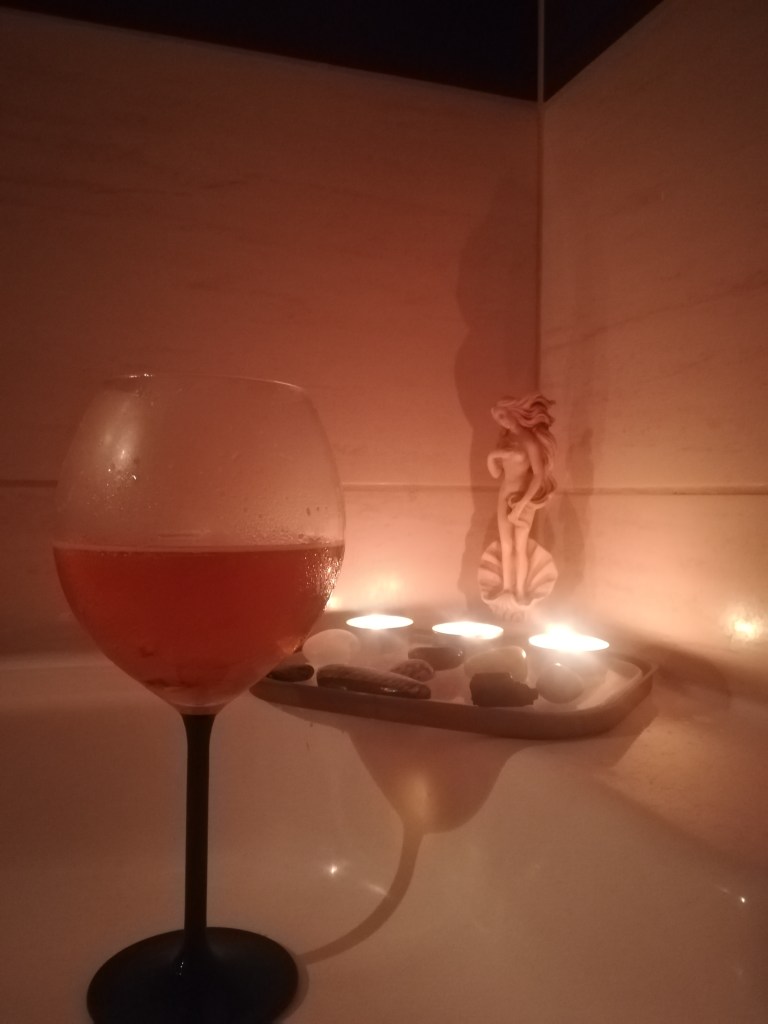
  • Venus Obscura: Lilith & My Fatal Attraction to Female Anti-heroes

    An original artwork depicting Lilith as a Goddess from https://www.pinterest.com/adamyonghz/lilith

    As I experience in this period the North Node in Cancer transiting my natal Lilith in Cancer in the 9th house (aka the Nurturing Nomad role meeting the Wild Feminine Archetype), I find myself to be even more protective of my independence than I usually am, and I continue to spend most of my life interacting with powerful women (I am one of those anomalies, having had only female bosses for the last 10 years of my professional life – there was an occasional male boss once, but that exception only lasted a month). This strange path might be created by the fact that since 2008 a year which coincided with my leaving the ‘family nest’ and travelling on my own to seek love, happiness and fulfillment in international locations, the planet Pluto in the traditional sign of Capricorn has been opposing my natal Lilith in Cancer in the 9th house – this energy has been so far about transforming my local environment, about diving deeply into the occult to heal my maternal wounding and it has also been about power and vulnerability in my intimate connections with men.

    So this post is about personal transformation and how the Lilith Archetype, of the fiercely independent but also maligned and hated woman, the Venus Obscura of the zodiac, the dark and perilous side of Aphrodite, has been influencing me. It is my hope that if I share of my personal reflections on such transits I can show you some examples of what to expect, just in case you are about to have Pluto in Aquarius opposing your natal Lilith in Leo for the next, roughly 22 years. The inner Lilith energy was activated in my life back in 2008 as Pluto started opposing it, and as such it has been unconsciously working in the background of my life, stirring up some dark energies. Part of this energy was materialized in how my mind has been changed and reshaped (Pluto was in my 3rd house all this time) and how it has been created some interesting, cinematic obsessions. After all, what we are culturally interested in could mirror back at us hard to accept parts of our own Psyche, or better known as ‘Shadow’ aspects of the Self.

    In the following, I want to write about Meg Ryan, Mireille Enos and Amy Adams and three characters they created for the cinema, and who keep haunting me (while I am also starting to believe they are unconsciously starting to affect my life choices). The characters I want to focus on are: Frannie Avery, Sarah Linden and Camille Preaker.

    Meg Ryan embodying Frannie Avery in Jane Campion’s movie ‘In the cut’ (2003)
    Mireille Enos bringing to life detective Sarah Linden in the film series ‘The Killing’ (2011)
    Amy Adams playing Camille Preaker in the film series ‘Sharp Objects’ (2018)

    These are all American movies with American actresses, and complicated, dark and unsettling narratives, that combine loss with healing and sensuality with death (it’s October, close to Halloween as I write this and I’m currently living in the Deep American South, so the mood is pitch perfect). Another character I could add to the list is Stella Gibson from The Fall (2013) played by the enthralling Gillian Anderson (but I hated how that series ended, so I am going to exclude it from this analysis).

    Stella Gibson played by Gillian Anderson in British film series ‘The Fall’

    I’ll try to unpick what unites and divides these characters and why I am strangely fascinated by them. Usually, when we think of cinematic anti-heroes we instantly picture fallen and muscled men who are fighting for their souls, for example Batman (emphasis on the ‘man‘) who was also deemed the ‘Dark Knight’, or Constantine (an oddly loveable, if self-destructive detective). However, for women the situation seems to enact puzzling cricket-inspiring moments: ‘Who are those anti-heroines?’

    I would suggest that a female anti-hero or anti-heroine to be more precise, is the leading character in a story, a person who walks the thin line between the classical Madonna-Whore or Virgin-Vixen female stereotypes, but transcends them and drastically improves them through complex and soulful performances, that combine both light and dark aspects of the Human psyche. Therefore, the three characters that I fell in love with are a teacher, a detective and a journalist, women with seemingly ordinary jobs who are looking for their own peace of mind in highly misogynistic environments (and interestingly, in the case of Camille, this misogyny comes from her close female relatives).

    But rather then fear their constricting reality and submit to it so as to make peace with everyone, our three anti-heroines actively participate in it, they challenge it, they take it on and sometimes use it to fulfill their selfish needs. They transform whatever they can get in the relationships, from within, with guts, determination and a lot of painful soul-searching. These are not exemplary portrayals of ‘good femininity’; these women make mistakes on the way and are portrayed as imperfect creatures. These are stories about women who don’t speak much, who observe, who are intelligent and confident, even as they deal with their fair share of inner demons. These women don’t over-apologize for their existence, or gush at pictures of children, they are not easy to live with or to understand. For example, Frannie is naive, romantic and has weak personal boundaries and poor taste in men; Camille self-harms and is a functional alcoholic who suppresses a lot of her rage at the sexual abuse she suffered in her youth; while Sarah obsessively works to the point of neglecting both her physical needs and those of her teenage son. All three of them are also very beautiful, not only physically but also emotionally -precisely because of these vulnerabilities – and they are also creepily good at their jobs. Work for them becomes the only place where they find safety and some sort of material anchor in the midst of the spiritual battles they are immersed in. And ironically, it is through work and not through their families that they also meet the men they fall in love with and the people who ultimately nurture them into healing.

    They are also driven to pursue the mysteries in their lives until the end, whatever it takes. All three of them are surrounded by men who they do not know if they can trust and yet fall in love with, they witness how death and despair seeps into the cracks of everyday life, and how their past life-choices leave them at the mercy of their own present needs. Yet when confronted with difficult life decisions, they remain vulnerable and deeply understanding human beings. To an extent, they succed in their narratives not by fighting but by letting go, by forgiving, by deciding to care and to love themselves. These are three wounded women who are learning how to take care of their needs in the midst of life’s chaos. Camille’s boss tells her jokingly at the end of her maternal ordeal that she’d won the ‘fucked-up family Olympics’ and yet she chooses to lean towards kindness and acceptance rather than towards bitterness and revenge. Personal resistance in all three cases, becomes a measure of their worth, but ultimately it is kindness and courage which redeems them.

    This forms part of my enduring fascination of watching their stories unfold. Here, I am reminded of Eva Green’s acting tour-de-force, her character of Vanessa Ives in Penny Dreadful (2014), whose story unravels with a similar intensity and painful vulnerability, and it also quite difficult to watch at times (although her story deals more with the supernatural, and again I am excluding it here due to the heartbreakingly disappointing ending). To my mind, and for what it’s worth, Eva Green embodies the Lilith archetype so well, that now I tend to visualize her rather than some statue from Mesopotamia, whenever I hear the word ‘Lilith’.

    Eva Green embodying the mystical Vanessa Ives in Showtime’s film series ‘Penny Dreadful’

    Returning to the three characters that made ‘my list’ 🙂 and whose stories I was happy to see end in life-affirming ways – rather than in patriarchal fiascos – it is interesting to note their birth-chart placements and to compare them:

    • Mireille Enos is A Virgo Sun, Aries Moon and Leo Ascendant.
    • Meg Ryan is a Scorpio Sun, Aries Moon and Capricorn Ascendant.
    • Amy Adams is a Leo Sun, Virgo Moon and Gemini Ascendant.

    It’s a bit magical to see the Leo-Aries-Virgo connections across all of their charts! Leo and Aries are masculine signs, connected to the fire of the holy spirit and divine inspiration. Aries is cardinal fire energy (self-starting), while Leo is fixed fire energy (attracting). Virgo is the sign of the Maiden who reaps the crops during harvest time (Autumn) and she is considered the purest energy in a native’s chart, representing mutable Earth, in terms of order, cleanliness and health. So there are themes here of blending masculinity with femininity (strength and vulnerability) and of literally being ‘a brave feminine light in the dark’, illuminating the wisdom of self-care and purification through work. Work has so many different meanings to people. Both Virgo (as the Archetype of the Cosmic Maiden) and Lilith (as Adam’s first wife, who refused to submit to him) are two frequent cultural representations of post-modern feminism and are enmeshed in the ‘woman who works/refuses to serve’ archetype.

    Mark Ruffalo & Meg Ryan in a scene from ‘In the cut’

    Of course, I am not arguing that the lives of the actresses mirror the stories of their characters, but what is interesting to observe is that each of their birth-chart energies drew them towards these particular stories, and they took on the tasks of bringing to life these fascinating women; there are invisibly-threated, spiritual connections between these actresses’ personal astrology and the characters that they created, and again reaffirm my conviction that there are no coincidences in life, just simply synchronicities 😉

    For me as the viewer, these astrological aspects are also highly significant. I have an Aries North Node conjunct Jupiter in Aries, a Midheaven in Leo and a Sun in Pisces in the 5th house. Even though my life is not at all as dramatic as that of these characters, I share some personal similarities with their stories: I taught gender classes and I write for a living just like Frannie; I now work with legal actors and observe criminal cases, just like Sarah; I have past trauma and a complicated intimate history with the women in my life, just like Camille. Also, like all three of them I find it hard to trust men and have been told I am soft-spoken yet determined (Libra Ascendant and Sagittarius Moon conjunct Saturn).

    The classical Virgo Archetype

    Perhaps, why I am drawn to in these stories is because on some level they mirror some of the themes of my own life. Upon reflection, some of these are: the difficulty of living independently as a determined woman in a patriarchal world; working through trust issues in intimate connections; having an intense relationship with your mother and sister; learning how to practice self-nurturing; using work as an escape from feeling too much; and dealing with shadows from the past which are at the root of self-sabotaging behaviors in the present. Perhaps these are were the connections between my own path and that of the women in these stories lie: in the familiarity of our life stories. Each unique, distinct stories of random courage, of loss and healing, threaded together by the act of making your way through life, guided mostly by the flashlight of intuition and self-belief, illuminating the surrounding darkness. A darkness that is both within and without…and yes, having to rely mostly on the kindness of strangers to pierce through it, in the absence of familial support.

    However, the stories show that once that inner darkness is seen, loved and accepted, it ripples out into the wounded environment which also becomes suddenly replete with love. For example, Camille allows her boss’ loving family to take care of her and to ‘re-mother’ her (in the book) or she decides to take care of her younger sister (in the film), although with a much creepier conclusion. After much soul-searching, Sarah admits that she loves her long-suffering ‘work husband’ detective Holder, and lastly Frannie saves her own life and returns home to fall into the arms of the hand-cuffed detective Malloy.

    Joel Kinnaman and Mireille Enos in a scence from ‘The Killing’

    Of course, life is less spectacular and at times more silently bewildering than the blood-spluttered challenges that these women had to overcome. In our daily lives, we are given more time for spiritual development and growth then in the span of a film/TV series.

    And as for the women in these stories, it has been revealed to me that a heart that was once broken can be healed again with courage; that at the end of each individual dark-night-of-the-soul, once all the addictions are shed and self-love is discovered, these women (and myself) are able to follow our hearts again. Whether it leads to romantic love is generally uncertain, but it certainly leads to a form of love. One replete with ease and a sense of peace, where once there was only emptiness and a premonition of incoming darkness. Being a brave woman is literally being a light in the dark in the social world.

    Amy Adams and Emily Yancy in a scene from ‘Sharp Objects’

    Undoubtedly, these are stories about three successful Pluto transits sitting in relation to any of these characters’ Lilith, much like the transit I have also been experiencing in these last 14 years. And if I began the transit by renouncing my familial ties to seek pleasure, job ambitions and personal self-satisfaction, I now end this transit back in my family home, renewing my commitment to my family and experiencing reconciliation, repair and heart-mending. When your personal Lilith is activated in your chart by an outer planet (like Neptune, Uranus, Pluto or Saturn) you could be asked to go through some years of dark willfulness, sexual intensity, deviance from your soul’s light and of having to feel shunned, unfairly punished and judged, and made to sleep in the ruins of who you once though you were, much like Lilith was summoned to sleep in the ruins of cities, in the aftermath of bloodshed. However, it strikes me now that maybe this post was an essay about making peace and finally integrating the ‘demonic’ side of the Psyche, and learning to love and accept the unlovable and the unacceptable within. This is the spiritual teaching of Lilith and to some extent it speaks to what Leonard Cohen meant when he sang in Anthem:

    “There’s a crack in everything/ That’s how the light gets in”.

    With universal love,

    Lexi ❤