Author: The Spiritual Social

  • The Ex : The Unconscious and Dangerous Growth

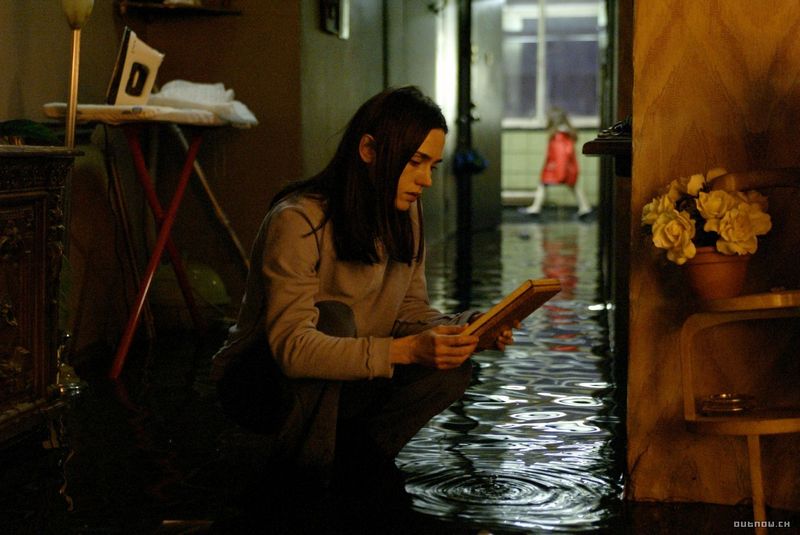
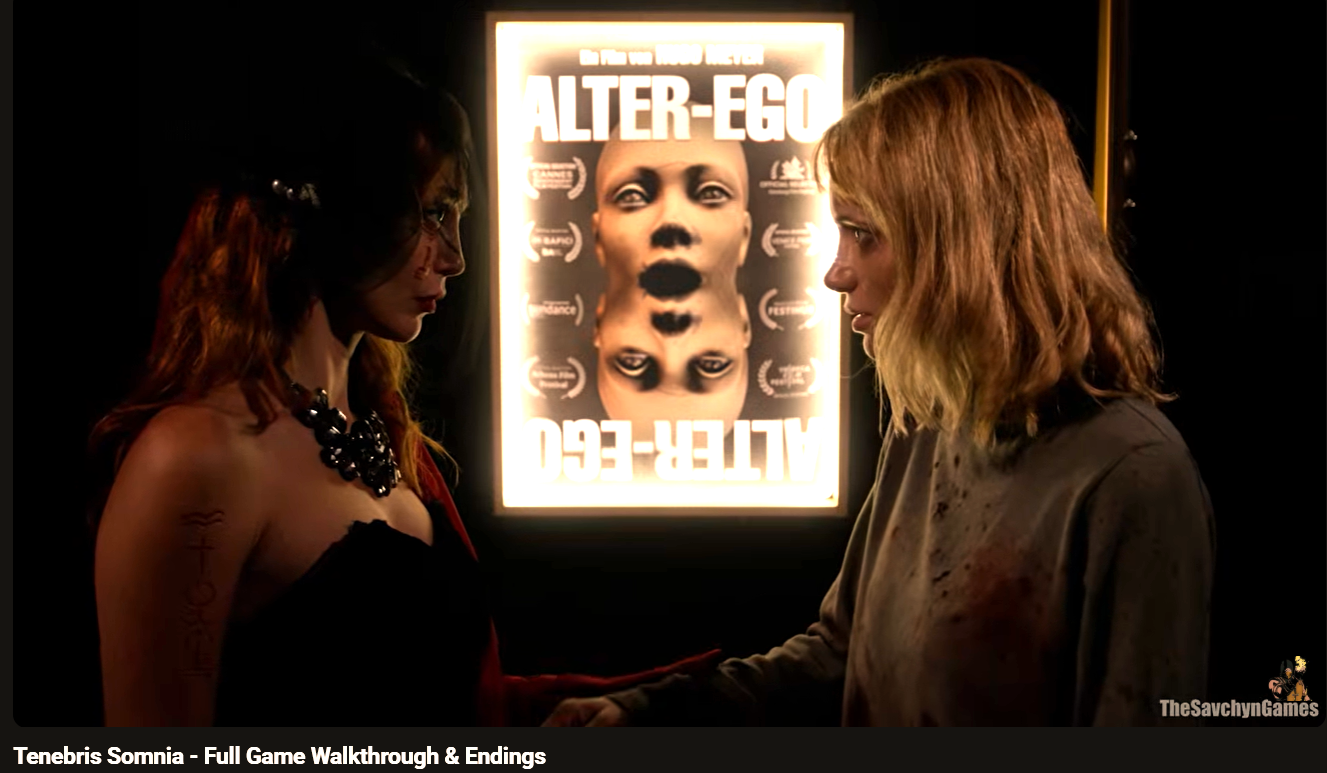
    Still from the game Tenebris Somnia created by Cancer Sun Andres Borghi, in which Julia faces for the final time her antagonist, the witchy Vitria

    I’m gradually waking up from being under the spell of two games in the last weeks, and these are the newly released Tenebris Somnia and Silver Pines. I don’t have the guts to play them myself but I watched the full gameplays on channels like TheSavchyngames and CJUGames on Youtube and I highly recommend that you give them a try. Instead of falling asleep to a movie each night, I would make a cup of cocoa and watch one hour of each game until dreams eventually overtook me. I must admit I had some fascinating dreams after each game, which then transformed into paintings (but more about this in an upcoming post).

    Tenebris Somnia (or dark dreams in Latin) is described on Steam as a “retro survival horror adventure game with live action cutscenes created by an award-winning film crew from Argentina. Unveil the depths of a disturbing story by solving puzzles and fighting horrible creatures. …What if they aren’t just nightmares?“. I don’t know why, but the atmosphere of the game is reminiscent to me of the movies “The Headless Woman” and “Santa Sangre“, two weird gems of Argentine cinema that have been haunting me ever since I saw them.

    On the other hand, Silver Pines is reminiscent more of “Twin Peaks” and “Silent Hill 2” with their heavy, brooding atmospheres and detective-like dynamics. The game was created by a team of Nordic developers and is described on Steam as “a survival horror metroidvania set in small town America. Fight nightmarish terrors and solve puzzles, while carefully managing your scarce resources as you uncover the mysteries that could hold the key to redemption.” Silver Pines has been nominated for best horror game of the year, although 2026 is a tough year for competitive horror games, seeing as we began the year with the masterpiece that is Resident Evil Requiem.

    The Pull of the Unconscious
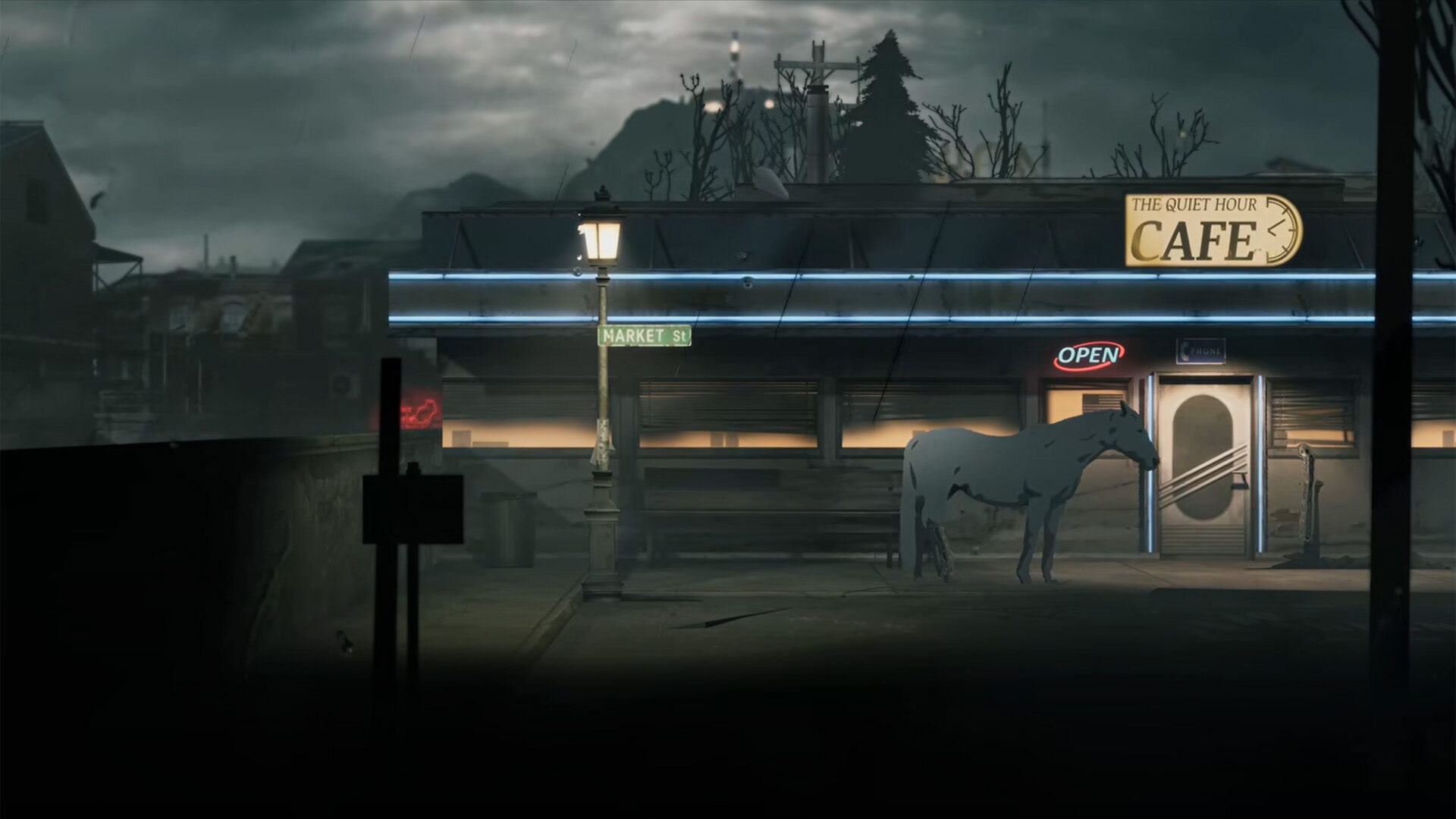
    Still from Silver Pines depicting the town’s Quiet Hour Cafe right before the storm and the wandering, emblectic white horse, as a symbol of death’s acceptance

    Both games have multiple endings and *spoiler alert* these are the aspects that I would like to unpack in this post which isn’t only about my sheer love for thoughtful horrors games but also about the psychological underpinnings of the protagonists’ stories, as they are revealted in their endings. And the endings revolve around an ex in one case and the past and the consequences of a man’s actions in another. These two themes are brought into foreground by the current and overlapping Mercury retrograde in Scorpio and Venus retrograde in Libra, helping collective energies to scavage through their romantic past.

    In Tenebris Somnia, Julia is persecuted by nightmares about her ex-boyfriend Ivan, and after failing to reach him she decides to use the apartment key she still was holding on to, in order to check up on him and see if he is alright. There are a number of red flags already at hand and I guess you can tell that one of the endings will involve Julia just looking at the key and deciding not to use it and not to check on her ex (which is exactly what I would’ve done, to be completely honest). I keep saying this to my clients that “an ex is an ex for a very good reason” but what would be the fun in listening to reason in a horror game, right?

    At the beginning of Tenebris Somnia, we are thrown into this kind of funny and slapstick, retro vintage gaming world, until the first real-action cut scene introduces us to a zombie-like creature who lunges at Julia with a forked tongue, and we are snapped into the brutal reality of the story. Julia seems eerily entranced throughout the game. She needs to find Ivan and find out what happened to him but she doesn’t know why she is doing this.

    In a similar vein, the detective of Silver Pines, Red Walker, has been hired by a mysterious man to find a musician named Eddie Velvet and as we later find out, is tasked with murdering him. Red is desperately searching for Velvet through the horrors of an abandoned town, soon to be besieged by a storm, without understanding exactly why he feels the compulsion to find this man. Both Red and Julia are gripped by their unconscious which pulls them to confront their fears, presented in each game as terrifying and creative-looking monsters.

    In the later parts of the game it becomes increasingly evident that Eddie and Red are the same man (watch as they share a fear of dogs, for example) and that Silver Pines is a projection of Red’s fractured psyche in the wake of an accident he had suffered which led to the death of his girlfriend. Red’s mysterious employer is the voice of his Ego, who drenched in self-hatred wants to keep him repressed and split off from finding the truth and awknowledging his guilt, at having caused the death of an innocent woman.

    In my view both of these fascinating characters, Julia and Red are symbols of the human Ego struggling to understand the unconscious. Often in our lives, we feel compelled or obsessed with certain activities or certain people without fully comprehending why. These are usually pivotal moments when important content from the unconscious wants to make itself known to our conscious mind in order for deep healing, somatic release and psychological growth to take place.

    Although, it needs to be said that such a quest, when undertaken with a view to fight and destroy the unconscious rather than to seek to understand it, will lead to the actual death or gradual psychic destruction of the person involved.

    And we see this theme of being overcome by nigredo (the darkening) or a retreat into psychological repression and fear, in both Julia’ s case in her Magnum Opus ending (where she kills the Relicta and fights Ivan only to obliterate her Shadow at his command), but also in the ending in which Red Walker finds Eddie Velvet and shoots him in the back, thereby completing his mission and never fully understanding the story he had been immersed in. Killing in both of these games carries the symbolic meaning of splitting apart, because after all, the greatest suffering happens in life when we separate parts of ourself and deny our whole being a right to exist freely. Splitting also happens when trauma occurs, which I will unpack below.
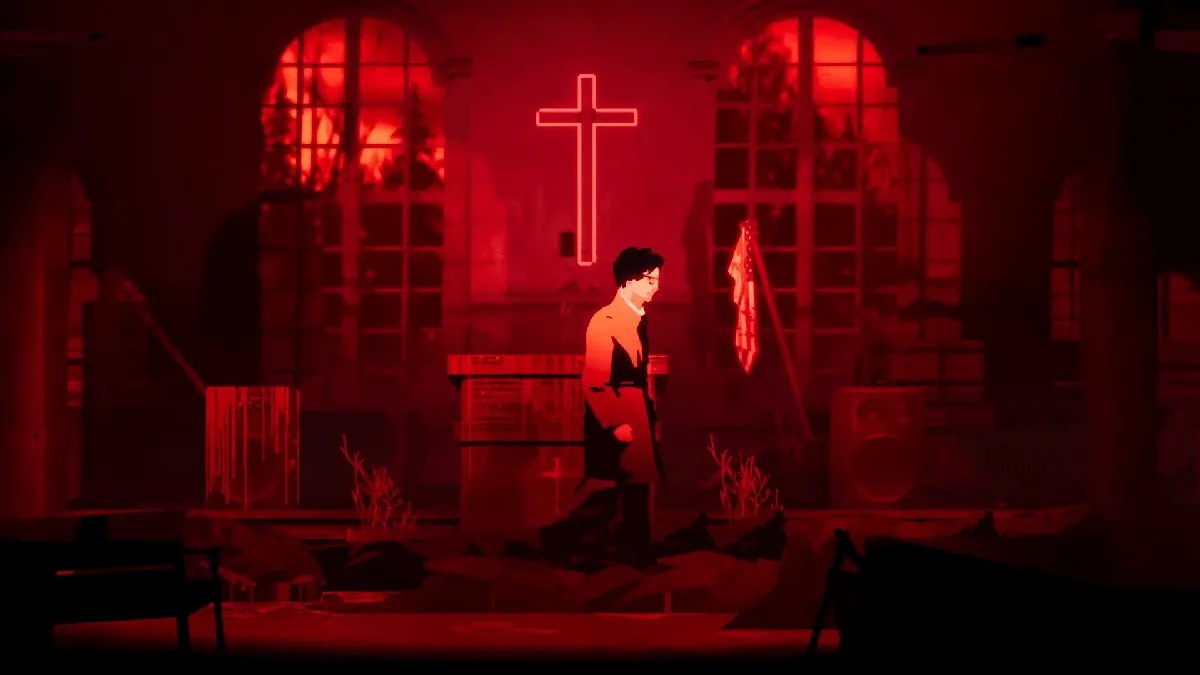
    Still of Red Walker in the town’s church right after a boss battle

    In these so-called ‘bad’ endings, Julia becomes afraid of the world and suspicious of every man as she retreats from her true Self and into the arms of her controlling and abusing ex-boyfriend, while Red continues to drive on endlessly into a night so dark that not even the moon can illuminate it. Both characters are doomed to remain in perpetual darkness, as nigredo extends indefinitely and cannot ascend to the clarity of the albedo stage or the warmth of the citrinitas/rubedo fulfillment, to use the alchemical words Jung has employed to describe the psychic development towards individuation.

    Haunting dreams seek our Attention

    Tenebris Somnia felt deeper and more meaningful as a story-line to me, because it dealt with domestic violence and I grew up with a controlling person who benefited from keeping me trapped and anxious. Therefore, I have intimate knowledge of how Julia must have felt in her relationship to Ivan, and empathized with her throughout the game. It was also fascinating to see that the so called ‘good ending of the game’ was titled ‘solve et coagula‘ (dissolve and coagulate), terms used by Carl Jung in his work on psychology and alchemy.

    In Tenebris Somnia, Julia’s journey can be seen as the process of solve et coagula which maps onto a woman’s quest for individuation through psychological transformation. In the bad ending (Magnum Opus), Julia slaughters her Relicta fragments with the Aurifer, a golden knife she creates through magic. Psychologically, killing is an act of violent psychic repression—she kills off parts of herself to survive, returning to reality permanently marked by her trauma (ex. the scar on her forehead remains but only in her mirrored reflection). In this version of her chosen reality, she remains bound to the archetype of her abuser, perpetuating the trauma cycle rather than escaping it.
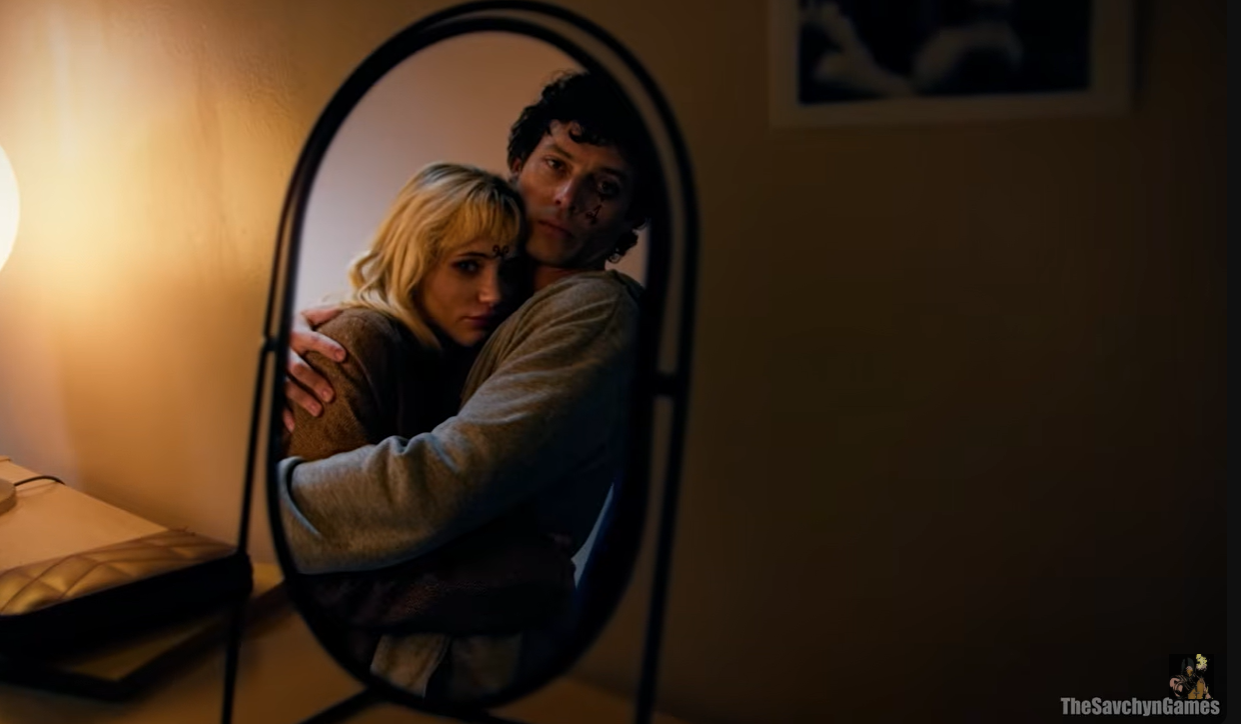
    Still of Julia and Ivan from the Magnum Opus ending of Tenebris Somnia

    On the other hand, by choosing the Solve et Coagula ending, she allows the old, victimized Ego structure to dissolve completely (solve). By refusing to attack her Shadow, she stops treating her internal trauma as an external enemy (she pulls her projection back). The final merging with the collapsing nightmare (coagula) is a raw, terrifying depiction of assimilating her Shadow. She doesn’t escape her history, rather she internalizes it to become whole, and I especially liked how tender she was with her Shadow when she met herself in the final boss battle, a sign that she has learned to be compassionate with the hurtful things she has chosen for herself in the past.

    In the epilogue, Julia channels a newfound raw and integrated psychic energy into her creative life as a filmmaker. She films a short-movie and debuts it at a premiere. Her film-making style is clearly different than that of her ex, Ivan, whose somber film-making contributed to her nightmarish psychic journey. In contrast, Julia’s work is funny, colourful and humane, and we see this through the way that the audience reacts to her film. I have to admit this final scene brought happy tears to my eyes, because I was so proud of her!

    In the Magnum opus ending, I was struck by how violent the relicta of Ivan was when she confronts him in the end and we see the true rage monster that was hiding inside the man she loved. The violence of Ivan’s relicta is a profound clinical depiction of what Jung called an autonomous complex bursting into consciousness with primal fury. Because Julia had suppressed the reality of Ivan’s abuse, that psychic energy didn’t vanish—it weaponized itself in her unconscious. When it finally manifested, it unleashed raw, unmitigated rage which she then problematically, turned against her Shadow rather than towards escaping Ivan and letting him go.

    We know by now that there are two halves of Julia’s reality, influenced by her decisions throughout the game, something that is aptly mirrored by the game’s shift between pixel art and live-action video. In the standard loop or the Magnum Opus ending, Julia’s psychic defenses are working against her: terrified of the outside world, her ego projects the internal threat (the danger of being harmed or controlled) onto innocent men in the public (like that guy in the subway).

    Because the trauma of Ivan’s abuse is unresolved, her psyche perceives the entire world as hostile. Paralyzed by this projected fear, she runs back to Ivan’s apartment. In trauma bonds, the abuser becomes the “safe harbor” from the very terror they created. Psychologically, Julia trades the unpredictable threat of the unknown world, for the predictable, familiar torment of her abuser. It is a regressive retreat to the root of her complex.

    In the empowered conclusion or the Solve et Coagula ending, her psychological orientation undergoes a deep change. The difference in her behavior is a textbook example of an integrated Shadow. True bravery in Jungian terms is not the elimination of fear, nor is it turning into the aggressor. In the bad ending, she attacks her fragments, becoming the abuser in order to survive.

    In the good ending, her refusal to harm her captors (symbolising aspects of her Self) shows that she has broken the cycle of victimization. She no longer needs to use violent defense mechanisms. By facing the monsters without attacking them, she looks at her trauma directly. And in turn, this robs the autonomous complexes of their stealth power over her psyche.

    Complexes or fears lose their terrifying grip on her because they are no longer hidden in the dark—they are acknowledged components of her history. By the end, she isn’t running back to the ruined apartment. She can exist in the live-action, objective world because she is no longer projecting her inner monsters onto random people around her. The outside world ceases to be a house of horrors the moment she cleanses her inner house.
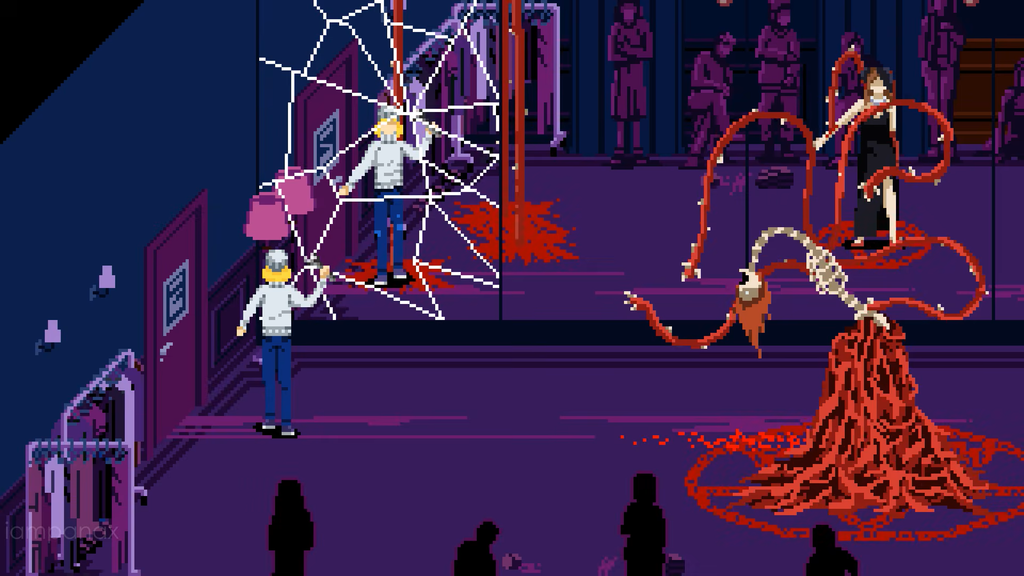
    Still of retro Julia battling Vitria through a mirror, a symbol of how she is desperately trying to integrate aspects of her Shadow but faces immense resistance from her Ego

    I liked how vulnerable she was being depicted during the premiere of her short film. We could see and feel her anxiety and her compulsion to project this anxiety on the public, like she would’ve done in the past, when her anxieties held her back and pushed her into a connection with a dominant and controlling man (Ivan). But she took a deep breath and held the tension and then suddenly the situation changed. The crowd started laughing because of the funny actor in her short film. All her worries of being perceived in a negative way or criticised by others were dispelled when her creative work touched the public.

    There was an immediate collective release of tension which was mirroring her own personal breakthrough: instead of falling into a past pattern, Julia stood her ground just by breathing, she held her anxiety and was brave enough to show up at her premiere and just see what happen. It shows that in time, through such repeated experiences, she will become a very strong woman, capable of controlling her own life (like a director) instead of projecting her control onto a domineering lover who may abuse her. This was the exact moment of Jung’s transcendent function manifesting in waking life, rather than just in her dreams or the pixelated unconscious of the game.

    What Julia is experiencing during the premiere of her short film is the shift from an unconscious compulsion to repeat the trauma loop to the conscious endurance of the “crucible.” Sometimes, to truly heal we need to hold and stay strong among uncomfortable feelings. In Jungian analysis, growth rarely looks like the permanent erasure of anxiety, rather it is a change in our relationship to that anxiety. We don’t get rid of our feelings, we transform them.

    In alchemy, this is maintaining the heat of a vessel without letting it crack. She allows the anxiety to exist within her body without reacting to it or offloading it onto others.Because Julia holds her internal tension, she creates the psychological space for reality to surprise her. By enduring these moments, Julia transitions from a passive actor trapped in Ivan’s abusive, black-and-white film to the author and director of her own and colourful psychic reality. This is a process that takes time and repetition. Each time she stands her ground in the face of her anxiety without retreating into the arms of a controller, she strengthens the new Ego she is carefully building for herself. She transforms her vulnerability from a liability into the very wellspring of her creative sovereignty.
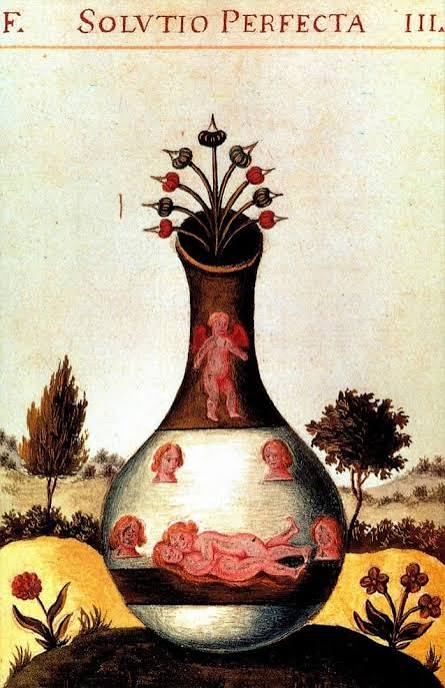
    Image depicting the alchemical vessel of containment, which can hold opposing forces (such as masculinity and femininity) with the purpose of transforming the soul

    Learning from THESE GAMES For Future ThErapeutic Work

    As a training analyst, I kept wondering what would I do in such a case, if a patient like Red Walker or Julia walks into my office? I was especially stuck at that scene of Julia’s premiere and marvelled at her subtle growth. I guess that when I would observe patients reaching this “premiere” stage in their own lives—where they face the terrifying choice between an old, toxic coping mechanism and a brave new path—I would think about what kind of clinical containment or support I could enact to help them hold that tension without collapsing back into the past.

    Since a patient has reached this advanced stage in their therapy, I don’t believe a maternal-like containment is necessary as this would be more appropriate for someone who is still possessed by a complex, but Julia emerged outside of it and may now need just some gentle nudging in the direction of courageous decisions. So I would offer her validating compliments based on her decisions to show up and hold the anxiety and I would continue to re-affirm the necessity of maintaing a strong connection to reality and to understand that she doesn’t have to be perfect, she just needs to be present and continue with the good work she is already doing.

    In my view, I would shift from the maternal, containing matrix (necessary for holding a fractured Ego together) to the paternal/transformative function of encouraging the ego to step out into the world with agency. After all, over-containing a patient at Julia’s stage can accidentally infantilize them or mirror the very dependency they are trying to escape. By offering validating compliments and focusing on presence over perfection,I can act as a steady witness to her emergent strength rather than a protector she must lean on.

    With universal love,

    Lexi
  • Morticia Addams is a State of Mind

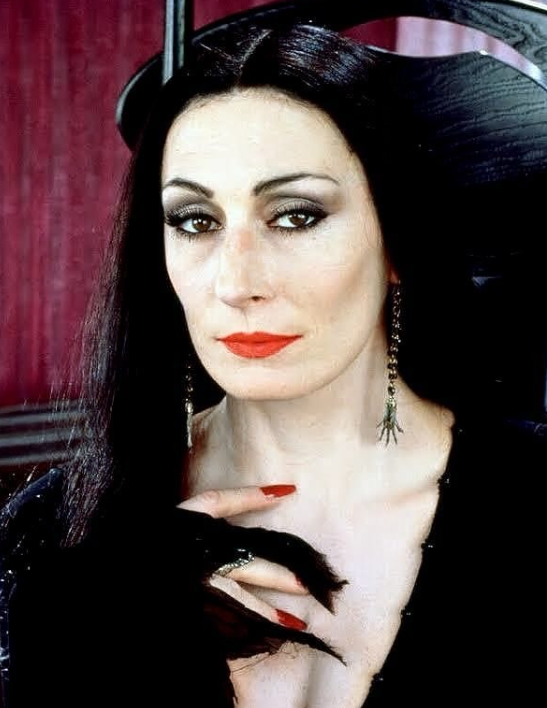
    Cancer Sun Anjelica Huston as Morticia Addams in The Addams Family Values (1993)

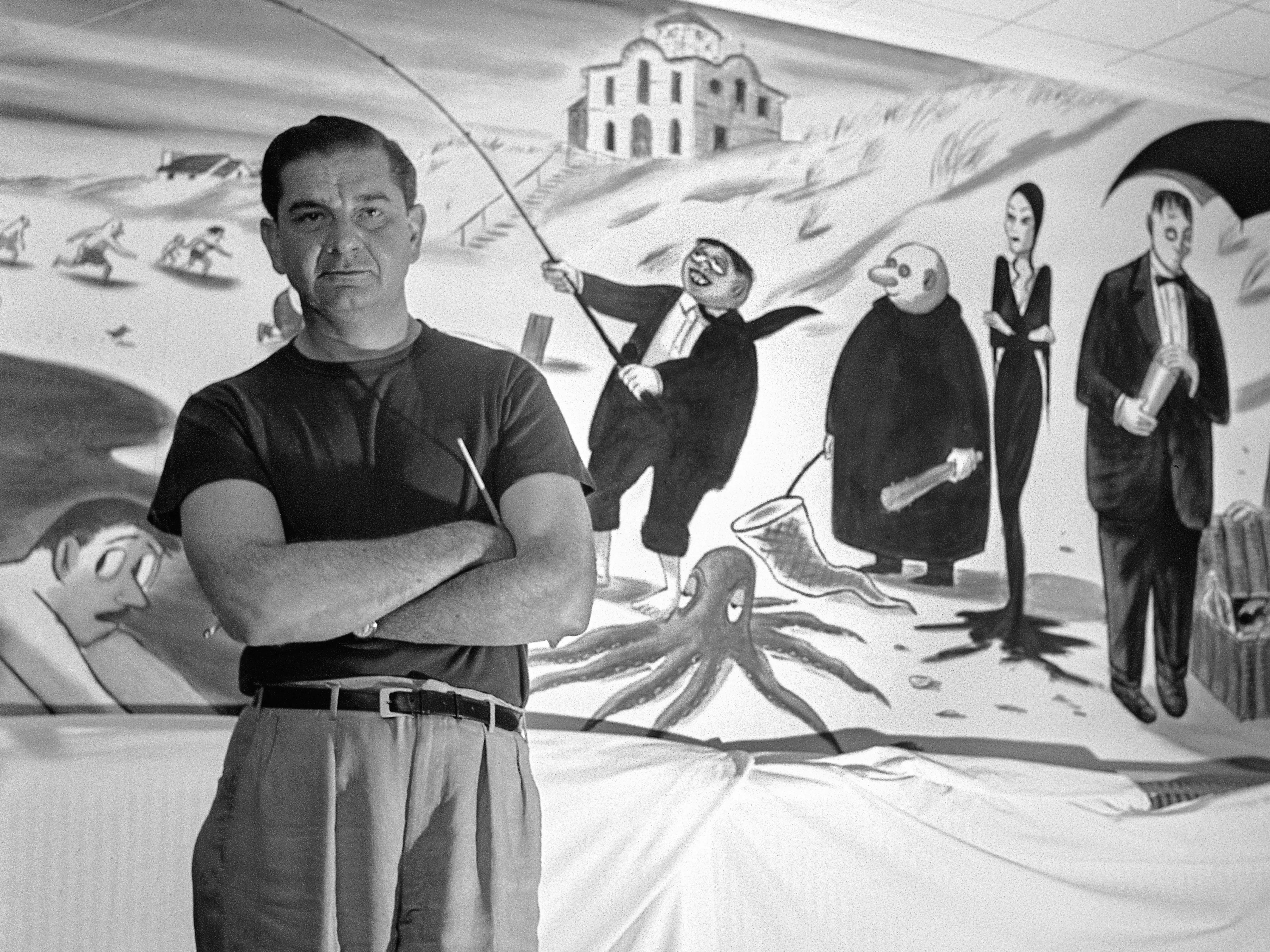
    It took a Capricorn imaginarium to give birth to her, through the creative vision of January-born, Charles Addams. With all three luminary and key points in Earth signs (Capricorn Sun in the 9th house, Moon in Virgo in the 5th and Ascendant in Taurus conjunct Saturn!) Charles Addams possessed immense grounding, discipline, and patient craftsmanship. And in many ways, just like her creator, Morticia is highly Saturnian herself.

    Vintage photo of Charles Addams from the New Yorker: https://www.newyorker.com/magazine/2018/07/09/the-addams-family-secret

    From her jet black hair, her slim figure, her undying devotion to her family, to her demure expressions of contained tension and her equally dark humor, Morticia embodies a precise and polished soft strength, typical of a Saturn-ruled individual. It’s only her tentacled dress that alludes to the fact that her nature may be darkly instinctual, behind closed doors.

    I want to focus on her image, style and essence in this post, because Halloween is approaching fast and I need a distraction from the many real horrors taking place in the world at the moment, which make the spooky gloom of this time of the year pale in comparison.

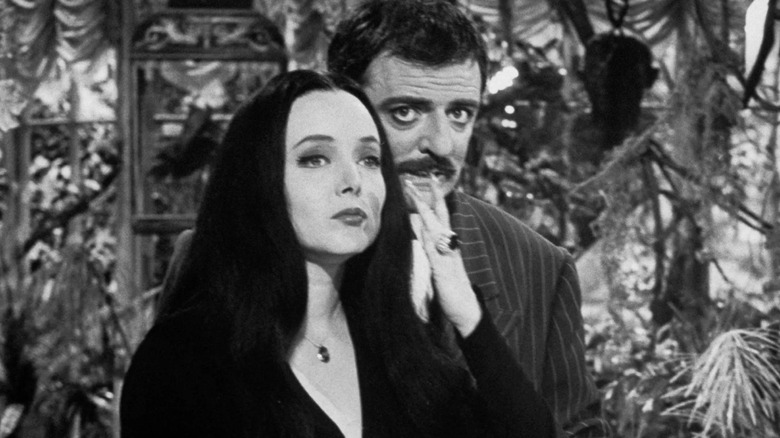
    Charles never gave us a birthday for Morticia, so I can just assume her sign, but seeing as creations are as much influenced by the astrological energy of their creator, it wouldn’t be weird to assume each Addams family character depicts an aspect of the visual artist’s natal chart. Case in point, Charles Addams also had a Mars in Gemini sitting in opposition to his Venus in Sagittarius loosely conjunct Jupiter, an energy I see embodied in Gomez Addams, the witty hypocondriac who is obsessed with his wife, easy on his children, great with money and always up for a fencing adventure.

    Image of Carolyn Jones as Morticia Addams and John Astin as Gomez Addams taken from https://www.tvline.com/2243765/the-addams-family-morticia-carolyn-jones-star-soap-opera-capitol/

    What delights me the most about Morticia, is the fascination that she displays for things and circumstances usually considered taboo or dangerous for women, and in many ways she is not only the prototype of the Dark Feminine Archetype but also a bit of a rebel. For example, she is often depicted as standing near her lion called Pet or feeding her carnivorous Venus fly trap, Cleopatra Green of the Nile, alongside other irritants such as hemlock, henbane, and poison ivy. This image of a woman capable of taming the wild, natural forces of destruction with the same calm and poise of a mother suckling her newborn child, is both wholesome and disturbing.

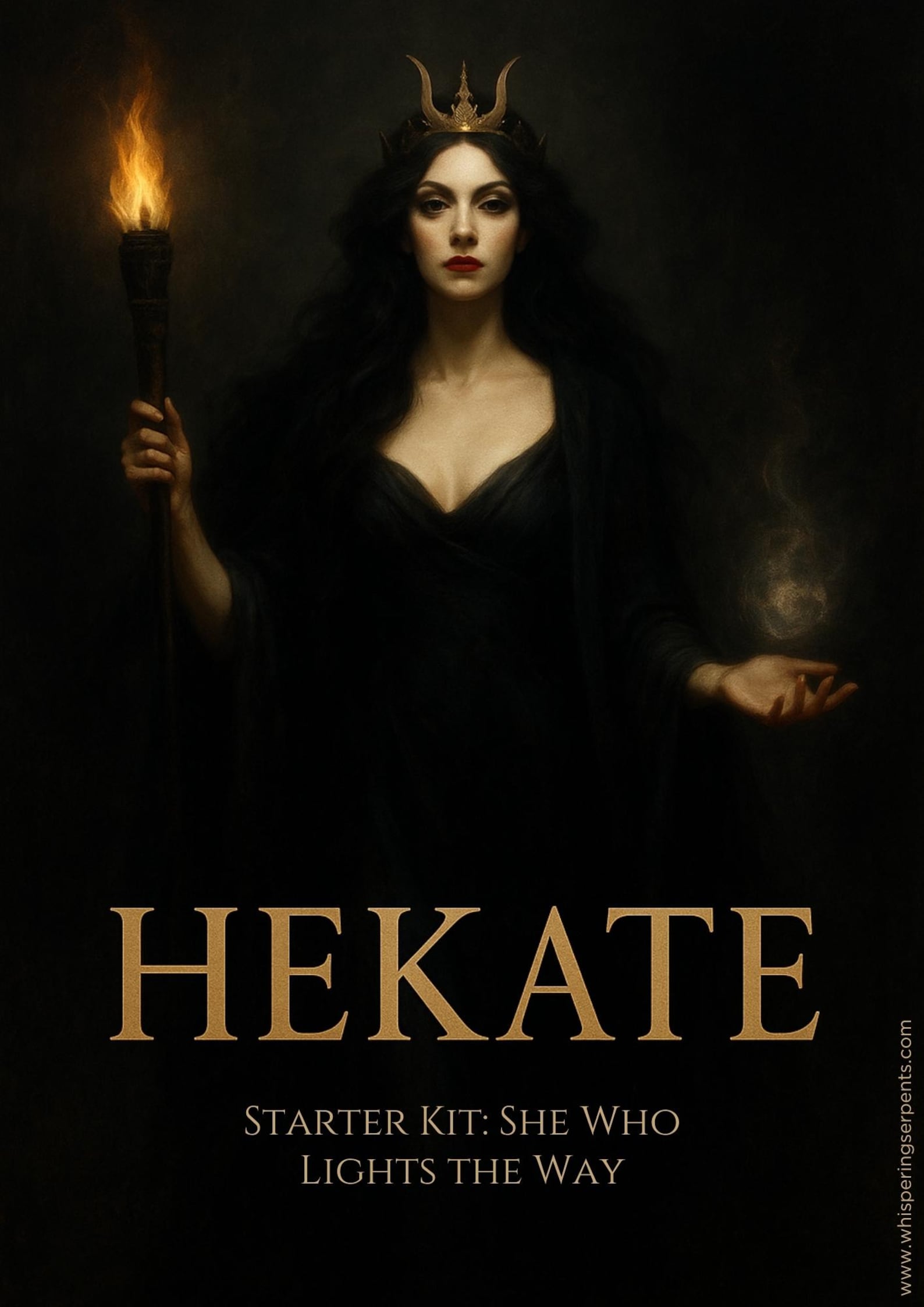
    In myth, Hecate the dark goddess of magic is the ultimate herbologist and mistress of potions (pharmakeia), and I think that the image of this Greek goddess aligns almost perfectly with Morticia’s dark, gothic elegance and maternal authority over the strange. Although, I must admit I see a little of the Morrigan in her too, particularly in the Celtic Goddess’ fondness for ravens and psychological warfare, which Morticia puts to good use in everyday encounters in very clever and subtle ways.

    Image taken from Etsy: https://www.etsy.com/listing/4338911032/hekate-goddess-guide-pagan-witchcraft

    Moreover, there are also many innuendos in the dialogues between her and Gomez, which indicate that a regime of physical punishments could be part of their shared sexual intimacy, which adds some edge and spice to her elegant and intimidating presence. The magic of it all is that it is done in such subtle ways that constantly leaves room for the imagination. We see that Gomez and Morticia are passionate and obsessed with each other but we never truly get to grasp what goes on when the lights are off, and seeing as they are in touch with their darker instincts, I guess the sky is the limit…or better said, the Underworld.

    I like that as a viewer, you are never dramatically hit on the head with how dark and edgy Morticia is, much like the recent goth girl trend popularized on Tiktok and catering to cheap sexual fantasies. No, with Morticia, there is an air of elegance thinly spun around her Persona which offer her a mysterious elusiveness, like a cellar spider making its nest nearby while you scroll on your laptop, completely unaware of this development in the corner of your room.

    Morticia never bends to social norms, expectations, or trend cycles. She is completely comfortable in her own skin and thrives in her unique environment without ever feeling the need to explain or justify herself to “normal” society. No matter how chaotic the world around her gets, Morticia remains serene, elegant, and collected. Chaos, hostility, or bizarre events do not break her inner peace—she simply glides through them with an enigmatic smile.

    One of my favourite episodes from the vintage series which ran on American television sets between 1964 to 1966 (fun fact: that was a Saturn in Pisces couple of years!) is the episode when Gomez and Morticia first meet, because it tells us so much about their personalities, before they became that unbreakable couple we all know and envy.

    Morticia Addams is far more than just a gothic style icon—she is a masterclass in psychological groundedness, radical self-acceptance, and unshakeable grace. Viewing Morticia as a mindset means adopting a lifestyle defined by composure, passion, and complete indifference to external judgment.

    Furthermore, Morticia’s relationships are anchored in devotion, mutual respect, and fierce loyalty. Where others see gloom, decay, or fear, Morticia sees romance, elegance, and beauty (like clipping the petals off roses to leave only the beautiful thorns). She doesn’t fear the dark or the taboo; she incorporates it gracefully into her life. Morticia never raises her voice, demands attention, or tries hard to impress. Her presence alone commands the room through stillness, slow movement, and calm confidence.

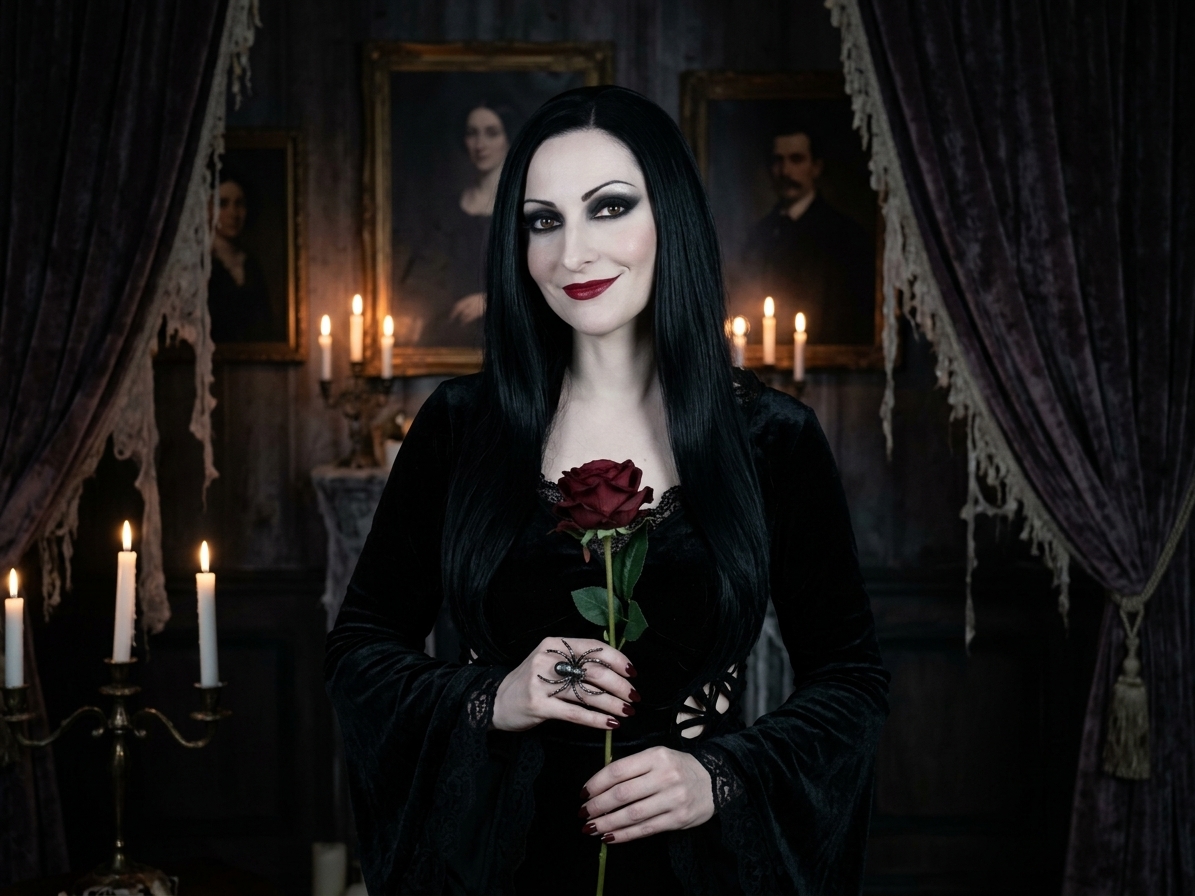
    And because imitation is the greatest form of flattery, I had some fun with Gemini and a relatively recent photo of myself , as I asked the AI to transform me into her. The outcome is kind of awesome, to the point that I am considering changing my daily make-up to look more like her. I basically adore the fact that my natural features (pale skin, long nose, arched eyebrows) fit so well with the striking visuals of all the women that embodied her so far, and believe me it took me years to accept and love my natural features.

    I think my favourite Morticia has to be Angelica Huston, not only because I look like her the most, but also for the flawless performance she gives in bringing our macabre darling to life: from the soft tone of her voice, to the passionate chemistry she displays with Pisces Sun Raul Julia, to the perfect delivery of sarcastic lines (I think that nothing tops “But, Debbie…pastels“).

    Personal photo enhanced with Gemini AI

    Who is your favourite Halloween icon? And let me know as well if you celebrate Halloween this year and what costume will you be wearing.

    With spooky and ooky love,

    Lexi

    P.S: Part of this post was written with the support of AI

  • The Better Angels of Our Nature

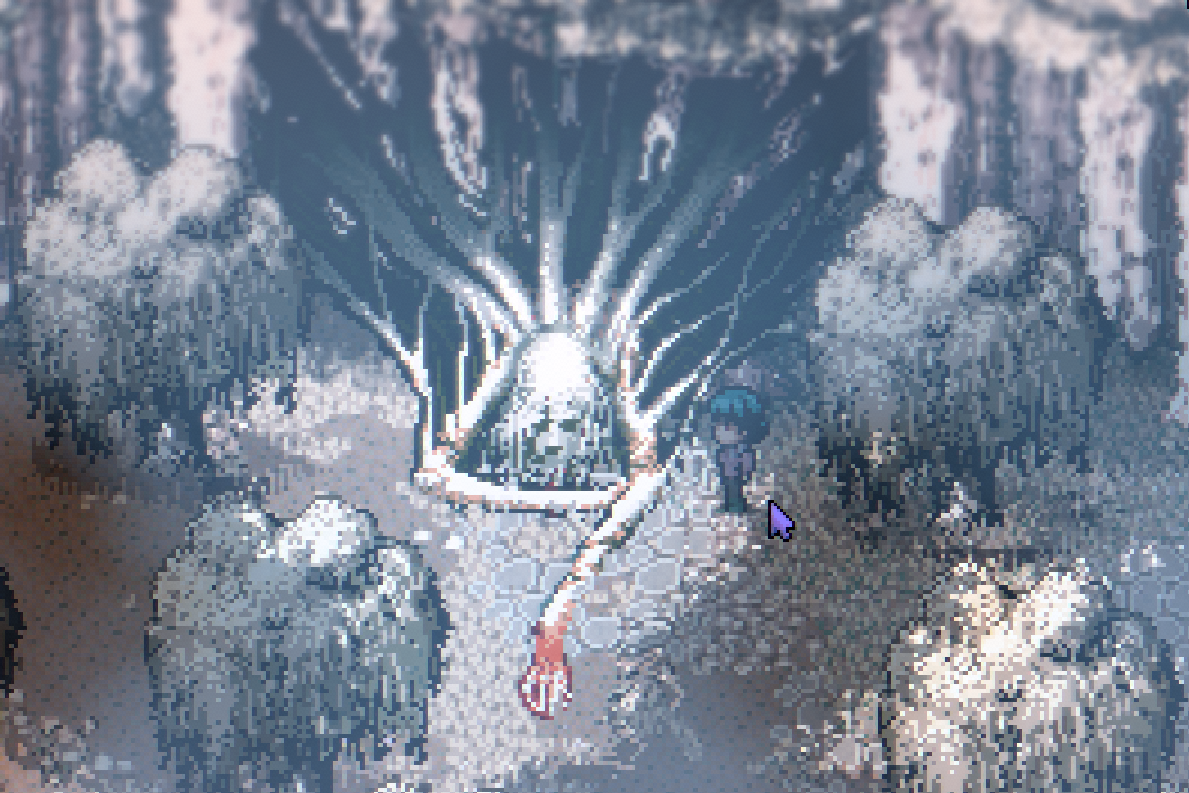
    Meeting a fallen angel in the Pale Clearing in the 2026 game “Welcome to Elderfield” by Chris Cote

    reconnecting to the source-ground of our feeling responses means reconnecting to the inner soul-child who has been cut off in a ‘psychic retreat’ and this constitutes an ensouling of the personality (…) in working through early trauma and its archetypal defenses we are in effect slowly freeing the – powers of the collective unconscious from the dark “fallen” roles as dismembering demons to play their larger life-enhancing role as the integrative life-restoring ‘better angels of our nature’” – p. 124, Kalsched, 2013

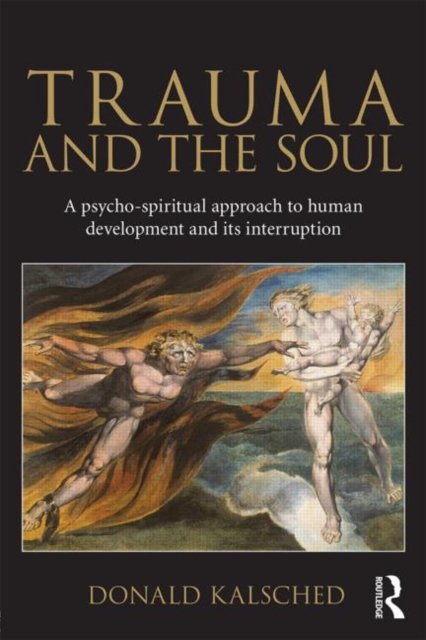
    I read last week Donald Kalsched’s second important book on trauma aptly titled “Trauma and the Soul: A psycho-spiritual approach to human development and its interruption” (2013), and like his first book it left a mark on me and I am now feeling slightly haunted by some of its content. This second book feels more dialectic than Kalsched’s previous work “The Inner World of Trauma” (1996) which I read back in April of this year during a difficult Easter in which I relapsed into depression, saved only by painting and retreating into Kalsched’s book. I think this second book expands on his core thesis that trauma generates a system of self-care which keeps us alive even during difficult life circumstances.

    Kalsched takes that notion and expands on it, showing how that very system can often backfire in keeping a traumatized person away from connecting to the world and other people. In this way, what seems like a protection mechanism can easily turn into a personal hell riddled with demons and monsters, further pushing the individual away from real living and connections. As such, the Inner Protector becomes the Inner Persecutor, keeping its willing ‘victim’ away from real love, intimacy and the comfort of human connections, but also keeping the pain, mistrust, lies and betrayal which normally exist in human relationships, safely away from the wounded person.

    The seductive dream world offers its inhabitant a uni-dimensional experience of life and it can be imagined as whispering: “I’ll keep you safe as long as you don’t connect to someone real and actually begin to live life again”. If the power dynamic is reversed, and through therapy the willing victim begins to recover and take control of their life, and healing is proceeding full-steam ahead, that’s when the self-care system can turn ‘evil’ and begin to trap the traumatized person into cycles of pain and self-sabotage.

    No one but Kalsched warned me about the powerful ‘latch on’ effect that the so-called cozy dream world has on the psyche, and how what can begin as a powerfully protective and safe inner paradise can suddenly turn dark and foreboding at the slightest hint of recovery and freedom. In relation to this system that wants to keep you all for itself, this song by the National popped up in my mind as I was writing these words:

    I liked how throughout the book, Kalsched contrasted his Jungian approach to trauma with Dante Alighieri’s “Inferno” (the first book in his Divine Comedy trilogy, and one which I randomly purchased when I was about 15 years old) and also with Antoine de Saint Exupery’s “The Little Prince”. I’m more of a fan of Dante’s than St Exupery’s work, because for whatever reason I just couldn’t resonate as a child with the story of a prince on the moon taking care of his rose…it felt embarrassing to my little girl’s mind, and it still does to this day. Nonetheless, Kalsched links the Devil in the final circle of Hell, described by Dante as Dis (the roman God of the underworld, also known as Pluto) with the mechanism that lies of the root of all trauma and that is dissociation. To bring things into perspective he also sees the little prince as a symbol of the lost innocence of a person’s soul which happens as a consequence of trauma in the process of dissociation.

    Trauma and especially relationship trauma can “scare” the soul away from the body, and through strategies of staying somehow alive, such as dissociation, life continues on, but with the loss of the soul of the wounded individual. Traumatized people are “weird” because they no longer live in reality, they cannot bear the pain and suffering of relating as their soul escaped into a different world, one in which angels can become demons. He analyses this world by comparing it to Dante’s Inferno, and explores the Little Prince as an attempt of the human soul to regain its lost innocence before the trauma happened, to keep a vital spark that made life worth living.

    For many traumatized people, the pain they experienced in reality becomes in their inner world, the image of an internal Persecutor/Protector, a jailer who offers them safety in exchange for a solitary existence. Initially, this system of self-care appears in the form of angels and protective ancestral influences, benevolent beings who keep a person alive and grants them some sort of meaning, solid enough to keep them living against the odds. But through repeated attempts to relate to others in reality and then being disappointed (and in some cases re-traumatized by others) a traumatized person’s system of self-care can gradually change shape and turn from an inner paradise into a living hell, populated with curses, monsters, punishments and pain. Sometimes this becomes the Devouring Anima for men & the Sadistic Animus for women, and often this is expressed on the outside, in the real world as acts of self-sabotage and mental health symptoms. The patient begins to wrestle with the angel.

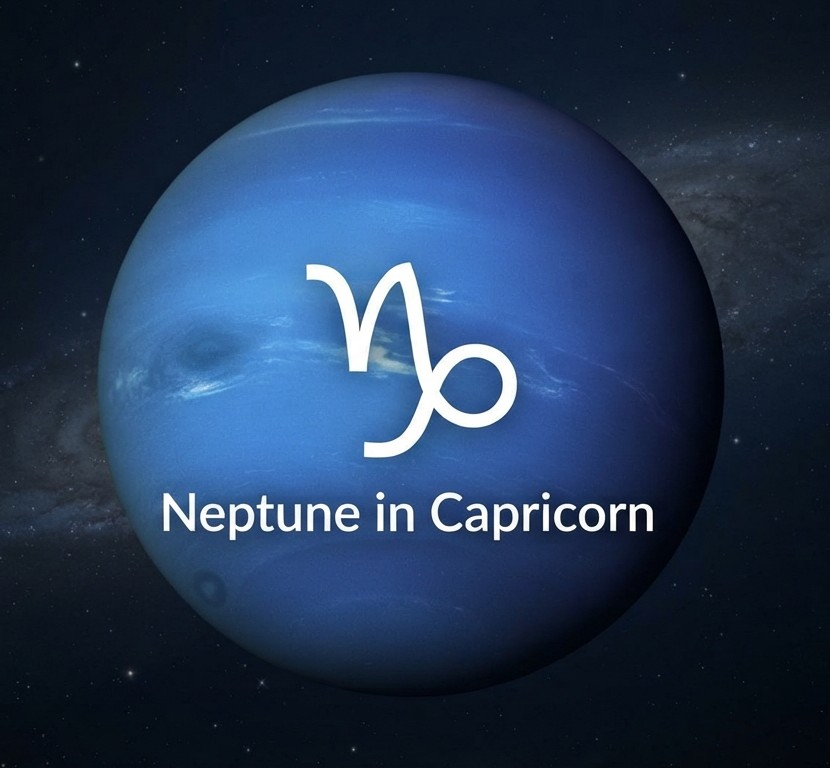
    Coming back to the larger perspective of Kalsched’s beautiful book I was really fascinated by the fact that he adopts a “psycho-spiritual approach”, which I am all about! Partly this may be the reason why I resonate so much with his writings. There is also an astrological reason why I am so drawn and uplifted by his work and that is because we are compatible signs, as I’m a Pisces Sun and Donald is a Capricorn Sun, so Water meets Earth in harmony, and on top of this his Sun touches upon my natal Neptune in Capricorn in the 3rd house. His work (the Sun) literally brings a spiritual approach (Neptune) to the working of my mind (3rd house).

    An image generated with Gemini of the planet Neptune and the sign of Capricorn

    I especially enjoyed his discussion of the two realms of existence: the real, material world and the spiritual, imaginary world in which people sometimes (and trauma survivors, often) escape into. Donald Kalsched believes a well-lived and healthy life is experienced in the middle part, on the bridge between these two worlds, where our bodies can become en-souled & feel alive enough to extract meaning from the spiritual and make things tangible in the practical. He offers the autobiography of Jung as an example of such a bridged life, where the analyst had to contain many times opposing forces within himself in order to expand his consciousness and reach “aha” moments of mental relief.

    Kalsched underlines that only by accepting human suffering can the soul of the traumatized person come back to the body, and make it feel alive again. In this process, the role of the therapist (linked in the book to the image of the poet Virgil who accompanies Dante on his journey through hell, limbo and heaven) bears a great responsibility. A receptive therapist may be in certain circumstances the last good link to reality or stable anchor that a traumatized patient may have with the real world. A therapist begins to assist the patient in this struggle with the angel, to experience the beauty of the liminal space again and not to escape into the imaginary world, or remain strictly in material reality. As Kalsched clarifies:

    “(…) it is a relationship that heals the trauma. But not just any relationship. The kind of relationship that makes a difference is the kind of transformative relationship actualized in the best contemporary psychotherapy (…). Such a relationship will have one eye open, looking outward and one eye closed, looking inward. Such a relationship will re-open both intersubjective & mytho-poetic space. It will “awaken the dreamer” in the patient. – p. 20,

    And also:

    there is a simple acceptance of the human condition, made possible by the previous long journey with a witnessing partner” – p. 125, Kalsched, 2013

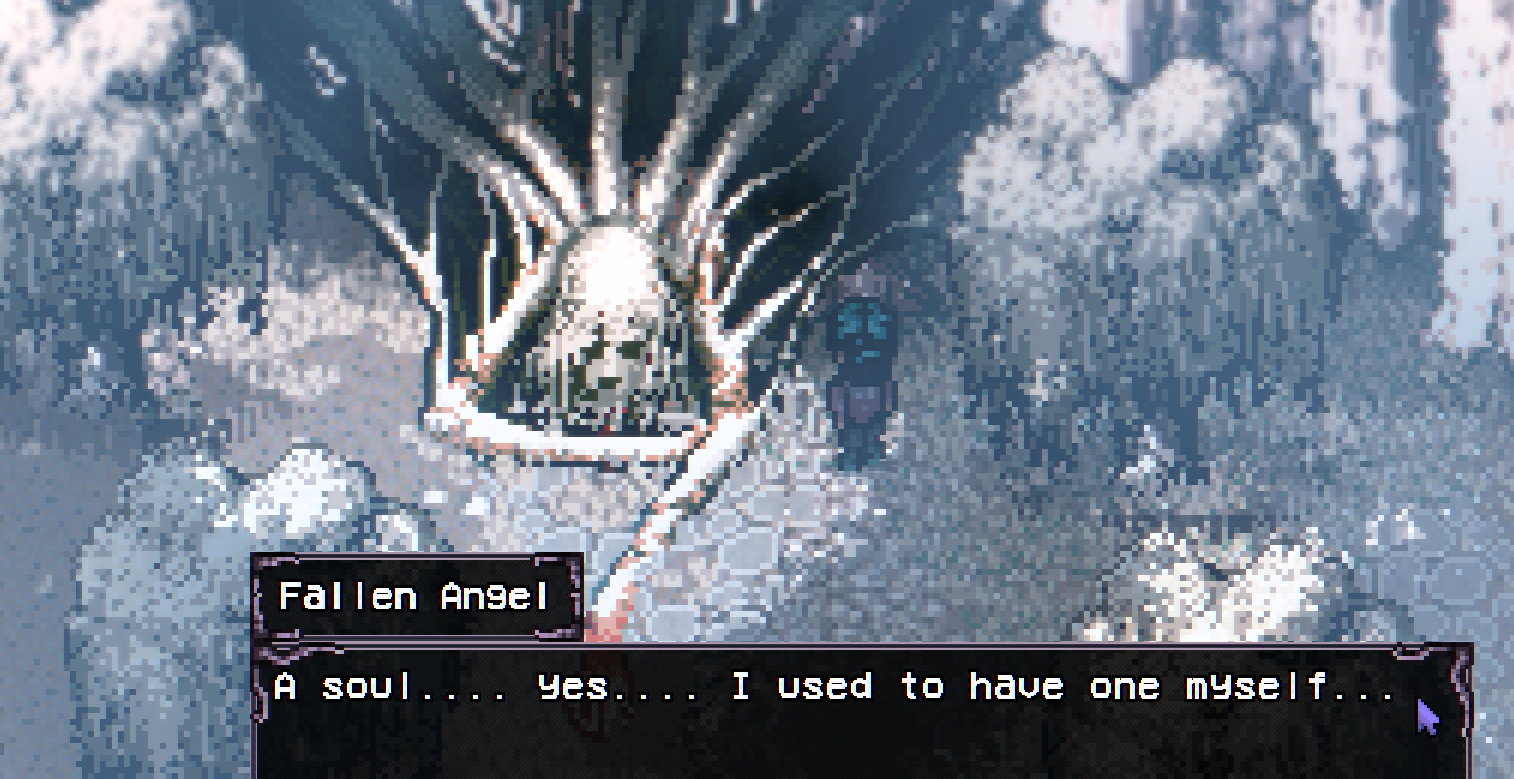
    While I was reading Kalsched’s book in the evening, I was also playing games in the morning (I like to face the day with a strong cup of coffee and some minutes of gaming to wake up my brain). And lately I can’t get enough of the Eldritch-inspired horror farming game Welcome to Elderfield created by Chris Cote and released on Steam at the beginning of this month. In the game, among many horrible things that your character has to go through and fight, there is one that stood out to me, probably because it stimulated my unconscious concerns. There is a fallen angel that you come across at some point in the creepy Old Woods. This Angel resides in the Pale Clearing, a mystical, white, puffy place that sits in sharp contract to the jagged, rough, cumbersome decor of the rest of the frightening woods. Even the amazing soundtrack of the game disintegrates and loops ominously when you meet the fallen angel. You talk to the creature and it tells you that it once had a soul (it felt alive) but due to having fallen (the traumatic event) it remained isolated (hasn’t seen a living soul in ages) and is now hungry (blocked psychic energy that needs to be expressed).

    Screen-capture from the game Welcome to Elderfield

    The Angel is ravenous and the only thing that may satiate its hunger is a living soul, either yours or the unfortunate one you may trap in one of your adventures. So, I caught such a living soul as a loot drop after I destroyed a Chest Mimic, and offered it to the angel to see what happens. Will my offer redeem the fallen creature? Well no, I was naive. The Angel devoured the soul in nano-seconds, accompanied by a very graphic description of the act. But then again, I am playing a horror game, so shit like this was naturally going to happen. What was I thinking? 🙂

    In the Bible, we are told that fallen angels are demons even if they present themselves by their names before the fall, they become as such mirages of evil. However, Tammy Montgomery in her book “The Angel in Annunciation and Synchronicity:Knowledge and Belief in Carl Jung” believes that the dark, fallen or somber angel can have curative properties at the same time as it delivers scary messages, as she explains:

    The presence of the somber angel, then, does not signify the presence of evil. Instead, it signals the conveyance of sobering information or insight into what once lay hidden (…) the process by which these dark contents come to light is often dreadful, painful, and inescapable. – p, 103, Montgomery, 2013

    So, the fallen angel can be seen as an aspect of the Shadow energy at work in my life, and this is what this moment in the game left such a strong impression on me. And hoards of fallen angels or a general interest in demons and demonology could be indicative of the Shadow aspect of our collective unconscious, asking for some sort of light and interpretative redemption, like the ‘fallen angels’ in our celebrity worship.

    Reading Kalsched’s text in parallel with playing this game jumpstarted my brain and something became illuminated. Trying to understand how the self-care system ‘s personal protection mechanism of keeping a victim trapped inside of themselves in a world filled with so-called angels, helped me see how emotionally attached I too had been in the past with this sugary, stereotypical understanding of divinity as purely “love and light”. In reality, the true presence of God exists in every rushed decision, act of self-sabotage or hellish day. As the zen master Thich Nhat Hanh said at some point ‘no mud, no lotus’. So beware the presence of paradise for it could contain more evil than obvious evil could actually engender.

    This is why I believe women are so drawn in our current landscape to romance-fantasy books in which they make love to monsters. Because a monster can show you who he really is from the beginning, while an evil prince charming first has to deceive you and then destroy you. And it is the deception that amplifies the trauma. But more on this in another post…

    I’m told by a quick Google search that the phrase “the better angels of our nature” was coined by Abraham Lincoln desperately trying to avoid a civil war and it was a call to solidarity and compassion during a period of division (The Dis in Dante’s Hell running amok in the nascent American collective unconscious). For Jung the main problem of the 20th century was the problem of the human soul, and the continuous pressure it has to withstand to remain whole and not be broken into two sides: the deeply materialistic one or the completely spiritual one. He believed mental health lies in the liminal space between the two, on the psychic bridge which would lead a person to moments of tension followed by moments of growth and then consciousness expansion.

    Jung had Saturn in Aquarius and because he was a visionary he could pre-empt the movements of the psyche under the guidance of the planet Uranus, the very same movements which are transforming society during this decade and the next under Pluto’s transit through innovative Aquarius.

    I was struck after finishing Kalsched’s book on the story of how the soul can be lost due to trauma by sinking into the depths of a profound depression or it can be invaded by anxiety, two very common mental health concerns during a time in which we have collectively lost our faith in a Higher Power. I don’t think there’s a coincidence that as God is no longer worshipped, individual psychic content is emerging as sheer madness out on the streets and on social media. My teacher, Mihaela Minulescu discusses how the human psyche has a symbolising function and a dia-bolising function: the first one helps brings thing into union, into a cohesive whole, while the latter severs, cuts, separates. It is the psychic equivalent of “the devil” within us all. The one who comes out when we choose to struggle with the angel, as we lose hope in life, ourselves and other people.

    But the unconscious is always concerned with our adaptation to the social world around us and it will continue to send us dreams, moods, symptoms, synchronicities and will pull us into people who can help us in our healing journey. The important thing is that we stay open to it all, so that life can work through us rather than leave us. Communicating and checking in with one’s soul is as vital as brushing teeth, and can be part of the everyday hygiene of life. By having this constant inner dialogue with our spiritual nature then maybe we can bring some magic into our surrounding reality or at least enjoy and notice the magic that already exists in plain sight.

    With universal love,

    Lexi

  • Shows about Shrinks

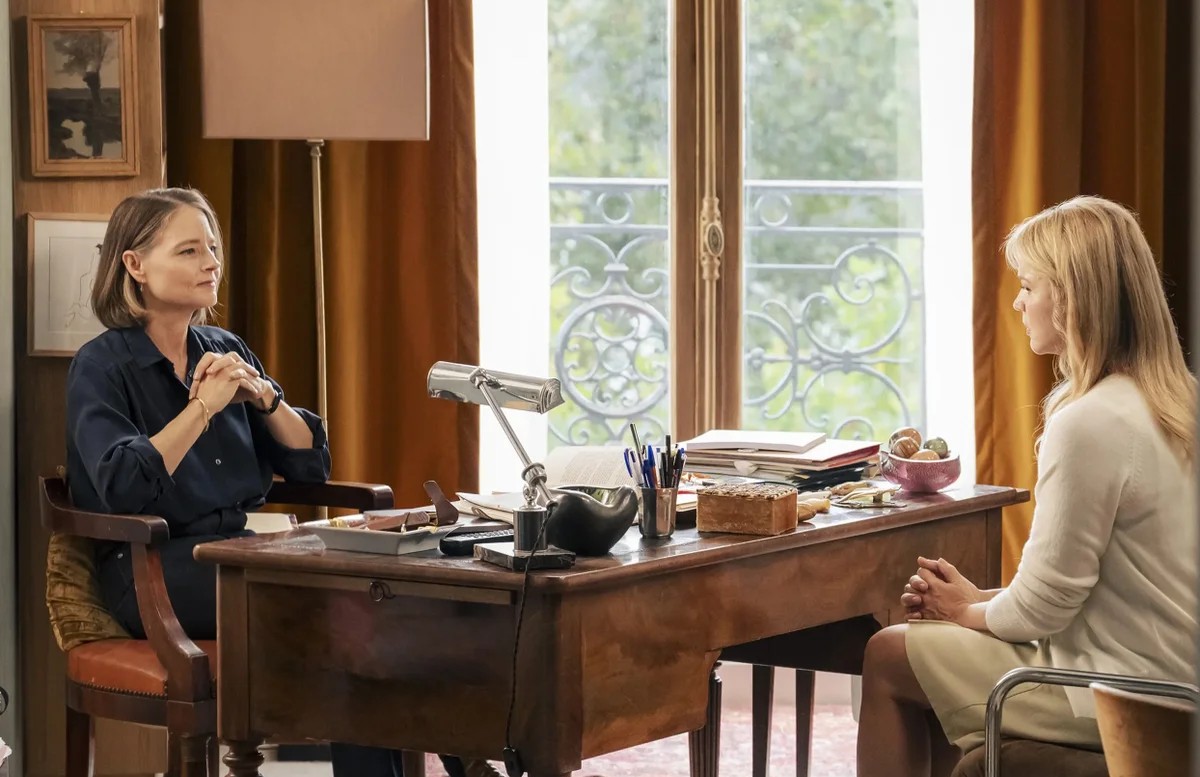
    Jodies Foster as psychotherapist Lilian Steiner in Vie Privee (A Private Life) 2025 : https://www.imdb.com/title/tt33852162/

    “Ours is a psychological age rather than an institutional one” – R. Moore & D. Gillette

    Last week, I had a semi-funny chat with my analyst about the desk and the carpet in her office. As I’m preparing to embody the role of a therapist (hopefully in the coming year), we talk in our sessions not only about my childhood and personal traumas but also about random aspects related to the daily responsibility of showing up to work as a good-enough therapist, a ‘healer of souls’ who has to hold the patient’s emotions and do so within acceptable boundaries.

    I see each day how much of what lives in the mind and inside of our selves has nothing to do with how others perceive us. I tell my analyst my impressions about how I felt intimidated by her large dark-wood desk or that once her carpet was removed from the office I felt like the rug was pulled from underneath my feet. She just laughs and says “My previous client said that he started to hear an echo in the room. But I just sent the carpet to dry cleaning and I do this every year with my rugs. I like to rotate them in my office”. One thing is the fabric of reality and another thing the many, creative and often self-sabotaging ways in which we can interpret it.

    As I’m simultaneously allowing myself to be both a vulnerable client and an increasingly knowledgeable apprentice, I like exposing myself to a wide array of sources to get familiar with a therapist’s work and the various cases I may encounter. I began reading the “The mummy at the dinning room table”, a collection of short vignettes about the most memorable cases of celebrated therapists in the field. And I also finished Elyn R. Saks’ personal account of a brilliant woman living with schizophrenia in “The Center Cannot Hold: My Journey Through Madness”. And when I want to catch a break I watch some more shows about shrinks, because when I get in the zone, it’s hard for me to stop – I need to see the theme all the way through, and I blame this behavior on the Mercury trine Pluto aspect in my natal chart (which is also to blame for my attraction to the field of psychology).

    I began this year, actually in the first week of January by going to the cinema through a thick layer of snow to watch Jodie Foster perform (in impeccable French!) the role of a therapist who spirals in chaotic ways once one of her clients commits suicide. It’s a very odd and unique movie that kept me hooked, primarily because it’s a movie led by a woman therapist (and sadly, we don’t have many of those around) and it is focused on her forgetting to practice probably the most important thing in her line of work, which is to listen (not just non-judgmentally, but to listen to people overall).

    Caught up in her unresolved personal affairs and emotionally blocked by her client’s shocking demise, she begins to live a little outside of her clinical setting and finds her heart again. The final scene in the movie made me burst into tears as it was so impactful after the zaniness of the whole movie, which combines drama with savage laughter. I also just love Jodie Foster, who like my own analyst at the moment, is a Scorpio Sun.

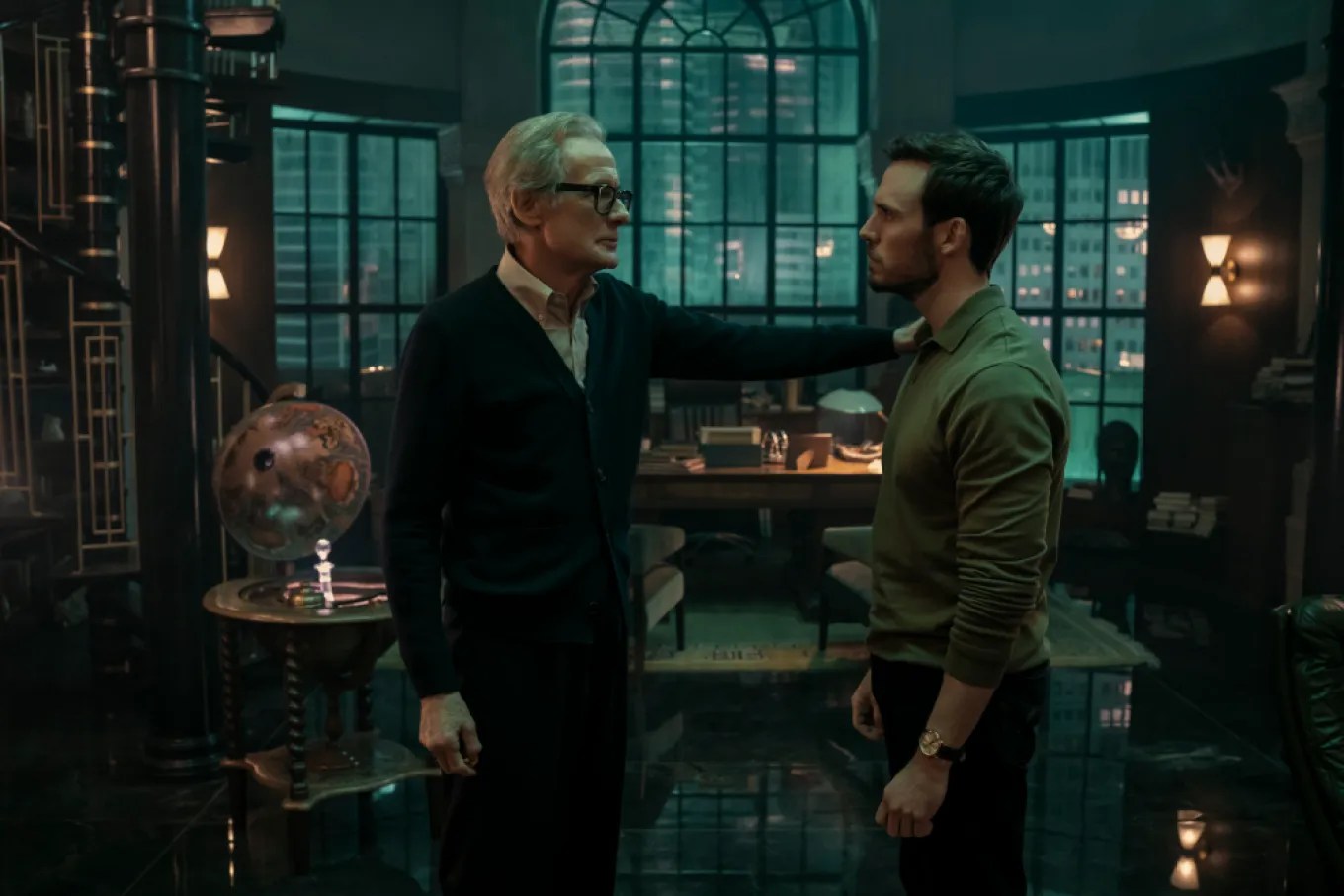
    Sam Claflin as Dr. Joel Lazarus alongside his father played by Bill Nighy in the mini-series Lazarus (2025): https://www.imdb.com/title/tt31186865/

    Moving on to the second show I watched, which was Lazarus, about a distraught psychiatrist who communicates with ghosts and finds out some disturbing things about his own father’s legacy. Although, I have a bit of a crush on Sam and really enjoyed watching him unravel on screen, I was in general slightly put off by this show. It was overly dramatic in the directorial style and the “too cool for school” editing, so that really made me wince a couple of times. What kept me watching was Sam Claflin, who is easy on the eye and damn good at switching between emotions. Of course, I wouldn’t expect anything else from a Sun in Cancer with a Pisces Moon, so yes, I was happy to tune in each night and see a talented actor go over many professional boundaries in this desperate pursuit to understand why his patients are dying and why his father keeps haunting him.

    Just for the record, I don’t know if I should write this or not, because it seems pretty obvious, but what therapists perform in movies has little to do with how therapy actually takes place in reality. Obviously, you do have a similar setting, usually a face-to-face conversation between someone who listens and offers advice and someone else who struggles and seeks help, but aside from that the similarities between on-screen therapy and real-life therapy end. It’s also good to keep in mind that there are so many different modalities of therapy you can practice or choose from, and one of my favorite games to play when I watch a show with shrinks is to figure out: a) “What modality is the therapist trained in?” and b) “Will this show confound psychiatry with psychotherapy again?” Believe it or not, they are different things.

    A psychiatrist is more of a medical doctor who can prescribe medications and is usually having relatively surface-level conversations with you, about your medication intake, behaviors, diet and overall life-style. While a psychotherapist offers exclusively verbal support and cannot prescribe pills to help you regulate your system, but may use fun techniques to help you remember, to help you dream or to help you confront aspects of yourself that may heal you. I’m using ‘may’ because therapeutic work can be as frustrating in its lack of outcomes as any other profession, and the first things you are learning as a student of psychotherapy is that you should prepare to fail, to lose clients and to not know it all. Being humble helps a lot in this profession, in which power issues can be disproportionate and problematic.

    I also really enjoyed the art deco, gloomy set design in Lazarus, displayed by the lavish psychiatrist office of Lazarus’ father, which to be honest, who can afford these days, especially on an NHS budget, but let’s roll with movie-logics and pretend that the gorgeous vintage office makes sense in today’s economy, although it fits better in a Spider Noir setting. Speaking of which, I wish that there would be more shows with shrinks in black and white or at least sepia undertones, like flicking through the pages of an old, vintage photo album.

    From a personal pov, by watching Sam play Lazarus, I realized as well that I am uncomfortably drawn towards intelligent yet emotionally vulnerable men, to the extent that I had a whole session with my analyst about where this bizarre attraction comes from. So I guess I can thank this show and Sam’s charisma for helping me understand a part of myself that I was weirdly not aware of and may benefit by keeping it in check, as I assume a lot of my future clients would fit this profile.

    Jason Segel as Jimmy and Harrison Ford as his colleague, Paul in the series ‘Shrinking’ (2023-): https://www.imdb.com/title/tt15677150/

    And speaking of not being aware of a lot of patterns and blatantly crossing professional boundaries in your psychotherapeutic work, I watched the first two seasons of “Shrinking” and I have to admit I’m not sure whether I like this show or not. It’s irreverent in its depiction of cognitive behavioral therapists and their messy personal lives and you get that the show is trying to humanize them and to break through the intimidatingly impenetrable facade that most therapists have spent years creating (or hiding behind). And I like that, but in other parts the show can be kind of rude and insensitive.

    Much like Lazarus, it just feels dramatic for the sake of provoking outrageous emotional reactions from its public. For example, I really don’t know if it was necessary to have Harrison Ford (a Cancer Sun) drive a fast sports car in the show’s pilot episode just to prove his virility and lust for life in spite of being diagnosed with Parkinson’s moments before. I mean, it’s ok to be vulnerable, weak and old, America. Some scenes felt too on the nose and this bothered me about this show.

    The most controversial character in the series is Jimmy played by Jason Segel (a Capricorn Sun), who even has a whole episode dedicated to his unusual habit of “Jimmying” or going far too deep into his patients’ lives and adopting some shock-therapy practices to help them in their healing process (as a sidenote, one of his clients, a veteran with anger-issues, lives in his pool house! which is a gross ethical violation of the client-therapist alliance). On top of this, the screenwriters struggle so much to make Jimmy seem like a flawed man, a dad who is struggling as a single parent and a therapist looking for his father’s unconscious approval (as we see in his relationship to Paul), that he ends up becoming a sketch of a person, almost a poster man for the image of the ‘modern-day quirky and messed up White therapist with a good heart’. Just for the record, it’s not advisable nor commendable to act in such a way as a professional and actually most therapists put in years of hard work and analysis in order to tame the impulses that Jimmy so generously lavishes in.

    In conclusion, as an apprentice Jungian analyst I watched three shows with “shrinks” and without a doubt, A Private Life was my favorite, the other two being “meah” and rather funny experiments into depicting what psychiatrists and psychotherapists actually do.

    With cosmic compassion,

    Lexi

  • A Playlist to Surrender to a Dark Romance

    The Kiss by Antonio Ambrogio Alciati (1878-1929) – Pastel on paper

    As Mars enters Taurus and begins its return in my house of love and Other people (the 7th astrological house), I still feel under the spell of one of the most beautiful academic books I’ve read this year. It’s called “On the Way to the Wedding: Transforming the Love Relationship” by Linda Schierse-Leonard, a book initially published in 1987, which is as old as I am and so gently powerful.

    This book alongside with “The Inner World of Trauma: Archetypal Defenses of the Personal Spirit” by Donald Kalsched have to be the most amazing texts on love, relationships, healing and Jungian Analysis that I had the pleasure to discover this year.

    These books do something to you…something begins to move in your mind once you’ve finished reading them and dreams begin to proliferate. A wall in your heart begins to chip, as you start to see things around you differently. Even if you are the most sarcastic person on the planet, you begin to yearn for love. But if you are wounded in love, you may fall for someone who risks re-traumatizing you.

    Part of the fun of reading Linda’s book is that she titles the chapters of her book as “Prince Charming and the Special Princess”, “The Bewitchment” or “The Divine Wedding”, and my favourite “The Demon Lover”, as she breaks down fairy-tales and applies them to real cases from her patients and their mental health struggles.

    There’s magic in the struggle.

    Quote from page 77 in Linda’s book “On the Way to the Wedding”

    Inspired by this book and the seductively dangerous image of the Demon lover, I created a playlist, to engage in a fun and sexy way with this Archetype. I guess this playlist can also see you through a bad romance or two, until your self-love kicks in and you begin to feel worthy of better:

    The Cure – The Last Day of Summer


    Twilight Sad – It never was the same again

    Glass Animals – Black Mambo


    Idles – Beachland Ballroom (p.2)


    Daughter – Flaws

    Warpaint – Love is to die


    Bjork – Hidden Place


    James Blake – To the last


    Sweatcult – Pray

    Austra – Beyond a Mortal


    Smashing Pumpkins – Ava Adore HQ


    Jonathan Bree – Until We’re Done


    Ghostpoet – Sorry My Love, It’s You Not Me


    Cigarettes After Sex – Twizzler


    Editors – Two Hearted Spider

    Sea Power – Want to be free

    I initially created this playlist so I can listen to it while I’m preparing to read “Carmilla” by Sheridan Le Fanu, considered by many to be the first novel on vampires that started the trend. So I thought I’d share it. Hope this emotional sound-landscape adds a darker and interesting sheen to your life, whethever you may find yourself in the world.

    With universal love,

    Lexi

  • The Other Parents

    John Everet Millais “Christ in the House of his Parents” (1849-1850) https://en.wikipedia.org/wiki/Christ_in_the_House_of_His_Parents

    I’ve spent most of today reading Carl Jung’s book “The Archetypes of the Collective Unconscious” and among the wealth of ideas presented inside this little book, one stood out to me the most. And this is Jung’s description of the double parenting concept. He describes it as the condition of the child being born firstly out of his biological parents and then secondly, in a spiritual way, when the child gets baptized and receives a godmother and a godfather. Here is how Jung describes this process from a historical lens as well:

    This is the motif of the dual mother an archetype to be found in many variants in the field of mythology and comparative religion and forming the basis of numerous “representations collectives.” I might mention, for instance, the motif of the dual descent that is, descent from human and divine parents, as in the case of Heracles, who received immortality through being unwittingly adopted by Hera. (…) It is an idea that underlies all rebirth mysteries, Christianity included. Christ himself is “twiceborn”: through his baptism in the Jordan he was regenerated and reborn from water and spirit.

    Consequently, in the Roman liturgy the font is designated the “uterus ecclesiae”(…) Thanks to this motif of the dual birth, children today, instead of having good and evil fairies who magically “adopt” them at birth with blessings or curses, are given sponsors—a “godfather” and a “godmother.”

    The idea of a second birth is found at all times and in all places. In the earliest beginnings of medicine it was a magical means of healing; in many religions it is the central mystical experience; it is the key idea in medieval, occult philosophy, and, last but not least, it is an infantile fantasy occurring in numberless children, large and small, who believe that their parents are not their real parents but merely foster-parents to whom they were handed over. (p.45)

    It’s interesting that just a couple of days away from the planet of higher awareness (Uranus) preparing to move from stable Taurus and into contradictory Gemini, I am entertaining Jung’s thoughts on ‘dual descent’, ‘the dual mother’, ‘dual birth’, being ‘twice born’ and receiving spiritual sponsors. I guess this shows me once again how Jung’s idea of synchonicity works and how beautifully such timed experiences play out in our lives. In some way, this makes me think how astrology is a just gigantic clock measuring the timing of the significant events in our lives, as predestined-phases meet with our human, free will.

    But I digress. The godparents – which by their naming already contain a symbol linking them to “god” figures – become the child’s spiritual protectors through the rituals put in place by the church. In older times, the godparents were important since they would’ve been the ones in charge of raising the child should something happen to the child’s family (in medieval Europe death was a flu away and people took precautions as best as they could).

    Now, this is an interesting concept, because I remember that when I was born I also had a couple of my dad’s friends who became my godmother and godfather. Sadly, they remained in my life only in the form of black and white pictures, as they lost contact with my family and I never heard of them (although apparently we live in the same city). I was even given a middle name (Georgiana) to fit with their names (which fittingly were George and Georgeta) and I guess, to have an additional layer of semantic protection, not only so-called spiritual caretaking.

    On top of this, my middle name is under the blessing of Saint George, the one who killed the infamous dragon. My parents gave me two very powerful names, under the protection of two rather tough Saints (Alexander and George) and then they struggled all their lives to crush my will and get me to blindly obey them. This was paradox all onto its Self, but at the same time a deeply strength-building life experience, marked in the profound energies inherent in my birth-chart. And even through the power of them being poor role models for successful parenting and loving, they nonetheless helped me fulfill my path in life.

    It is perhaps a fact that with time and under a political regime that supressed religion and spirituality as much as it could (communism), people lost the soulful meaning of this ‘dual parents’ blessing. The vestiges of that crushed faith were further dilutted in the current capitalist, materialistic and spiritual-dead landscape. But aside from the religious ritual, to have godparents was a blessing, and maybe it’s a practice worth keeping, as a community healing practice or life-enhancing survival strategy? Imagine if nowdays we would have continued this gift of the godparents, how much of the current mental health problems would be assuaged by having another set of parents to turn to when your biological ones would leave you out in the cold. Of course, that is presuming that your godparents are relatively good-enough and functioning human beings themselves.

    On a deeper level, it could be that we are forced as a collective by the cynical circumstances of the Age of Information to turn to the mythical and actually spiritual representations of the Divine parents (Mother Earth and Father Sky, or Mother Mary and Jesus Christ etc.) in the absence of godparents who can guide us and biological parents who can support us in our times of need.

    Jung adds to this line of thought:

    Because people have always feared that the connection with the instinctive, archetypal stage of consciousness might get lost in the course of life, the custom has long since been adopted of giving the new-born child, in addition to his bodily parents, two godparents, a “godfather” and a “godmother,” who are supposed to be responsible for the spiritual welfare of their godchild. They represent the pair of gods who appear at its birth, thus illustrating the “dual birth” motif. (p. 68)

    My thoughts on this topic are just forming and writing this short piece may feel fractured for time being, but I was reading these words and something fired up inside of me. The flame of inspiration perhaps, courtesy of Saturn and Neptune in Aries. As a mother-hungry child myself, I grew up with an image of distorted femininity. In addition, the parent I loved and felt loved by, my father was struggling with his own demons (co-dependency, porn and alcohol addiction and deap-seated emotional repression from buried childhood trauma). So I’m finding out that my Animus isn’t doing all that great either.

    In summary, I grew up not feeling deeply understood, loved and held by either parent. My physical and material needs were somehow met but emotionally I was blocked, stunted and even punished for being loving, needy and exuberant. As I matured, I became a woman afraid of vulnerability, expressing my feelings and saying the truth and I began embodying the role of the Amazon, obsessed with science and academic pursuits, but starved emotionally in my intimate life. In 2020, the pandemic offered me the chance to sit still and go within, and I began the work of healing my femininity, a work I am still immersed in, as self-acceptance ebbs and flows.

    My parents were young when they had me so we all grew up together, and I do not judge them anymore for the mistakes they have made with me. They did the best they could. Last year I lost them both: my father to cancer, against my will, and my mother from a conscious decision to keep her away from my life after another harsh betrayal. I began therapy and my formal training as Jungian analyst in the midst of the second darkest depression of my life and now I can begin to see the light and rebuild my confidence.

    Reading texts like Jung’s thinking around the archetypes helps. Talking about the past and reframing it helps. Naming the painful feelings and being brave enough to sit with them also helps. In the last year, what kept me getting out of bed and away from a pattern of dealing with tough emotions by imbibing alcohol that has plagued generations of my ancestors, was the love and light I have constantly felt from a Divine presence. Jung would’ve said this is the Self speaking back to me, guiding me through life, as the Archetypes of Father Sky and Mother Earth were constellating in my unconscious. And indeed, I had visions of sleeping in the palm of a tender Giant; I had dreams of a Lady in White washing my hair and holding me in her arms in pure water.

    The reason why I’m sharing this is to put it across that much like Jung’s intuition in the quotes above, you need to remember that you were born twice in this life. Even if you a) weren’t baptized, or b) you were but you had godparents that are non-existent, or c) you were baptized but never received godparents, this is just a ritual as a formality on the material plane. The true meaning behind the action of receiving your spiritual sponsors at birth, is to continue to nurture a spiritual life, from which you can gain your deepest strength when the material aspects of life and the people in it, will test you.

    Because on the spiritual level, as your consciousness was forming and the child you once were was growing, you were also imbued with archetypal images from your surrounding environment. It is up to you now to consciously activate them and work with them. Whether you are of faith or not, these images live inside of you because as Jung says “we are born into the collective unconscious”, with its wealth of primitive instincts and ancestral images.

    This is just a kind reminder that if you are suffering from parental abandon, if your biological parents are long gone from this mortal coil, or if they are still alive but you put up walls to defend against their vitriol, you will always have your Divine parents watching over you. Even now, as you read these words, your God-mother and God-father (emphasis on “God” here) are helping you receive these messages and find some sort of comfort. I hope that you will allow them to guide you as you continue on.

    With universal light,

    Lexi

  • Kindred Spirits

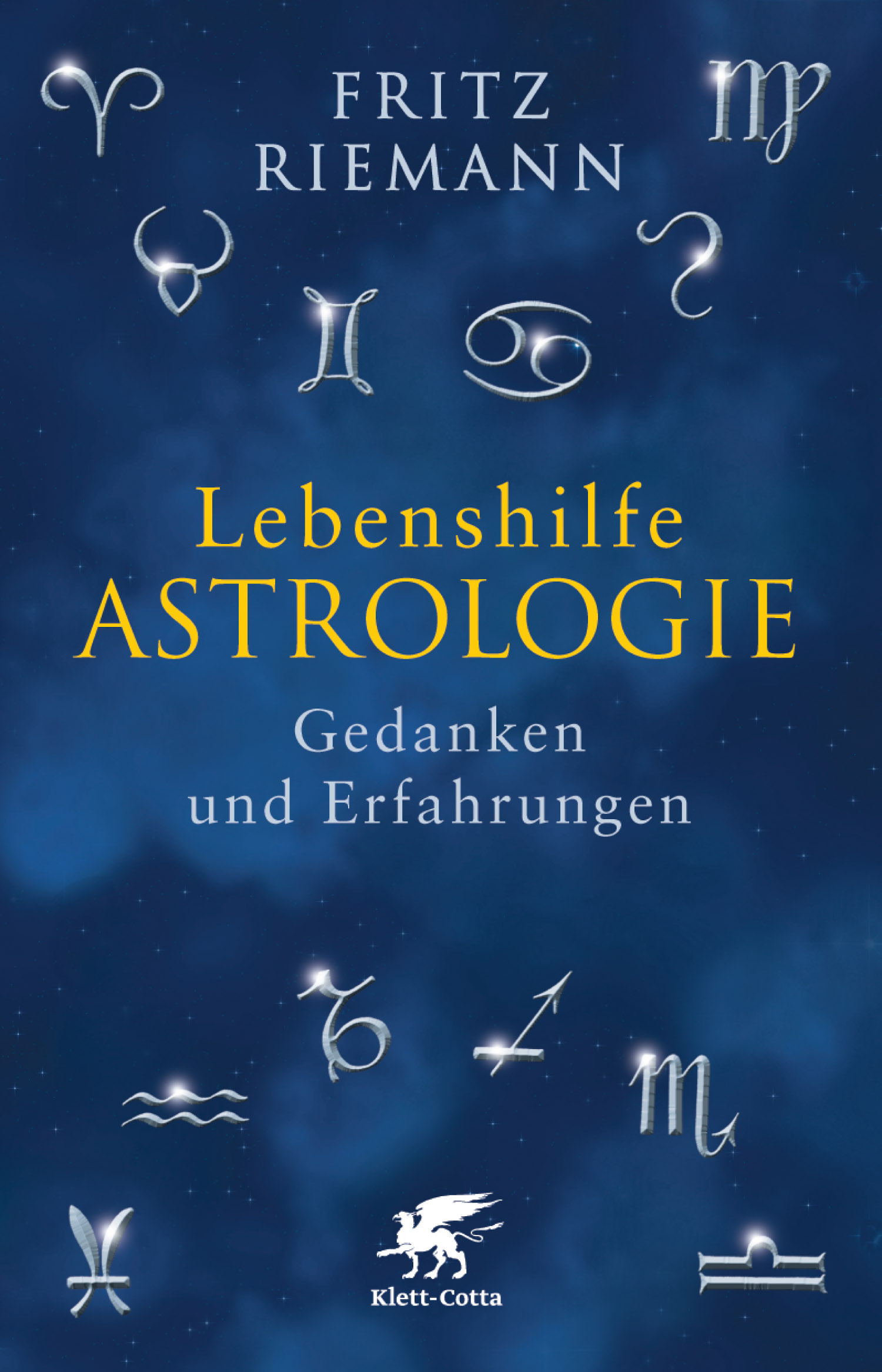
    I think I have found my spiritual father. His name is Fritz Riemann and I’ve been reading his work in the past week, at my analyst’s recommendation. I began first with his book which in English has been rather poorly translated as “Anxiety: Using Depth Psychology to Find a Balance in Your Life” (in its original: “Grundformen der Angst“), and then I realised that he was also the author of another book I had on my list, the beautifully titled “Astrology and Psychotherapy” (or “Lebenshilfe Astrologie“) a book which I see as the manual to my future profession.

    German cover to Fritz Riemann’s book “Astrology and Psychotherapy”, which you can access here: https://www.klett-cotta.de/produkt/fritz-riemann-lebenshilfe-astrologie-9783608946574-t-4101

    I’m just two weeks away from turning 39 years old, an age which is usually marked by something called the mid-life crisis. This is described as a pivotal period in a person’s life (usually spanning from the 37th year of life until the 41st) in which the foundations in a person’s life are revised and new decisions for the future have to be made. It’s like a pitstop in the middle of a person’s life in which past actions are coming up for scrutiny in order to find the answer to the burning question “How do I move forward in life?”.

    It’s called a “crisis” because something breaks down (usually a career path or a significant relationship, a way of life) and this catapults the individual into a pressure chamber of a mindspace, in which solutions need to be found with urgency.

    Carl Jung wrote about this period in a positive light. He saw this breakdown as a special indication that a person was getting closer to living out the truth of their identity or in his terms, the crisis was an opportunity to finally ‘individuate’. What made the crisis so intense was the extent to which someone had lied to themselves so far in their lives, and build a life on shaky and borrowed values, rather than on their personal intuition or on what mattered most to their individuality. In his words:

    The nearer we approach to the middle of life, and the better we have succeeded in entrenching ourselves in our personal attitudes and social positions, the more it appears as if we had discovered the right course and the right ideals and principles of behaviour. For this reason, we suppose them to be eternally valid, and make a virtue of unchangeably clinging to them. We overlook the essential fact that the social goal is attained only at the cost of a diminution of personality. Many—far too many aspects of life which should also have been experienced lie in the lumber-room among dusty memories; but sometimes, too, they are glowing coals under grey ashes. – C. Jung, The Collected Works, p. 395

    Astrologers also wrote about this period as being one marked by the multiple aspects that transiting Saturn would be making to the natal Saturn and Uranus placements in an individual’s chart, precipitating painful and unexpected changes that have long-lasting consequences. The most notable of which is Erin Sullivan in her book “The Astrology of Midlife and Aging”. Sullivan describes the mid-life crisis as:

    “Between the ages of thirty-seven and forty-one, in synchrony with the transit of the planet Uranus’ opposition to its place in the horoscope, something mysterious takes place within the psyche. Further, Dante says: “I cannot clearly say how I had entered the wood; I was so full of sleep just at the point where I abandoned the true path” (II 10-13) The ‘sleep’ with which we are full at the meeting at the crossroads is really the unconscious life that we have within and that is still unlived. Jung said that in this phase of life one is living the “unlived life”, assuming correctly that midlife does not begin a time of rapid decay, loss of libido, and inevitable death but rather in a time in which one might recollect one’s life and, from that recollection, build upon a profound understanding and conscious action toward the next phase of adulthood.” Sullivan, The Astrology of Midlife and Aging, p. 4

    Similarly to what Jung and Sullivan have described in their books, I also find myself needing to change my profession at this turning point in my life, as I am no longer able to make a living out of just being an astrologer and tarot reader. I am lucky that I am able to have the interior and exterior resources to be able to undergo this transition with a relative amount of meaning. After I was hit with the transit of Saturn conjunct my natal Mercury and Sun in the last 3 years, I witnessed the gradual loss of a lot of the things and people which used to anchor me in place. I’ve also felt blocked in my development, both creatively and emotionally and frustrated with life.

    This produced a crisis of meaning inside of myself and aware that Saturn rules over time and old age, I sought the wisdom of those older than me. In a random way – and possibly influenced by this year’s transit of nostalgic Jupiter in Cancer – I was reminded of an old dream of mine, that of completing my psychotherapeutic training. So after my father’s death I signed up for a professional training to become a Jungian analyst. And I’m happy to say that as lost as I was a couple of years ago, I am now meaningfully placed exactly where I need to be, since my current training offers me a sense of purpose and meaning, which I was robbed off in the past.

    However, there are still plenty of difficulties to overcome, most of which have to do with the reshaping of my very soul. I am overwhelmed at the moment by moods, fears and bouts of low energy, which I am processing each week with the help of my supervising analyst, by doing dream analysis and art therapy. This is where depth psychology and the work of many Jungian analysts come in handy, as I don’t believe I would’ve been able to start the process of “mining” through my memories and rearranging my inside, without their help.

    So here I am, in my second semester of professional training reading the works of Fritz Riemann and Marion Woodman, my substitute spiritual mother and father. While the German author is helping me stitch together my previous experience as an astrologer and put it in relation to my current experience of being a trainee psychotherapist, Marion Woodman is my wise maternal guide, helping me understand the deeper layers of my psyche and especially my relation to my own Shadow, and what lies beneath it: the Animus and the Death Mother Archetype, two figures who have been haunting me for a while.

    After, watching the documentary “The Way of the Dream” and having read her interview with Daniella Sieff titled “Confronting the Death Mother: An Interview with Marion Woodman“, I was curious to find out more about Marion, much like I wanted to discover more about Fritz and his attraction to astrology. I kind of feel like they are kindred spirits to me, or at least ancient members of my soul family. So naturally I pulled up their birth-charts.

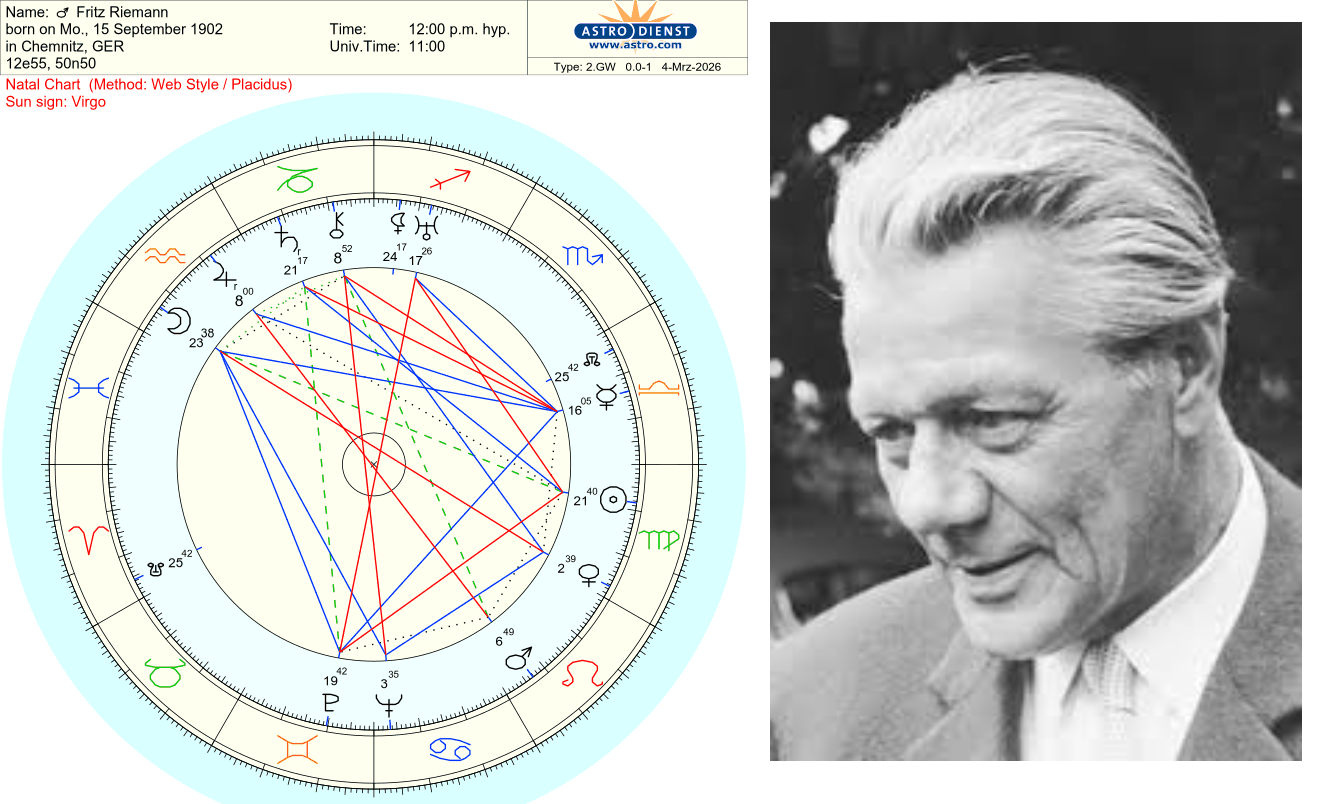
    Birth-chart of German author and psychotherapist, Fritz Riemann. Created with https://www.astro.com/index_e.htm

    Fritz was born a Sun in Virgo (loosely conjunct Venus), with a Moon in Aquarius (loosely conjunct Jupiter). He has a natal Saturn in Capricorn conjunct Chiron (the Wounded Healer Archetype) and a Uranus in Sagittarius conjunct Lilith (the Wild Feminine Archetype). Remarkably he is a member of the Pluto in Gemini generation and he has a natal Neptune in fellow water sign, Cancer. His Mars is in proud Leo and his Mercury is conjunct his North Node, both in the sign of Libra.

    His comfort zone, is marked by Aries, as his South Node is in Aries. Unfortunately, I have no idea in which astrological houses these planets are falling because I am lacking information on his birth time, and hence there is no Ascendant. But he seemed like a charismatic and optimistic fellow (which is rare for Virgo men to be honest). So I am wondering if perhaps his Ascendant was in Leo, which would’ve placed his Mars conjunct it too?

    In terms of comparing our charts and finding out why I feel he is one of my kindred spirits, I can see that he has his nodal placement opposite to mine as I was born with a SN in Libra/NN in Aries, and that his Moon and Jupiter fall around my Venus in Aquarius (so I fall in love with the ideas that he cared about, and with Aquarius energy these ideas are indeed audacious and astrological).

    Moreover, his Uranus in Sagittarius is conjunct my natal Saturn in the same sign (which makes him the perfect, wacky mentor for me) and his Pluto in Gemini sits in a tight conjunction to my natal Chiron in Gemini in the 8th house, while his Mars in Leo sits on top of my Midheaven. I interpret these two final aspects as being motivating and healing to me, even from beyond his grave. No wonder, I see his work as that of my spiritual father figure.

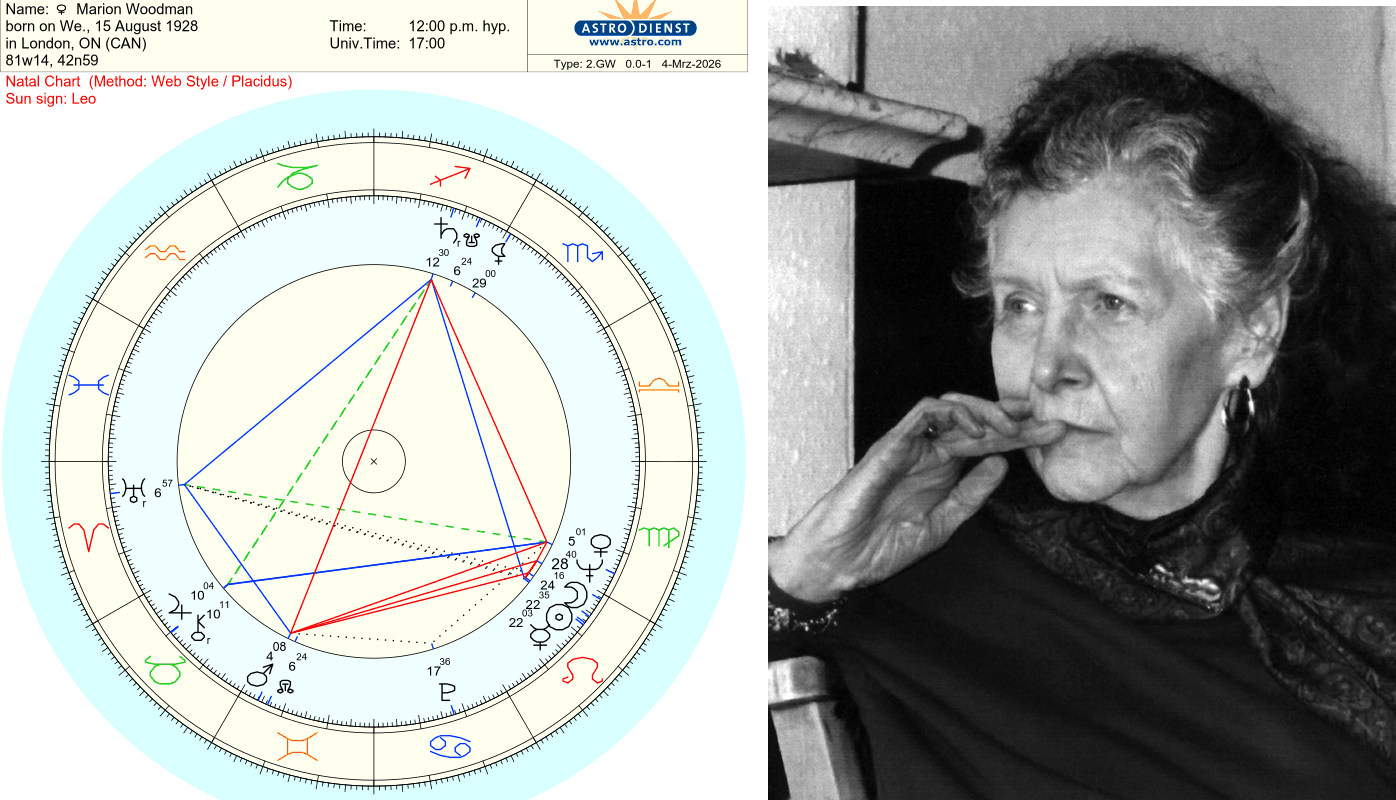
    Birth-chart of Canadian author and analyst, Marion Woodman. Created with https://www.astro.com/index_e.htm

    Moving on to Marion, she was born with a Sun in Leo conjunct the Moon and Mercury (so she is a New Moon baby, an aspect that denotes a pioneering spirit and a true individualist). She has her natal Venus conjunct Neptune in Virgo, an aspect which made her perfect for analytical work but it may have gradually eaten down her relationships due to a perfectionist streak. Furthermore, her natal Mars is conjunct the North Node in Gemini and her South Node is in Sagittarius (and sadly) conjunct her Saturn, which denotes a rough upbringing no matter how positive the Jupiterian influence may be.

    In addition, I see a bold Uranus in Aries, Pluto in maternal Cancer and Jupiter in enterprising Taurus conjunct Chiron (the Wounded Healer Archetype). You can easily see that she has not had an easy life and that growth for her came during painful moments when she was wounded but she had to heal others (Jupiter conjunct Chiron). At the same time, she was able to increase her awareness of the pains of the human condition and bring truth in areas of life previously thought of as taboo, such as in her description of the Inner Tyrant. Her book “The Ravaged Bridegroom: Masculinity in Women” is a pearl in terms of helping me understand the painful underbelly of romantic attractions and why they usually fail and end up in heart-break.

    Being born with Saturn conjunct your comfort zone means that any comfort in early life is usually robbed off you as a form of karmic debt, and Marion has been vocal in her book “Leaving my father’s house: A Journey to conscious femininity” about the strained relationship she has had with her father who blocked her chances of being herself (Saturn in Sagittarius). But she was an exceptionally intelligent and wise woman, almost to the point of having an intelligence which stood against her in many ways, and may have self-sabotaged her chances of being happy in life.

    In terms of placing her chart in conversation with my own natal chart, the fist thing I noticed is how we share the same Saturn placement and how her South Node is almost perfectly conjunct my Moon in Sagittarius, denoting a deep and unconsciously fertile link between the wisdom she provides and my compulsive search for wisdom. In addition, her Uranus in Aries is conjunct my natal North Node and Jupiter in Aries, making her a truly wise, maternal guide for me to learn a lot from, especially in relation to my own masculinity and wounded Animus (Aries).

    Moreover, her Pluto in Cancer falls in my 9th house, where I have Lilith in Cancer (the Wild Feminine Archetype), an aspect which I fondly refer to as the Erin Brockovich effect in terms of using feminine power to combat the abuses of the patriarchy. Marion’s writings liberate me and give me the feeling that I can live life completely free of taboos and complexes as a powerful woman, surviving a changing world (much like Marion had lived her life).

    It’s strange how I just begun with an intuition that I should read the works of both Fritz and Marion, and then as I dived into their work and found how strongly it resonated with me, I fell under the suspicion that it may be more to our shared energies than meets the eye. Astrology then showed me in concrete ways, of what I initially just spun out of the thin air of a gut feeling, that I was correct. So I rest my case once more.

    Astrology is truly magical, and following your intuition and insights is almost like putting the whole energy of your natal chart in motion towards fated events. This is why it is so important to allow the inner compass to guide you in life, rather than fall for external opinions or follow the indications of others. Trust your gut, trust you path and walk in the direction of your soul tribe. Pursue interests and learn from those who came before you. I would even go so far as to say that this may be the pragmatic application of Jung’s core theme of individuation.

    May your journey be filled with suprising joy and boundless wisdom!

    With light,

    Lexi

  • Rebellion and Control: The Astrology of Famous Daughters

    Saint Mary Magdalene by Sofonisba Anguissola

    Seeing as the highly feminine and exalted transit of Jupiter in Cancer of this year, is providing the perfect background for such a topic, I would like to analyse in the following article some famous and difficult mother-daughter relationships from an astrological point of view. I have experienced such a relationship throughout my life and chances are that if you were drawn to the title, you may also be immersed in such a maternal bond (and consequently the maternal complex that comes with it).

    I think this article is also about feminine rebellion and about the astrological signs that point in someone’s birth-chart that their destiny is about becoming a rebel, even if only a gentle one at best. It is to some extent about those character traits that push someone to stand up against external forces that try to dim their natural light, their energy and their capacity to be who they feel they are meant to be, even when these forces come from inside your family unit and your bond to the mother.

    In astrology, all aspects connected to the Self and its capacity to express what it is, are contained within the Sun sign, the astrologically dominant planet under which we are born and which shows the seasonal proclivities of the part of year in which a person is born and metaphorically speaking, the kind of “weather” that a person continues to have throughout their life.

    As an example, for a Gemini (a person born at the end of May and beginning of June) their world revolves around communication and socializing since that period of the year shows Nature in full bloom, is abundant in fresh produce and as a result people organise celebrations, parties and weddings. While for a Sagittarius (describing someone born at the end of November and beginning of December) their solar light points them in the direction of growth during trying times, as Nature dies around the month of November to prepare for a renewal, and for developing a sense of adventure when faced with life’s darker side and the vicissitudes of surviving Winter.

    In addition, astrologers tend to associate the Sun’s solar light to masculine traits while the Moon’s energy in our chart shows our feminine potential; as such the Sun is considered to be the placeholder for the Father archetype while the Moon is the placeholder for the Mother archetype. Bearing that in mind, in this article I want to write about how a feminine Sun signs and their destiny (their North Node) could live under the shadow of someone else’s control and of the karmic masters who wield it in our lives, those first initial spiritual teachers who mould our capacity to intuitively understand our Sun sign and who demarcate how well we can express our inner light during our formative years. I am of course, talking about our mothers.

    What happens when someone’s solar energy (i.e. their vitality, capacity to grow, their personality, skills and energy levels) is frustrated by their bond with a mother figure? In the following, I will be looking into the charts of two famous women who suffered at the hands of their mothers but they somehow managed to transform that suffering into haunting literature and cautionary tales of the price of fame and entertainment.

    Rebellion and control are usually not words associated with ‘normal’ or ‘thriving’ mother-daughter relationships. This is why these word ends up labelling other types of mother-daughter arrangements, those barely ‘good enough’ forms of mothering which usually look ‘good’ on the outside and are experienced as ‘living hells’ on the inside. What would be the purposes of such relationships in our lives?

    In the summer of 2024, I became strangely obsessed with the biography of Shirley Jackson, an American author I discovered after watching the Netflix series ‘The Haunting of Hill House’, a series which even though it is a departure from Shirley’s original text, it was nonethelss brilliant in my opinion in its fantasy depiction of domestic & familial horror.

    I then started learning about Shirley’s life and work with the help of the channel Books and Cats on Youtube, which has plenty of videos on Shirley’s work and her legacy. I came to fnd out that domestic horror is the literary genre which Shirley spear-headed, and as a person who has had lifelong issues with emotional neglect and maternal control, her story and writing spoke so deeply to me, as if it woke up parts of my soul that lay dormant and needed some stirring healing. So I thought of composing this article after I finished reading “The Lottery and Other Stories“.

    Photo of author Shirley Jackson and of her natal chart, created with the help of http://www.astroseek.com

    At the same time as discovering Shirley’s work, I got drunk one night and called my mother. Somehow everything I had repressed in my relationship with her came spewing out of my mouth. Needless to say, I had an argument with her; this is something usual in our dynamic and it is hurtful each and every time, like putting salt on an open wound. My mother was hurt by her own mother so she ends up hurting me and thus we perpetuate mutual hatred on the maternal line.

    I resist having children for fear that I may unconsciously continue this dreaded cycle of pain. After our fight, I fell asleep crying. The next day I opened my eyes and they immediately fell upon one of the books in my bookshelf as the light from the Sun outside was making it stand out. I bought a book last Spring and realized I forgot to read it. This book was Jeanette McCurdie’s “I’m glad my mom died”. I picked it up and could not put it down, since it spoke volumes to my current state of despair in my ‘bond’ with my mother.

    Photo of actress Jeannette McCurdy and of her natal chart created with the help of http://www.astroseek.com

    Although, I have no prior experience of being a child star, I could emotionally identify with Jeannette’s experiences. And I felt weirdly understood at the same time. These are some of the contextual elements which brought me in contact with both women’s reflections on their experiences and I’m going to use an astrological perspective to interpret these experiences to see if there is anything in their natal charts that shows that their mothers had to teach them some tough karmic lessons in order to make them into the individuals that they reluctantly became.

    I will be drawing in my analysis from Jan Spiller seminal book “Astrology for the soul”. I hope this post will appeal to those of you who love the two celebrities but also may have the same astrological markers discussed. We know that Shirley had a co-dependant relationship to emotionally abusive mother from the letters she wrote to her but never sent. You can find out more about Shirley’s life from this video or by dividing deep into her Wiki entry. For Jeannette we obviously know a lot about her relationship to her mom from her best-selling memoir and some revealing interviews she offered the public after her mother’s death. One of the main things that attracted me to writing an article about these two women were the fact that they had problematic mothers and that they also shared a South Node in Cancer / North Node in Capricorn destiny.

    When analyzing the destiny of a NN in Cap it is important to check the sign, house & aspects made by the person’s natal Saturn (as Saturn is the planet presiding over their NN since it is the traditional ruler of Capricorn). So we see that Shirley (a Sagittarius Sun and Ascendant with a Moon in Leo) has a Saturn in Cancer in the 8th house, while Jeanette (a Cancer Sun with a Moon conjunct Mars in Taurus) has a Saturn in Aquarius in the 7th house; these are too highly relational houses, denoting problems and blocks on the path of loving and being loved, trusting and being able to create intimacy. Saturn, astrology’s great malefic, parked in these houses for life also denotes low-quality relatives and issues of money and painful duty being deeply intermingled with parental care.

    Although the gals have the same destiny as their nodes are similar, they are ‘living’ out this destiny in specific ways as shown by their dissimilar Saturnian placements: for Shirley it is emotional & maternal karma (Saturn in Cancer) while for Jeamette it is group-based & self-awareness karma (Saturn in Aquarius).

    Their Saturnian placements are furthermore, amped up by their lunar nodes, those parts of the natal chart that describe the growth potential and destiny of someone’s life. Here is what Jan Spiller has to say about NN in Capricorn/SN in Cancer individuals:

    “Capricorn North Node people need to find a focus beyond their scattered emotional needs and those of people around them. When they bring themselves into alignment with a higher principle or spiriual belief , they feel protected and nurtured. These people excel at being “the boss” (…) To achieve success in any area, these folks need to be “in charge” of their own piece of the puzzle. When things don’t go as they want, they overreact emotionally, subconsciously hoping that others will see how upset they are and change their behavior. But other people perceive this as a means of controlling and are unwilling to modify their behavior just to appease these natives (…) These folks are extremely sensitive to their own emotions and those of others.” – p. 400-403

    If we take a brief look at their astrological placements we can see that Shirley is a Sun in Sagittarius with a Moon in Leo and a Sagittarius Ascendant; not only that but she has a whooping 8 planets and points in her chart in Fire signs! That is a considerable amount of passion and lust for life that had to be kept under wraps due to the presence of a watery and maternal Pluto in Cancer, the marker which shows that her destiny (South node in Cancer) was bound to her relationship with a dominant mother figure who worked on her emotionally (Pluto in Cancer).

    On the other hand Jennette is a Sun in Cancer with a Moon conjunct Mars in Taurus and an undetermined Ascendant. She is a member of the so-called Millenial generation, being born with a Pluto in Scorpio. What I found interesting, and what binds the destinies of these two women together is not only the fact that their power lies within their emotional healing as both of their Pluto placements are in Water signs but also the fact that they both have a South Node in Cancer & North Node in Capricorn – the quintessential marker of a person who is meant to gradually and irrevocably separate from their mother figure and find their own financial success by overcoming hardships, limits and the many temptations of their own basic instincts.

    I know it’s considered childish or a sign of having a weak character for blaming your parents, and especially your life-giving mother for all the problems in your life, and I agree. Life as an adult will show you many times that in order to move forward with it, you’ll necessarily have to get ‘childish’ and explore your past, your roots and pluck what is rotten in order to prepare the ground for fresh growth. It’s an unnerving and often frightening psychological process of coming to terms with parts of yourself that are exactly like what you are criticising in your mother (you know that old saying that every daughter inevitably ends up turning into her mother, and this clichee begins to feel eerily familiar once you reach your late 30s).

    Again, I want to let Jan Spiller speak on behalf on this nodal placement’s complicated family dynamics:

    “Capricorn North Node people have a hard time letting go. They are very sentimental and they don’t want to hurt anyone’s feelings. When they start to leave a situation, even if its clearly not working, they get depressed – so they tend to “hang in there” until their realize deep down that there’s no hope. They do all they can to make the relationship, the job, the situation work. When their survival is threatened they will leave; but they will be much better off letting go before the situation escalates to that point (…) Their whole world revolves around their family and they expect the dynamics to be reciprocal. But more nurturing from family members, usually isn’t forthcoming – it’s just not set up that way in this lifetime (…) Capricorn North Node people need to let others know what the rules and limits are, and then stick to them unflinchingly (…) These folks must learn to stand behind their word. Their commitment must be stronger than their fear of upsetting the other person.” – p. 406-409

    Of course, one thing to keep in mind is that we all know about Jeannette & Shirley because they managed to face their fears & succeeded to a large extent in growing into their NN in Capricorn. They are  more or less willingly fulfilling the “take charge” requirements of their destiny and this is how a Romanian astrologer like myself got to hear of them and their lives: through their work & their stoic and scary reflections on family life. Think about having this kind of reach & influence in your own life, if you happen to have this nodal placement and are struggling to embody it. Decide today to set goals & take charge & see where the soulful journey takes you.

    And don’t worry for you shall be blessed. As the SN in Cancer/NN in Capricorn individual has to integrate their mother’s wounded energy to become the father they wish they had themselves. One exercise I like to do to integrate this maternal/paternal healing energy is to pray not only “In the name of the Father, the Son and the Holy Ghost”, but also “In the name of the Mother, the Daughter and the Holy Body”. Amen.

    With universal love,

    Lexi
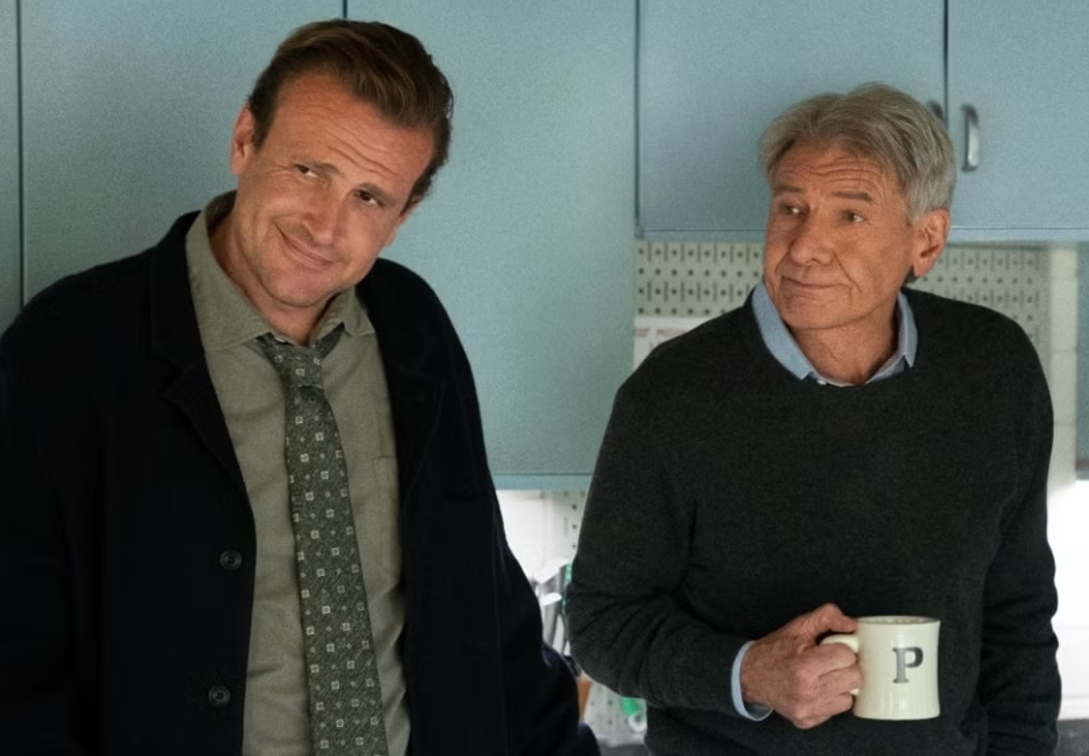
  • Pluto Conjunct the Imum Coeli: Still Waters Run Deep

    Movie still of Jennifer Connelly in “Dark Water”. Image taken from: https://flipscreened.com/2021/02/23/how-dark-water-2005-delivers-whats-lacking-in-relic-2020/

    “ The individual is driven by his personal crises into deep waters which he would usually never have entered if left to his own free will.  The old idealised image of the Ego has to go, and its place is shaken by a perilous insight into the ambiguity and many-sidedness of one’s own nature.” – p.79, E. Neumann, Depth Psychology

    “And it’s inside myself who I must create, someone who will understand” Clarice Lispector, The Passion According to G.H.

    Symbology of the IC/Nadir and Definition

    When Pluto, the planet of Rebirth and Intensity, reaches the Nadir (also known as the Imum Coeli or the root portion of a birth-chart) it begins a soulful and emotional transformation that has the potential to change the relationship of an individual to their environment. Individuals experiencing this transit are becoming increasingly aware that surrounding reality seems to be shaped by what they feel and how much they feel it.

    The Imum Coeli, translated from Latin, literally means ‘the bottom of the sky’. You may encounter some astrologers refer to the IC as the Nadir, another obscure term defined by the Oxford Dictionary as: a) (in astronomy) the point on the celestial sphere directly below an observer; b) the lowest or most unsuccessful point in a situation. In a 2014 article on the reputable website astro.com, Polly Wallace describes the IC as poetry in motion and in the following way: “Definitions of Imum Coeli include the lowest heaven and a literal translation as the undersky. Such evocative phrases conjure up a sense of the IC as a territory in its own right (…) As the undersky, the IC is always hidden. It stands like the portal into a mysterious zone. The realm of the lowest heaven is vast; it encompasses all our past(s), all the detail of our origins and our roots – and all our secrets. It is another world, an inner world, experienced on a level as profound as the deepest darkness of night-time and of winter. Like the earth below our feet, this realm is the fecund darkness where seeds germinate, where roots develop intricate and enduring networks.”

    I guess you can imagine what darkness is unleashed in the life of an individual when the farthest and most intensely contested planet of our solar system meets with the most mysterious and hidden point of the chart. But this darkness is unseen to others, it is private and known only to the person affected. Contrary to other places in the natal chart, the 4th house describes interiors of many different kinds, and what could be more interior to a person than their psychology, their memory and their soul. I am personally becoming more reclusive since this transit has begun. I feel the need to sleep during the day and stay active at night. The soul is awake at night and I feel its power so strongly at the moment. I am so driven to read, write, watch movies and draw – I do these things to understand my drivers and patterns, so I can remake them. I do these things because I love them and they make sense to me. Reality and daily living seems harsh and belligerent, devoid of meaning and I push myself to be in my own ‘bubble’ by wearing noise cancelling headphones. But more on my personal experience with this transit in the middle portion of this article. Let’s get back to the traits of Pluto’s movement conjunct the IC and inevitably on the cusp of the 4th astrological house.

    Unlike Venus, Pluto has no delicate finesse. It acts like a sledgehammer, especially in the debut of a transit, the first months up to a year when it switches signs. The theme of its transit is brought up suddenly – like a punch in the stomach – all of the emotions that have been repressed, overwhelming the psyche of the affected person with memories, patterns, unresolved wounds and chaotic emotions are suddenly out on the table. It takes the next decade to work through them, and as the work is performed a deep, personal transformation occurs. Then at the middle point of a Pluto transit, the rebuilding begins and slowly what was once dark and hopeless turns into light and passionate love. Throughout the entire duration of that Pluto transit, the individual will have to do the deep psychological work of organizing their messy psychic content, discarding what is now dead and useless and continuing to nourish what remains vital and alive inside of them.

    If one can deal with these emotions and work at understanding them, then their immediate reality will begin to mirror their hard-working inner world and a state of attuned harmony is reached after some time. However, if one allows themselves to be drawn into a whirlwind of emotions without comprehending them, if one begins to live more intensely in the past than in the present, becoming complacent in the struggle with the forces of the unconscious, then there is potential here for one’s worst nightmares to materialise and for a mental health condition to completely take over one’s life.

    Either way emotional transformation and confrontations with core, wounded aspects of our largely unconscious Self are necessary for personal growth. Most importantly, the main theme of any transit to the IC is reflecting upon or establishing a sense of personal safety in the world again.

    The sign or constellation that Pluto travels through will also determine the way in which emotions and past memories are unleashed and how the individual will work at integrating them. As this transit happens it will also end up affecting the home, the immediate and private environment of an individual. For most people and in most charts, the IC lies in the 4th house, the house ruled by the Moon and the astrological sign of the celestial Crab, which symbolizes the protective shelter in which we regroup our forces.

    What Others are Saying About this Transit

    To prepare for this article, I read extensively whatever I could find on the topic. First of all, I turned to Steven Forrest’s seminal text “The Book of Pluto” and found this beautiful and psychological interpretation of the meaning of the 4th house:

    “the fourth house is the “House of the Home”. In most modern astrological texts, it is interpreted in more psychological terms, as the house of the inner self, the feelings, one’s deepest archetypal roots (…) Every human who has ever lived possesses a fourth house. Translated, we all to some degree have a need for ‘family’ – a word we must use broadly to mean a set of unquestionably secure social relationships. Loyalty and lifetime commitment are the critical notions here, not blood kinship. Depth, often unspoken depth, may possibly develop in these bonds, but it is less central. Roots, a safe haven, a place to let one’s hair down – these are the crucial concepts (…) To form clan and hearth with other human beings is the ultimate act of trust. Due to your wound, you may turn away from it, taking refuge in your own self-sufficiency (…) “If I really opened up, they’d be too shocked to handle it” – that’s often the belief at the roots of this particular navigational error. Even more fundamentally “There’s something horrible and dirty inside of me” (…) Your navigational error, if you succumb to it, would be to live the life of a ghost, with your fire, intensity, and vision removed from your biographical life while you went through the motions of existence. And, regardless of outward appearances, at the psychological level you would live the life of a heartless, homeless person.

    – p. 79-83

    Some people describe this Pluto-IC transit as the midnight of the Soul. As Lynn Hayes writes: “It shows the psychological legacy from our parents and ancestors that submerges in the unconscious until activated, usually by transit of a planet to that point. This is the point at which we enter the underworld of our own internal psyche, turning inward to meet the essence of who we are in this lifetime.” The Raw Astrologer describes this transit in such a perfect way as Pluto invading your personal space and beginning to chaotically and disturbingly recreate your family life, your home and your sense of security.

    This placement can have a beautiful side-effect and that is coming in touch with the Plutonian imagination which can be vast, intense and mystery-increasing. As Anne Whitaker describes in her account of being born with such a placement, that in her childhood: “My ‘real’ life – eating, sleeping, going to school – was incidental to my inner life which was full of what I felt were the really interesting questions: why are we alive, where do we go after death, do we live on several planes of existence at once, what is happening in other galaxies”. In addition, June from Saturn & Honey writes that this type of Pluto transit is a family curse-breaker: “4th house Pluto means staring the truth of one’s early life or longer-term family history in the eye and choosing not to continue the pattern, committing to change. Let the ways of the past end with you.”

    Over at Little Golden Age blog, and in a short post which contains a good amount of personal experiences with this transit, actuallyjessica writes on surviving Pluto: “I quite literally hope that I survive. I realize that many people don’t ever experience this kind of astrology, so I’m trying to extract the lessons, tear down the old bullshit, transform my powerlessness into wisdom and turn my lump of coal into a shiny diamond. If you, like me, are deep in this Pluto business, I hope you find your way through the darkness to bright new days.”

    Pluto conjunct the IC (the bottom of the sky) means that Pluto is also in opposition to the Midheaven, as Peter Holm from Holm Astrology writes: “when the home and family are being affected in our lives and security wavers, it may be due to demands from the MC, which deals with one’s status, occupation and ambitions (…) The IC and MC, particularly in early life, depict incidents linked to the parents which in turn will affect the child. This parental influence on a child, shifts as we mature. The influence widens in such a way that we are no longer just influenced by the parents that dictate our lives, but we are also now affected by an extended version of the family and our place in the overall structures of life.”

    Finally, for a really comprehensive description of this astrological placement and transit, Astrology by Jo offers a description of the IC as being the one to set the feeling tone of our upbringing and the soul’s inheritance. These deep parts are what are illuminated and transformed by Pluto. One can find their root power under a Pluto conjunct the IC transit, but before the moment of intense breakthrogh comes the pressure-cooker build-up. Let me exemplify with a brief account of the last two years of my life (2024-2025), as Pluto gravitated between 29th degree of Capricorn and the 1st degree of Aquarius and encircled my IC.

    My Personal Experience

    Initially I felt invaded by this energy, and it felt like against my will the structures in my life which I had worked so hard to build, started moving and shifting in dangerous ways. I went from suffering constant auditory pain in my household, to waking up with the bleakest moods I’ve had in my life, to visiting my dad decaying on a hospital bed, to having shouting matches with my mother, and being threatened with violence by neighbours. The upsides of this energy, have been reshaping my career to do a training in Jungian analysis, expanding my social family by adopting two more cats from the street, and realising the meaning that alcohol had in my family’s life and bypassing ‘a need to drink’ by sublimating it into drawing and painting again.

    An image of my natal chart with the transits for November 2025, generated with the help of the free birtchart calculator from https://horoscopes.astro-seek.com/#birthchart

    In the final months of Pluto in Capricorn at 29 degrees, I began to obsess over anything related to the home, to protection and to securing the boundaries of my daily living experience. Just shy off my 36th birthday, I bought an apartment in March of 2023 with my lifetime’s savings. What had initially felt like a wish come true, soon turned into a nightmare. I came to realize that while my place was cozy and practical, it was surrounded by problematic individuals and part of an environment which I had considerably underestimated under the spell of my first-time buyer’s excitement. I am not a financially wealthy being, and actually the wound of poverty is the strongest marker in my personal chart (see that Saturn in the 2nd house placement).

    To me, owning a home, even if it was a small flat, was a very important aspect of breaking through ancestral patterns of women being denied the right to property or having money to buy their homes, and thus finding self-empowerment and safety. Dazed as I was by finally finding a place that I was able to afford in crowded and expensive Bucharest, I had not realized I was trying to sleep in a hornets’ nest. And there can be no true safety in such an environment.

    Across the road from my apartment a highway was being finalised and when I moved into the place in March, I had no idea that roadworks would last until the end of November of that year. I lived for months with loud drilling noises, made worse by the fact that the building next to mine also was being enveloped simultaneously as the highway – something damaging happened to my nervous system during that period, the repercussions of which I still have to live with. Over the summer of that year, the neighbourhood turned into hot mulch, and the air was toxic due to the dust in the air.

    Even with the windows closed, the surrounding noises were unquenchable, especially since I was hit with another issue: my next-door neighbour was prostituting herself to the workers in the neighbourhood and would place loud music on her subwoofer, every time they came to see her to drown out her moans. To make matters worse, often these men would knock on my door, as the doors to the flats were so close to each other.

    As summer burned outside, the inside of the building was littered with garbage and we lacked an Intercom, so strangers were freely entering the building to get drunk or high on the staircases. One night I got woken up by the sound of a man snoring loudly as he had fallen drunkenly asleep near my door. And to top it all off, one of my neighbours from two doors down across from mine had frequent psychotic breakdowns in which he would dress as a woman and threaten to jump out the garbage chute or paint the hallways with crayon and other bodily fluids.

    Whenever I would leave my home I was equipped with a pocket knife, pepper spray and ready to record any interaction coming my way. I felt like walking through metaphorical ‘trenches’ and distracted my attention by making my indoors look cozy and warm and by taking care of the neighbourhood’s stray cats. By taking care of the vulnerable I was also and indirectly sending out a cry for help: ‘Would someone take care of my vulnerable Self?‘ It took me a while to understand that this elusive someone had to also be me.

    All these interferences and frights made me crave safety in life like never before, but as the planet Saturn resides in my 2nd house, I am deprived of experiencing it in this lifetime, unless I put in hard work to obtain it. Interestingly, just when I thought I had figured out the deeper meaning of the 4th house in astrology, I began reading Wanda Sellar’s book ‘Introduction to Decumbiture‘ and was struck by how often she associated the 4th house with ‘the grave‘. This terrified me at the time, as I imagined my own sudden death, but in turns out that this death took someone else in my family, the parent I was attached to the most, my father. Most of us will have this Pluto to the IC transit happening somewhere in our charts and part of the reason I am writing this article is to help prepare some of you for what may come and how to read the energies that could emerge in your life, disturbing your peace, home life and emotional foundations.

    I eventually (and reluctantly) ended up selling my flat in February 2025. Even writing this sentence is sending me into a slight panic attack, which tells how I continue to be emotionally attached to this idea of a place as a container of my sense of safety. When in reality, these disruptive events that are causing me to move home so frequently are trying to help me cement the understanding that I am actually the home I am looking for, the home I idealise and crave to own or to build. It is inside of myself that this feeling of safety, of belonging in the world, that needs time and nurture to root and sprout, to grow and expand until I end up feeling safe as a state of being. The root of this feeling begins in my past and is reconstituted in the present through my body and my relationships to others, it is with these two aspects that I need to make peace, by relinquishing a sense of guilt, shame and fear and learning to trust more, to be gentler and to flow.

    After I sold the flat, I moved into a rather old-looking apartment, a place in desperate need of new furtnitue and renovation, with big windows and vast amounts of light. I was drawn to that exposing light and didn’t mind the old furniture because to be honest I was so destroyed at the thought of having sold my home that I’ve felt deep down inside that I somehow don’t deserve better. I wrongly believed I had failed at making a home. I sold what was so dear to me. I had given up. I accepted this weird rental with two-beds and linoleum flooring and a kitchen that was tiled in the same style like a sanatorium because I felt sick, frail and somehow self-punishing.

    The strangest thing is that the week that I moved into this intermediate home, this purgatory flat, my father died. Two months later a neighbour died. 4 months later, I realised my landlady was suffering from undiagnosed mental health issues that pushed her to cross my boundaries regularly & months later I moved out in a panicked state, right before Christmas after having an argument with her because she had begun following me. The same week I moved out, I also had sex for the first time after 4 years.

    When the Scorpio man with beautiful blue eyes, whom I had the spend the night with, asked me “Why did you wait so long?” I answered “Because I was waiting to have sex with someone I loved. But in the meantime, I guess I got pragmatic”. On some level it’s not healthy to put off sex for so long as an adult, and a part of me felt that if I had sex maybe my neurotic symptoms will cool off. And they did, temporarily at least.

    Thanatos and Eros, the death drive and the sex drive felt like two large psychological pillars that had marked my existence in the weird limbo-flat in which I stayed for most of 2025. When I moved in, I witnessed the death of my father. When I moved out, I had a night of passionate sex with a stranger. I had ultimately chosen life, and pleasure and sex, which prompted me into a rebirth of some kind. I guess the duality had to be activated inside of me in order to believe again that I am worth more and that I deserve better. I am now renting a one-bedroom apartment which no one knowns the address of and I can’t believe how much I am enjoying this little detail. It’s a place with a dark red wall, just one bed, a place that feels somehow more solid, exceedingly warm and protected, although it is also on the pricier side. I sleep all day and stay awake at night to work in perfect silence. I feel balanced, because somehow, I had managed to jump into a new reality, and had left some of the pain behind. I go to therapy sessions on a weekly basis, analyse my emotions and dreams in a diary and create as often I have energy. Although, I am not sure yet what I am now becoming, I feel somewhat released of the birthing pains and pushed on the path of learning to walk again.

    The Energy of this Transit as Shown in Films

    Because of my recent experiences, I resonated so strongly with a couple of movies which portrayed the psychological transformations of 4 women. Each at a different level of their becoming, the protagonists’ struggle in their homes, mirrored some of my own intense emotions. I also found it remarkably healing to look at stories driven by women, which placed the themes of motherhood, desire, safety, loss and betrayal at the core of their cathartic decisions. And maybe this could serve as some interesting recommendations to understand the deeper meaning of a Pluto in the 4th house transit or natal placement.

    In the following section, I will share my perspective on what the place of the home represented on an emotional and psychological level to the main characters in each of the movies I list below. Interpreting the symbolic meaning of a home is a good exercise in preparing for what is to come. However, understanding something may not inevitably protect you from it, but it will certainly help you feel like you are at least more aware of the wise implications of this energy, so that when it happens you are able to handle it and even – dare I say – enjoy it?

    Similarly, when someone is aware that they are going through for example, a Saturn return then it is easier to handle it on a mental level, as you understand that tests, limits and hardship are inevitable. I find it fascinating how the movies I am drawn towards, as this transit is unfolding, are centered around the theme of rebirth within the space of the home. These movies show me that when other women go through intense emotional experiences (whether blissful or terrifying) their homes change with them, and in some cases are even exorcised by them. It’s also interesting to note that almost all of the movies I have chosen to discuss have female protagonists and in all of them something either creepy or erotic tends to take place (these being core Plutonic themes). In my description of the following movies, I’ll figure-skate around any spoilers in case you haven’t seen these movies, so you may safely continue reading.

    1. Sliver (1993)

    Created in the final stages of the Pluto in Scorpio era, this movie features the magnetic Sharon Stone in such a vulnerable role that at the same time brings an electrifying edge, which only she can perform on screen. Her story begins with moving into a new condo in a weirdly shaped, futuristic building, reminiscent of the intimidating structure in High Rise. She has her reserves about this place (which she should’ve listened to) but is eventually convinced by the estate agent to give it a try. Little does she know that this will be a life-altering decision because not only will she become the fresh target of the building’s covert murderer, but also meet the man of her dreams. Again, the themes of death and sex, Eros and Thanatos are brought to life in this decision to move home.

    The movie finds its thrilling bits in the way it keeps you guessing whether her lover is potentially the killer or not, but what really makes the movie fascinating to watch is the state of being under constant surveillance and seeing how this pressure cooker builds to a quick life-affirming denouement. I have to say that the soundtrack kind of sucks though, taking away from the eerie atmosphere of the movie, but her chemistry with William Baldwin is sizzling. As a sidenote, both of them are Pisces Sun actors, and I think I could write a whole different article on William Baldwin’s penchant for starring in erotic thrillers with awesome Piscean co-stars (see Fair Game for another example).

    2. The Night House (2020)

    It’s clear by now that I’m a big Rebecca Hall fan, but this movie was surprisingly scary and also deeply emotional at the same time. I kind of sweated and cried with her, since the movie centres on a theme which unfortunately was something, I experienced as well in my life: romantic betrayal, then abandonment and the desperate search to understand the truth about the man you once loved. The really scary character in this movie, is this truth, which once brought to life, shatters the foundations of her sense of psychological security.

    3. Dark Water (2005)

    This rather flawed movie is at the same supremely atmospheric and carried for most of it by the ultra-talented Jennifer Connelly, who lights up the screen with her soulful performance. It’s also a supremely damp, soggy and wet film in which the environment is literally suffocated by leaks and spill overs, denoting the repressed emotions of the main protagonist, a single mother who in the wake of a divorce has to start life all over again together with her small daughter. She rents an apartment in a building in desperate need of refurbishment on Roosevelt Island in New York, finds a job and enrols her daughter in a new school. All seems to be rebuilding well, until her bedroom ceiling gets a strange leak that keeps becoming larger and larger with each passing day, and then her daughter befriends a girl who no longer exists. With its emphasis on loss, repressed emotions, ghosts, water, broken bonds, porous walls and the desperate seeking of safety in the figure of a mother, this movie holds such deep and obvious fourth house themes that it should be used as compulsory viewing material in astrology schools.

    4. The Woman in the Window (2021)

    A once stable child psychologist with a family of her own, becomes agoraphobic and obsessed with the aparent murder of her neighbour from across the street – I guess you see how these two things clash, and from the tension of not being physically able to leave her flat the excitement of the film develops as well as the horror. On the surface level this is the plot of a movie that holds no punches in delivering the most gruesome fighting scene I have ever witnessed between a teenager and an adult on a rainy rooftop. but I won’t say more so as not to spoil the plot for you all. You’ll notice early on that the movie draws heavy inspiration from two classic claustrophobic stories that also happen to take place in mythical apartments: Rear Window and Dark Passage, and coincidentially two of my all time favourite films.

    The place of living may not be a home for all, but it matters to us all as a vessel of psychological containment for our fears and worries, or what Jung called the ‘unum vas’, the alchemical vessel which holds matter and distils the soul, as we transform and individuate. The home as a shell, your personal safety coating against the harsh world and the perils of nature, or the home as a container of our psychological changes, the walls recording daily dramas, witnessing the unravelling of our private selves. In the home you are who you are, you rarely bring your Persona in and your Ego doesn’t seek the approval it normally seeks from other people’s public validation. So being ‘at home’ can allow the Self to emerge.

    I always thought that if people were to know my homebody, ‘pyjama Self’ they would probably find it very different than my academic Self. Last year, in 2025, I dared to show others, with the help of my work on the Internet, this fragile, pyjama Self. I didn’t get much validation and approval, but neither did I get offense and rejection. I felt left to inhabit a limbo area of my Self, much like the apartment I was inhabiting. But I did move in a whispered way from exposing this vulnerable Self, to taking it within and protecting it. This is why I feel safest now, in a state of being ‘draped up’, of not existing during the day, but rather meeting and making friends with my nocturnal Self, my night being. My spirit animal is the sensitive and misunderstood bat and I am comfortable with that image, because usually right before a drastic rebirth you are meant to walk inside the darkest of nights for a while.

    Nocturnal little animals
    You keep your mother up
    You watch the town shut down
    You watch the lights go off
    Shutters closing in the bars

    – Daughter, Wish I could cross the sea

    Homes can permit or block the development of us as beings, for example, if you look back at your childhood home (or lack thereof). Homes can also be places to hide what we don’t want others to see, or places within which we hide in order to control the environment around us, to spy on the world that hurt us so much that we can no longer participate in life, like the Woman in the Window portrays so well.

    Homes can be places within which desire plays out like in Sliver, birth may happen, diseases and death can occur, away from the prying eyes of strangers. We allow ourselves to be vunerable, soft, pliable in the home. Moreover, houses can be vessels to our memories, and haunted homes especially so, in that they can become a projection screen for parts of our unconscious mind that we have yet to come in contact with: those infamous skeletons in the closet, those darkened basements that house the unspeakable, those creaky floors, bedroom windows that won’t shut properly and those singing pipes, that threaten to burst when our emotions get the best of us but we bottle them up anyway, like its shown in The Night House and Dark Water.

    What is left ‘un-homed’ is equally important to what the home represents. The space that is left when we outgrow a place and silently move on in life, leaves an energetic imprint. We leave traces of ourselves everywhere we have been and homes are the containers of these past, previous, ghostly selves, that we can no longer fit into. It’s a different way to interpret the sense of ‘horror vacui’ , which appears so frequently around abandoned homes and derelict places. This is why revisiting a location can feel so distabilising or why entering in a new place can also overwhelm us, because we come into contact with what has lived here in the absence, much like Steven Soderbergh shows in his haunting film “Presence”(2024).

    And absoring that absence, welcoming the past self into the present, private reality we dispose of, can help us to create that elusive and transient sense of being ‘at home’, like it is so tenderly portrayed in a movie that managed to leave me in cathartic tears, as it deals with healing a father-daughter relationship through art, the poignant Sentimental Value (2025). Please go watch it, it will leave you loving.

    In conclusion, I guess it helps to welcome the past, no matter how painful it has been, and to resist running away from it, as it will show you the way forward in life when you are going through a period of being ‘stuck’.

    Ultimately, I understood that to feel safe in the world, no matter the location or place, is to feel safe embracing that haunted basement, those secret skeletons in the closet and that scary attic that have always been part of me. Like the goddess Hekate, I have to find a way to carry a torch even in the darkest parts of my Underworld, those places I didn’t dare visit while I was young because I was unprepared to take on the burdens of Eros and Thanatos, but that now as an adult are asking me to integrate them with courage and honesty into all aspects of the experience of being alive.

    The spiritual goal toward which the whole nature of man strives is to rescue the light of consciousness…it is the sea to which all rivers went their way.

    – Carl Jung, Collected Works 8

    With universal love,

    Lexi

  • The Dark Romance of Jupiter Meeting the North Node, Saturn, Neptune and Uranus

    Final scene of Nosferatu (2024) directed by Robert Eggers, taken from https://taliesinttlg.blogspot.com/2025/04/nosferatu-2024-review.html

    The final leg of this intense Mercury retrograde in Scorpio/Sagittarius reminds us that we are currently under a beautiful astrological configuration, brought about by the meeting of Jupiter in Cancer (at 24° 47′ degrees) together with Saturn (25° 15′), the North Node ( 24° 24′), Neptune in Pisces (29° 45′) and also Uranus in Taurus (29° 16′). These 4 massive planets of our solar system, together with the lunar nodal axis in Pisces/Virgo, are cozying up to each other within the span of 5 degrees and forming pleasant and harmonious trines and sextiles.

    With so much soothing Water and Earth energy in the sky, the air feels thick with generative emotions, creating a fertile, spiritual ground for romantic ideas. But because Earth and Water romantic energy is often tinged with serious and rather heavy feelings such as melancholy, yearning, loss, sadness, possessiveness, forgiveness, and low self-worth, it develops a rather gothic and dark sheen.

    Collectively speaking, it took us a while to get here after a year that began with considerable chaos and irritations (and I blame Jupiter in detriment in the sign of Gemini for that). At the beginning of this year, most of us felt lost, almost like we dissolved and had to let go of things and people we felt emotionally attached to. This loss created spaces in our hearts, in our minds and in our homes that are now being watered and replenished by the rich soil of new seeds, a life germinating with so much emotional potential. A life which awaits the simple spark of Saturn re-entering Aries in the month of February 2026 to light up. Until then, we have time to reflect on what exactly this year was, and I’m personally choosing to do so through the medium of film.

    Saturn & the Bleeding Father Wound

    I think it’s significant that from a cinematic viewpoint we began the year with big releases such as Nosferatu and are ending it with Frankenstein. The Zeitgeist denotes a growing fascination with horror in our collective, both in terms of movies, but also in the gaming world. Could it be that the realm of horror in art is helping us deal with our own crippling existential anxieties in a collapsing socio-political environment? We usually associate the Archetype of the Father with the spark of vitality, with the energy to overcome obstacles, to boldly face life’s challenges and to contribute to society. But as society and social norms are dissolving right before our eyes, is our conception of the protective and all-encompassing Father Figure also crumbling?

    Much like it was gorgeously shown in Guillermo del Toro’s Frankenstein, are we left with hunting the monsters of our own psyche, placing upon those on the fringes of society the monstrous qualities of our unintegrated, collective Shadow? Is this why it feels so difficult to exist as a non-conformist, sensitive and creative person in a global village in which everyone thinks the same, looks the same and feels nothing?

    Movie still of Mia Goth and Jacob Elordi in Guillermo del Toro’s “Frankenstein”. Taken from: https://www.cbr.com/netflixs-frankenstein-final-trailer/

    If masculinity then appears distorted in our collective unconscious do we transform it into something perverse or perhaps expect it to be perverse? Because things usually exist in pairs, then we cannot speak of a ‘perverse’ or ‘distorted’ form of masculinity haunting the collective without shedding light on its opposite: the higher-minder, redeeming image of man, as a defender, protector and spiritual guide. This is why we may have these counter-trends proliferating in the collective at the moment, being swept over by both religious fervour (see Rapture Tok) and smutty satisfaction (see Werewolf Romances or Biker Tok). There’s a lot more to say on this topic but I’ll let Jungian Analyst and prolific fairy-tale collector, Marie-Louise von Franz explain the psychological tendencies:

    People of all ages needed an inner guide to help them overcome life's trials. This need has prompted people to see in certain individuals, gods or deified inspired personalities, the personification of all the skills they are looking for. When people are confronted with this impulse, the father archetype often appears, bearing the image of a deified or god-like counselor.
    - p. 255, Archetypal Symbols in Fairy-Tales: The Profane and the Magical.

    So, at present, are we choosing (more or less consciously) to worship a Demonic Father, a Destructive God which imbued with our own unacknowledged heavy feelings, has the power to obliterate us? Are we then seeking redemption through destruction? And how do these collective energies in which we exist daily end up affecting our behaviours, especially our gendered attachments?

    Some Uranus in Taurus Witchcraft

    For me, 2025 started with a trip to the local movie house to see Nosferatu, a movie I was eagerly waiting for. Stuffed in my seat liked a tinned sardine with a big crowd in a room that was hellishly warm because the air conditioning was not at full capacity on that cold January evening, I was too distracted to enjoy the movie by the bickering couple sitting next to me who had also berated me for not sitting in my proper place (aka the one I bought the ticket for). Nonetheless, I loved the movie! The dark aesthetics lingered in my mind, as well as that unforgettable, final scene, symbolic of the painting Death and the Maiden (see first image of this post).

    After the movie, I came home and felt a sudden and overwhelming urge to take a bath. But rationally I told myself “No, don’t take a bath, because you are during your period at your day with the highest flow and you will literally bathe in your own blood if you do”.

    Stupidly enough, I listened to reason and learned to regret it, because I woke up the next day with a severe cold that locked me in bed for the next 3 days. After I recovered, and being an impressionable Pisces, I felt that somehow the dark and evil nature of the monster portrayed in Nosferatu was somehow “stuck” to me and made me feel physically ill. I did some occult research and discovered that bathing in your own blood is actually a protective strategy that can help someone let go of the slimy energetic strings that were attached to her through the malevolent evil eye of others (or in my case, the bad vibes of the bickering, dramatic couple sitting next to me in the cinema). Menstrual blood is especially powerful, as it contains both death and the seeds of life alongside with the protective energy of the discarded uterine lining.

    The entire experience was yet another lesson in learning how to trust and listen to my insights, visions and intuition. For a while after that, I was kind of afraid of re-watching Nosferatu because I associated the movie with getting ill and did not want to repeat the experience. Nonetheless, I decided to face my fear and saw the movie once again, at the end of August this time, projected onto the barren wall of my bedroom. Alone, in stillness, only disturbed by a cool breeze from the summer air wafting through my room, the slow sound of traffic and the crickets outside, I finally enjoyed the movie. I also did not catch a cold or argued with strangers and I saved my pocket money for candles and crystals.

    Just as a sidenote, having lived through a lot of things in life and travelled extensively, I generally recommend solitary experiences to collective ones. Solitude truly is a gift and we should learn to value it and appreciate it more. That being said, this post is about love 🙂

    Or better said, it is about romance and the way it blends with love at the level of our unconscious dark fantasies under this blissful astrological configuration covering the months of November and December of 2025.

    Jupiter, the Quirky Dark Romantic

    When two of the planetary giants of our solar systems (Saturn and Jupiter) find themselves shining through two of the most sensitive, soft and romantic Water signs, a deep rollercoaster of emotions is unleashed onto the collective. Socially, we find ourselves at the mercy of attachment triggers, insecurity hot-spots and conflicting emotions. Much of the anger we get to experience in the collective, has at its root a terrifying sadness and fear of abandonment.

    Despite, their romantic nature, sweetness and adaptability, Cancer and Pisces can be the bringers of great suffering and pain in their lives and the lives of those they come into contact with. This happens when instead of understanding, accepting and mastering their emotionality, they succumb to it or they repress it (by pushing what they feel deep in their unconscious), thereby fuelling their Shadow Selves. People who succumb to their Shadow and live governed by their unconscious desires, become that very thing that they fear: the monsters, those with a great capacity for harm and psychological damage.

    Cole Sprouse and Kathryn Newton in ‘Lisa Frankenstein.’ Michele K. Short, image taken from https://www.hollywoodreporter.com/movies/movie-reviews/lisa-frankenstein-review-kathryn-newton-cole-sprouse-diablo-cody-1235816547/

    Since Jupiterian matters are simultaneously light-hearted and yet filled with rich meaning, I need to say a couple of words here about the wonder-fest that Lisa Frankenstein is. I discovered this Diablo Cody creation this year and have already seen it thrice, I just love it so much! Flipping the script on the male-dominated plot of Frankenstein, this movie has a certain unique, camp charm combined with female ingenuity on the background of an 80s synth-wave trip. The plot revolves around strange Lisa who lives with her father, her step-mom and step-sister in a sleepy, suburban neighbourhood. Her life is marred by a gruesome event that traumatised her childhood and makes her rather reclusive. She takes her social awkwardness and fantasizes in a bachelor’s cemetery about her ideal boyfriend while dabbling in some light witchcraft.

    Then on a stormy day she accidentally brings to life a young noble-man who zombies his way to her house to profess undying love to her. He is disabled and smells awful but his heart seems in the right place. To make him human-looking again she has to come up with some creative ideas, and thank God she knows how to sew! Chaos ensues in the sweetest and most psychotic way possible, and I guarantee you will find it hard to guess the ending.

    The fascinating thing about Lisa Frankenstein is how her rage and overall teen angst is somehow projected onto the Creature, who ends up putting into action her murderous intent and sadistic fantasies, especially geared towards her borderline step-mother. By falling in love with her, the Creature somehow redeems Lisa of her lowest desires and darker feelings. Their weird, beyond-the-grave love has therefore, cathartic properties, reminding us (again, from a flipped gendered-perspective this time), that love has the power to quench rage and transform death into life again.

    This is a delightful movie, considering how low on romantic outputs the past few years have been in Hollywood. I also love the trend of 80s inspired dark romances and slashers. Inevitably, this movie sent me thinking of Totally Killer, a movie I added to this year’s Halloween list of recommended frights.

    Neptune or When you Love the Monster

    Judging by the rising popularity of creepy, dark romance content on Book Tok, I think it can be said that this year, under the wounded and distorted, paternal energy of the Saturn-Neptune conjunction and Chiron in the sign of Aries (which I wrote about in a previous post), we are all unconsciously processing our strained relationship to men and masculinity, and especially to our fathers, the first men we loved.

    Increasingly, it seems that the fine line between the sado-masochistic content of personal fantasies is pervading the collective, who find enjoyment and liberation in stirring up social discoussion around these darkly, ecstatic experiences. This is also driven by greed, a typical manifestation of Uranus in Taurus energy, because what is taboo, forbidden or mysterious usually sells really well.

    Nonetheless, I wonder what this form of dark consumption is doing to our psyches in the long-run? Like a Halloween Bacchanal taking place in the privacy of your home and on your phone’s lit up screen, a gallery of perversions and dehumanising acts are misinterpreted as sexy and romantic to rather cringe-worthy heights. Could this be a marker of our sexual appetites changing or of a collective call for desensitization brought about by the transit of emotionally detached and freaky Pluto in Aquarius?

    I’ll let you find your own answers to this one.

    Movie still of Tyler Galpin and Wednesday Addams from Wednesday Season 2. Taken from: https://www.sportskeeda.com/us/shows/he-s-f-king-evil-internet-divided-whether-wednesday-tyler-end-together-wednesday-season-2

    In all honesty, I’ve also been consuming this year a lot of analogue horror content and I began listening to heavy metal. With Jupiter’s transit into nostalgic Cancer, and at my therapist’s request, I started looking for ways to consume the pent-up rage I have been feeling towards my mother in the wake of my father’s death. Taking walks at night-time, drawing monsters and shadow figures, cursing people who harmed me and listening to heavy metal were such sublimation strategies to process my anger. And I admit that as time passes, these sublimation strategies are working and I felt lighter. My mind is also remembering the background to my teenage years, mired in the foreboding sound of bands like System of a Down, Korn and Slipknot. Paradoxically, hearing men scream feels like they are screaming for me, in my name, in the name of the soul inside of me grappling to catch light again.

    However, using creepy symbols, scary masks and war paint, dancing and shouting were also survival strategies our ancestors used when faced with the dark forces of disease and violence. Sometimes you become scary when you feel at your most vulnerable and are frightened yourself. As a protective strategy – you become that which you fear in an effort to push back on the energy crossing your boundaries and consuming your identity. This is where the fathomless creatures of Neptune, the God of the Sea, rear their ugly heads, in the realm of dreams and in the silent waters of our inner emotional reservoir. We sometimes reach down inside this fantasy realm to gather the strength to fight the beasts surrounding us, whether human or imaginary. And sometimes to overcome the darkness, we must become it, this being the behaviour encouraged by the camouflaging tendencies of Neptune, domicile in the sign of Pisces.

    Recently in the second season of Wednesday, we’ve seen the overt conflict between Tyler and Wednesday, as it is now revealed that he is indeed the Hyde and therefore highly dangerous. Tyler is locked away in an asylum, seething in his rage at being betrayed by the Addams family prodigy, he once felt so attracted to but also attempted to murder. Although both Tyler and Wednesday are exploring their difficult attachments to their mother figures in this season, the overall feeling I had while watching the narrative unfold is the terrible weight of loving somebody who is overwhelmed by their Shadow, to the point of having a monstrous alter-ego.

    From a paternal point of view, I also found it interesting that Tyler’s father is ashamed of his son, while Wednesday’s father is proud of her. Could this psychological resource determine the boldness that Wednesday shows in directly facing Tyler in Hyde form, the monster she loves? (it is to be assumed that love is involved, since Wednesday so obviously displays psychopathic tendencies which normally inhibit affect).

    Although Tyler is the one in visible chains, Wednesday is the one having to deal with the emotional repercussions of loving someone monstruous, someone who consistently helps her and also harms her. But this tendency exists inside of herself too. Underneath her amateur detective Persona, Wednesday harbours towards Tyler the simultaneous desire to help him while also fighting with him.

    In general, it seems that in the absence of meaningful myths to guide us we have been seduced to fall into the cesspool of dark fantasy images produced by contemporary culture and social media. It could be an act of creative absolution to reclaim myths and fairy-tales that align with our values and personal identities and use these as meaningful shields against collective dissolution, meaninglessness and cheap thrills. Maybe experiencing dark romances or exploring our Shadow aspects in love connections, could be the liberating way forward, where instead of pressuring each other into unsustainable, positive ever-afters, we process our pain and wounding into powerful and energy-giving, romantic transformations.

    With universal love,

    Lexi