“ The individual is driven by his personal crises into deep waters which he would usually never have entered if left to his own free will. The old idealised image of the Ego has to go, and its place is shaken by a perilous insight into the ambiguity and many-sidedness of one’s own nature.” – p.79, E. Neumann, Depth Psychology
“And it’s inside myself who I must create, someone who will understand” Clarice Lispector, The Passion According to G.H.
Symbology of the IC/Nadir and Definition
When Pluto, the planet of Rebirth and Intensity, reaches the Nadir (also known as the Imum Coeli or the root portion of a birth-chart) it begins a soulful and emotional transformation that has the potential to change the relationship of an individual to their environment. Individuals experiencing this transit are becoming increasingly aware that surrounding reality seems to be shaped by what they feel and how much they feel it.
The Imum Coeli, translated from Latin, literally means ‘the bottom of the sky’. You may encounter some astrologers refer to the IC as the Nadir, another obscure term defined by the Oxford Dictionary as: a) (in astronomy) the point on the celestial sphere directly below an observer; b) the lowest or most unsuccessful point in a situation. In a 2014 article on the reputable website astro.com, Polly Wallace describes the IC as poetry in motion and in the following way: “Definitions of Imum Coeli include the lowest heaven and a literal translation as the undersky. Such evocative phrases conjure up a sense of the IC as a territory in its own right (…) As the undersky, the IC is always hidden. It stands like the portal into a mysterious zone. The realm of the lowest heaven is vast; it encompasses all our past(s), all the detail of our origins and our roots – and all our secrets. It is another world, an inner world, experienced on a level as profound as the deepest darkness of night-time and of winter. Like the earth below our feet, this realm is the fecund darkness where seeds germinate, where roots develop intricate and enduring networks.”
I guess you can imagine what darkness is unleashed in the life of an individual when the farthest and most intensely contested planet of our solar system meets with the most mysterious and hidden point of the chart. But this darkness is unseen to others, it is private and known only to the person affected. Contrary to other places in the natal chart, the 4th house describes interiors of many different kinds, and what could be more interior to a person than their psychology, their memory and their soul. I am personally becoming more reclusive since this transit has begun. I feel the need to sleep during the day and stay active at night. The soul is awake at night and I feel its power so strongly at the moment. I am so driven to read, write, watch movies and draw – I do these things to understand my drivers and patterns, so I can remake them. I do these things because I love them and they make sense to me. Reality and daily living seems harsh and belligerent, devoid of meaning and I push myself to be in my own ‘bubble’ by wearing noise cancelling headphones. But more on my personal experience with this transit in the middle portion of this article. Let’s get back to the traits of Pluto’s movement conjunct the IC and inevitably on the cusp of the 4th astrological house.
Unlike Venus, Pluto has no delicate finesse. It acts like a sledgehammer, especially in the debut of a transit, the first months up to a year when it switches signs. The theme of its transit is brought up suddenly – like a punch in the stomach – all of the emotions that have been repressed, overwhelming the psyche of the affected person with memories, patterns, unresolved wounds and chaotic emotions are suddenly out on the table. It takes the next decade to work through them, and as the work is performed a deep, personal transformation occurs. Then at the middle point of a Pluto transit, the rebuilding begins and slowly what was once dark and hopeless turns into light and passionate love. Throughout the entire duration of that Pluto transit, the individual will have to do the deep psychological work of organizing their messy psychic content, discarding what is now dead and useless and continuing to nourish what remains vital and alive inside of them.
If one can deal with these emotions and work at understanding them, then their immediate reality will begin to mirror their hard-working inner world and a state of attuned harmony is reached after some time. However, if one allows themselves to be drawn into a whirlwind of emotions without comprehending them, if one begins to live more intensely in the past than in the present, becoming complacent in the struggle with the forces of the unconscious, then there is potential here for one’s worst nightmares to materialise and for a mental health condition to completely take over one’s life.
Either way emotional transformation and confrontations with core, wounded aspects of our largely unconscious Self are necessary for personal growth. Most importantly, the main theme of any transit to the IC is reflecting upon or establishing a sense of personal safety in the world again.
The sign or constellation that Pluto travels through will also determine the way in which emotions and past memories are unleashed and how the individual will work at integrating them. As this transit happens it will also end up affecting the home, the immediate and private environment of an individual. For most people and in most charts, the IC lies in the 4th house, the house ruled by the Moon and the astrological sign of the celestial Crab, which symbolizes the protective shelter in which we regroup our forces.
What Others are Saying About this Transit
To prepare for this article, I read extensively whatever I could find on the topic. First of all, I turned to Steven Forrest’s seminal text “The Book of Pluto” and found this beautiful and psychological interpretation of the meaning of the 4th house:
“the fourth house is the “House of the Home”. In most modern astrological texts, it is interpreted in more psychological terms, as the house of the inner self, the feelings, one’s deepest archetypal roots (…) Every human who has ever lived possesses a fourth house. Translated, we all to some degree have a need for ‘family’ – a word we must use broadly to mean a set of unquestionably secure social relationships. Loyalty and lifetime commitment are the critical notions here, not blood kinship. Depth, often unspoken depth, may possibly develop in these bonds, but it is less central. Roots, a safe haven, a place to let one’s hair down – these are the crucial concepts (…) To form clan and hearth with other human beings is the ultimate act of trust. Due to your wound, you may turn away from it, taking refuge in your own self-sufficiency (…) “If I really opened up, they’d be too shocked to handle it” – that’s often the belief at the roots of this particular navigational error. Even more fundamentally “There’s something horrible and dirty inside of me” (…) Your navigational error, if you succumb to it, would be to live the life of a ghost, with your fire, intensity, and vision removed from your biographical life while you went through the motions of existence. And, regardless of outward appearances, at the psychological level you would live the life of a heartless, homeless person.
– p. 79-83
Some people describe this Pluto-IC transit as the midnight of the Soul. As Lynn Hayes writes: “It shows the psychological legacy from our parents and ancestors that submerges in the unconscious until activated, usually by transit of a planet to that point. This is the point at which we enter the underworld of our own internal psyche, turning inward to meet the essence of who we are in this lifetime.” The Raw Astrologer describes this transit in such a perfect way as Pluto invading your personal space and beginning to chaotically and disturbingly recreate your family life, your home and your sense of security.
This placement can have a beautiful side-effect and that is coming in touch with the Plutonian imagination which can be vast, intense and mystery-increasing. As Anne Whitaker describes in her account of being born with such a placement, that in her childhood: “My ‘real’ life – eating, sleeping, going to school – was incidental to my inner life which was full of what I felt were the really interesting questions: why are we alive, where do we go after death, do we live on several planes of existence at once, what is happening in other galaxies”. In addition, June from Saturn & Honey writes that this type of Pluto transit is a family curse-breaker: “4th house Pluto means staring the truth of one’s early life or longer-term family history in the eye and choosing not to continue the pattern, committing to change. Let the ways of the past end with you.”
Over at Little Golden Age blog, and in a short post which contains a good amount of personal experiences with this transit, actuallyjessica writes on surviving Pluto: “I quite literally hope that I survive. I realize that many people don’t ever experience this kind of astrology, so I’m trying to extract the lessons, tear down the old bullshit, transform my powerlessness into wisdom and turn my lump of coal into a shiny diamond. If you, like me, are deep in this Pluto business, I hope you find your way through the darkness to bright new days.”
Pluto conjunct the IC (the bottom of the sky) means that Pluto is also in opposition to the Midheaven, as Peter Holm from Holm Astrology writes: “when the home and family are being affected in our lives and security wavers, it may be due to demands from the MC, which deals with one’s status, occupation and ambitions (…) The IC and MC, particularly in early life, depict incidents linked to the parents which in turn will affect the child. This parental influence on a child, shifts as we mature. The influence widens in such a way that we are no longer just influenced by the parents that dictate our lives, but we are also now affected by an extended version of the family and our place in the overall structures of life.”
Finally, for a really comprehensive description of this astrological placement and transit, Astrology by Jo offers a description of the IC as being the one to set the feeling tone of our upbringing and the soul’s inheritance. These deep parts are what are illuminated and transformed by Pluto. One can find their root power under a Pluto conjunct the IC transit, but before the moment of intense breakthrogh comes the pressure-cooker build-up. Let me exemplify with a brief account of the last two years of my life (2024-2025), as Pluto gravitated between 29th degree of Capricorn and the 1st degree of Aquarius and encircled my IC.
My Personal Experience
Initially I felt invaded by this energy, and it felt like against my will the structures in my life which I had worked so hard to build, started moving and shifting in dangerous ways. I went from suffering constant auditory pain in my household, to waking up with the bleakest moods I’ve had in my life, to visiting my dad decaying on a hospital bed, to having shouting matches with my mother, and being threatened with violence by neighbours. The upsides of this energy, have been reshaping my career to do a training in Jungian analysis, expanding my social family by adopting two more cats from the street, and realising the meaning that alcohol had in my family’s life and bypassing ‘a need to drink’ by sublimating it into drawing and painting again.
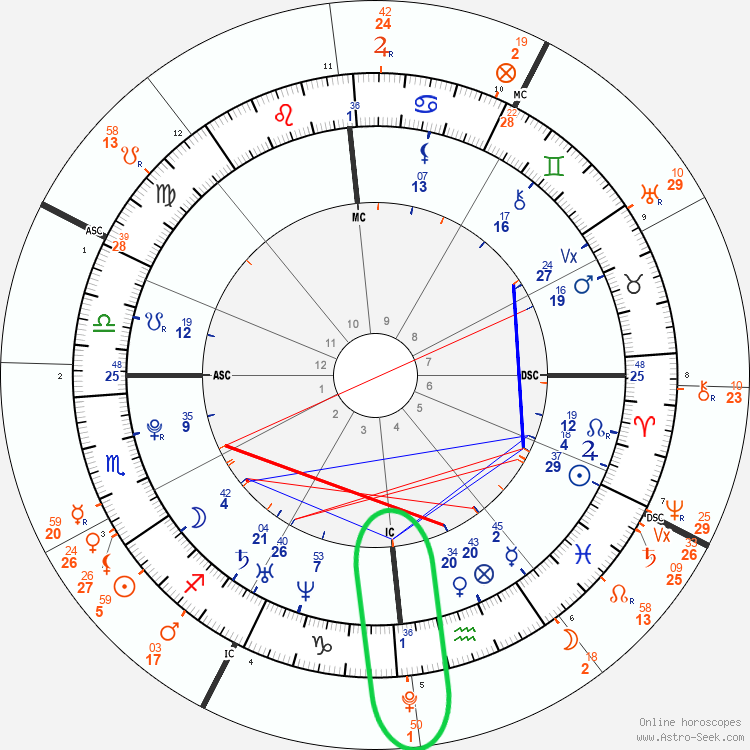
In the final months of Pluto in Capricorn at 29 degrees, I began to obsess over anything related to the home, to protection and to securing the boundaries of my daily living experience. Just shy off my 36th birthday, I bought an apartment in March of 2023 with my lifetime’s savings. What had initially felt like a wish come true, soon turned into a nightmare. I came to realize that while my place was cozy and practical, it was surrounded by problematic individuals and part of an environment which I had considerably underestimated under the spell of my first-time buyer’s excitement. I am not a financially wealthy being, and actually the wound of poverty is the strongest marker in my personal chart (see that Saturn in the 2nd house placement).
To me, owning a home, even if it was a small flat, was a very important aspect of breaking through ancestral patterns of women being denied the right to property or having money to buy their homes, and thus finding self-empowerment and safety. Dazed as I was by finally finding a place that I was able to afford in crowded and expensive Bucharest, I had not realized I was trying to sleep in a hornets’ nest. And there can be no true safety in such an environment.
Across the road from my apartment a highway was being finalised and when I moved into the place in March, I had no idea that roadworks would last until the end of November of that year. I lived for months with loud drilling noises, made worse by the fact that the building next to mine also was being enveloped simultaneously as the highway – something damaging happened to my nervous system during that period, the repercussions of which I still have to live with. Over the summer of that year, the neighbourhood turned into hot mulch, and the air was toxic due to the dust in the air.
Even with the windows closed, the surrounding noises were unquenchable, especially since I was hit with another issue: my next-door neighbour was prostituting herself to the workers in the neighbourhood and would place loud music on her subwoofer, every time they came to see her to drown out her moans. To make matters worse, often these men would knock on my door, as the doors to the flats were so close to each other.
As summer burned outside, the inside of the building was littered with garbage and we lacked an Intercom, so strangers were freely entering the building to get drunk or high on the staircases. One night I got woken up by the sound of a man snoring loudly as he had fallen drunkenly asleep near my door. And to top it all off, one of my neighbours from two doors down across from mine had frequent psychotic breakdowns in which he would dress as a woman and threaten to jump out the garbage chute or paint the hallways with crayon and other bodily fluids.
Whenever I would leave my home I was equipped with a pocket knife, pepper spray and ready to record any interaction coming my way. I felt like walking through metaphorical ‘trenches’ and distracted my attention by making my indoors look cozy and warm and by taking care of the neighbourhood’s stray cats. By taking care of the vulnerable I was also and indirectly sending out a cry for help: ‘Would someone take care of my vulnerable Self?‘ It took me a while to understand that this elusive someone had to also be me.
All these interferences and frights made me crave safety in life like never before, but as the planet Saturn resides in my 2nd house, I am deprived of experiencing it in this lifetime, unless I put in hard work to obtain it. Interestingly, just when I thought I had figured out the deeper meaning of the 4th house in astrology, I began reading Wanda Sellar’s book ‘Introduction to Decumbiture‘ and was struck by how often she associated the 4th house with ‘the grave‘. This terrified me at the time, as I imagined my own sudden death, but in turns out that this death took someone else in my family, the parent I was attached to the most, my father. Most of us will have this Pluto to the IC transit happening somewhere in our charts and part of the reason I am writing this article is to help prepare some of you for what may come and how to read the energies that could emerge in your life, disturbing your peace, home life and emotional foundations.
I eventually (and reluctantly) ended up selling my flat in February 2025. Even writing this sentence is sending me into a slight panic attack, which tells how I continue to be emotionally attached to this idea of a place as a container of my sense of safety. When in reality, these disruptive events that are causing me to move home so frequently are trying to help me cement the understanding that I am actually the home I am looking for, the home I idealise and crave to own or to build. It is inside of myself that this feeling of safety, of belonging in the world, that needs time and nurture to root and sprout, to grow and expand until I end up feeling safe as a state of being. The root of this feeling begins in my past and is reconstituted in the present through my body and my relationships to others, it is with these two aspects that I need to make peace, by relinquishing a sense of guilt, shame and fear and learning to trust more, to be gentler and to flow.
After I sold the flat, I moved into a rather old-looking apartment, a place in desperate need of new furtnitue and renovation, with big windows and vast amounts of light. I was drawn to that exposing light and didn’t mind the old furniture because to be honest I was so destroyed at the thought of having sold my home that I’ve felt deep down inside that I somehow don’t deserve better. I wrongly believed I had failed at making a home. I sold what was so dear to me. I had given up. I accepted this weird rental with two-beds and linoleum flooring and a kitchen that was tiled in the same style like a sanatorium because I felt sick, frail and somehow self-punishing.
The strangest thing is that the week that I moved into this intermediate home, this purgatory flat, my father died. Two months later a neighbour died. 4 months later, I realised my landlady was suffering from undiagnosed mental health issues that pushed her to cross my boundaries regularly & months later I moved out in a panicked state, right before Christmas after having an argument with her because she had begun following me. The same week I moved out, I also had sex for the first time after 4 years.
When the Scorpio man with beautiful blue eyes, whom I had the spend the night with, asked me “Why did you wait so long?” I answered “Because I was waiting to have sex with someone I loved. But in the meantime, I guess I got pragmatic”. On some level it’s not healthy to put off sex for so long as an adult, and a part of me felt that if I had sex maybe my neurotic symptoms will cool off. And they did, temporarily at least.
Thanatos and Eros, the death drive and the sex drive felt like two large psychological pillars that had marked my existence in the weird limbo-flat in which I stayed for most of 2025. When I moved in, I witnessed the death of my father. When I moved out, I had a night of passionate sex with a stranger. I had ultimately chosen life, and pleasure and sex, which prompted me into a rebirth of some kind. I guess the duality had to be activated inside of me in order to believe again that I am worth more and that I deserve better. I am now renting a one-bedroom apartment which no one knowns the address of and I can’t believe how much I am enjoying this little detail. It’s a place with a dark red wall, just one bed, a place that feels somehow more solid, exceedingly warm and protected, although it is also on the pricier side. I sleep all day and stay awake at night to work in perfect silence. I feel balanced, because somehow, I had managed to jump into a new reality, and had left some of the pain behind. I go to therapy sessions on a weekly basis, analyse my emotions and dreams in a diary and create as often I have energy. Although, I am not sure yet what I am now becoming, I feel somewhat released of the birthing pains and pushed on the path of learning to walk again.
The Energy of this Transit as Shown in Films
Because of my recent experiences, I resonated so strongly with a couple of movies which portrayed the psychological transformations of 4 women. Each at a different level of their becoming, the protagonists’ struggle in their homes, mirrored some of my own intense emotions. I also found it remarkably healing to look at stories driven by women, which placed the themes of motherhood, desire, safety, loss and betrayal at the core of their cathartic decisions. And maybe this could serve as some interesting recommendations to understand the deeper meaning of a Pluto in the 4th house transit or natal placement.
In the following section, I will share my perspective on what the place of the home represented on an emotional and psychological level to the main characters in each of the movies I list below. Interpreting the symbolic meaning of a home is a good exercise in preparing for what is to come. However, understanding something may not inevitably protect you from it, but it will certainly help you feel like you are at least more aware of the wise implications of this energy, so that when it happens you are able to handle it and even – dare I say – enjoy it?

Similarly, when someone is aware that they are going through for example, a Saturn return then it is easier to handle it on a mental level, as you understand that tests, limits and hardship are inevitable. I find it fascinating how the movies I am drawn towards, as this transit is unfolding, are centered around the theme of rebirth within the space of the home. These movies show me that when other women go through intense emotional experiences (whether blissful or terrifying) their homes change with them, and in some cases are even exorcised by them. It’s also interesting to note that almost all of the movies I have chosen to discuss have female protagonists and in all of them something either creepy or erotic tends to take place (these being core Plutonic themes). In my description of the following movies, I’ll figure-skate around any spoilers in case you haven’t seen these movies, so you may safely continue reading.
Created in the final stages of the Pluto in Scorpio era, this movie features the magnetic Sharon Stone in such a vulnerable role that at the same time brings an electrifying edge, which only she can perform on screen. Her story begins with moving into a new condo in a weirdly shaped, futuristic building, reminiscent of the intimidating structure in High Rise. She has her reserves about this place (which she should’ve listened to) but is eventually convinced by the estate agent to give it a try. Little does she know that this will be a life-altering decision because not only will she become the fresh target of the building’s covert murderer, but also meet the man of her dreams. Again, the themes of death and sex, Eros and Thanatos are brought to life in this decision to move home.
The movie finds its thrilling bits in the way it keeps you guessing whether her lover is potentially the killer or not, but what really makes the movie fascinating to watch is the state of being under constant surveillance and seeing how this pressure cooker builds to a quick life-affirming denouement. I have to say that the soundtrack kind of sucks though, taking away from the eerie atmosphere of the movie, but her chemistry with William Baldwin is sizzling. As a sidenote, both of them are Pisces Sun actors, and I think I could write a whole different article on William Baldwin’s penchant for starring in erotic thrillers with awesome Piscean co-stars (see Fair Game for another example).
It’s clear by now that I’m a big Rebecca Hall fan, but this movie was surprisingly scary and also deeply emotional at the same time. I kind of sweated and cried with her, since the movie centres on a theme which unfortunately was something, I experienced as well in my life: romantic betrayal, then abandonment and the desperate search to understand the truth about the man you once loved. The really scary character in this movie, is this truth, which once brought to life, shatters the foundations of her sense of psychological security.
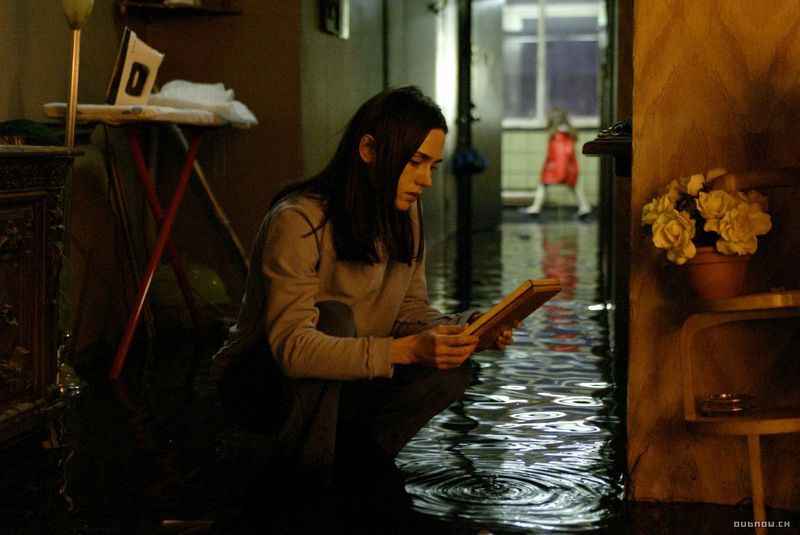
This rather flawed movie is at the same supremely atmospheric and carried for most of it by the ultra-talented Jennifer Connelly, who lights up the screen with her soulful performance. It’s also a supremely damp, soggy and wet film in which the environment is literally suffocated by leaks and spill overs, denoting the repressed emotions of the main protagonist, a single mother who in the wake of a divorce has to start life all over again together with her small daughter. She rents an apartment in a building in desperate need of refurbishment on Roosevelt Island in New York, finds a job and enrols her daughter in a new school. All seems to be rebuilding well, until her bedroom ceiling gets a strange leak that keeps becoming larger and larger with each passing day, and then her daughter befriends a girl who no longer exists. With its emphasis on loss, repressed emotions, ghosts, water, broken bonds, porous walls and the desperate seeking of safety in the figure of a mother, this movie holds such deep and obvious fourth house themes that it should be used as compulsory viewing material in astrology schools.
4. The Woman in the Window (2021)
A once stable child psychologist with a family of her own, becomes agoraphobic and obsessed with the aparent murder of her neighbour from across the street – I guess you see how these two things clash, and from the tension of not being physically able to leave her flat the excitement of the film develops as well as the horror. On the surface level this is the plot of a movie that holds no punches in delivering the most gruesome fighting scene I have ever witnessed between a teenager and an adult on a rainy rooftop. but I won’t say more so as not to spoil the plot for you all. You’ll notice early on that the movie draws heavy inspiration from two classic claustrophobic stories that also happen to take place in mythical apartments: Rear Window and Dark Passage, and coincidentially two of my all time favourite films.
The place of living may not be a home for all, but it matters to us all as a vessel of psychological containment for our fears and worries, or what Jung called the ‘unum vas’, the alchemical vessel which holds matter and distils the soul, as we transform and individuate. The home as a shell, your personal safety coating against the harsh world and the perils of nature, or the home as a container of our psychological changes, the walls recording daily dramas, witnessing the unravelling of our private selves. In the home you are who you are, you rarely bring your Persona in and your Ego doesn’t seek the approval it normally seeks from other people’s public validation. So being ‘at home’ can allow the Self to emerge.
I always thought that if people were to know my homebody, ‘pyjama Self’ they would probably find it very different than my academic Self. Last year, in 2025, I dared to show others, with the help of my work on the Internet, this fragile, pyjama Self. I didn’t get much validation and approval, but neither did I get offense and rejection. I felt left to inhabit a limbo area of my Self, much like the apartment I was inhabiting. But I did move in a whispered way from exposing this vulnerable Self, to taking it within and protecting it. This is why I feel safest now, in a state of being ‘draped up’, of not existing during the day, but rather meeting and making friends with my nocturnal Self, my night being. My spirit animal is the sensitive and misunderstood bat and I am comfortable with that image, because usually right before a drastic rebirth you are meant to walk inside the darkest of nights for a while.
Nocturnal little animals
You keep your mother up
You watch the town shut down
You watch the lights go off
Shutters closing in the bars
Homes can permit or block the development of us as beings, for example, if you look back at your childhood home (or lack thereof). Homes can also be places to hide what we don’t want others to see, or places within which we hide in order to control the environment around us, to spy on the world that hurt us so much that we can no longer participate in life, like the Woman in the Window portrays so well.
Homes can be places within which desire plays out like in Sliver, birth may happen, diseases and death can occur, away from the prying eyes of strangers. We allow ourselves to be vunerable, soft, pliable in the home. Moreover, houses can be vessels to our memories, and haunted homes especially so, in that they can become a projection screen for parts of our unconscious mind that we have yet to come in contact with: those infamous skeletons in the closet, those darkened basements that house the unspeakable, those creaky floors, bedroom windows that won’t shut properly and those singing pipes, that threaten to burst when our emotions get the best of us but we bottle them up anyway, like its shown in The Night House and Dark Water.
What is left ‘un-homed’ is equally important to what the home represents. The space that is left when we outgrow a place and silently move on in life, leaves an energetic imprint. We leave traces of ourselves everywhere we have been and homes are the containers of these past, previous, ghostly selves, that we can no longer fit into. It’s a different way to interpret the sense of ‘horror vacui’ , which appears so frequently around abandoned homes and derelict places. This is why revisiting a location can feel so distabilising or why entering in a new place can also overwhelm us, because we come into contact with what has lived here in the absence, much like Steven Soderbergh shows in his haunting film “Presence”(2024).
And absoring that absence, welcoming the past self into the present, private reality we dispose of, can help us to create that elusive and transient sense of being ‘at home’, like it is so tenderly portrayed in a movie that managed to leave me in cathartic tears, as it deals with healing a father-daughter relationship through art, the poignant Sentimental Value (2025). Please go watch it, it will leave you loving.
In conclusion, I guess it helps to welcome the past, no matter how painful it has been, and to resist running away from it, as it will show you the way forward in life when you are going through a period of being ‘stuck’.
Ultimately, I understood that to feel safe in the world, no matter the location or place, is to feel safe embracing that haunted basement, those secret skeletons in the closet and that scary attic that have always been part of me. Like the goddess Hekate, I have to find a way to carry a torch even in the darkest parts of my Underworld, those places I didn’t dare visit while I was young because I was unprepared to take on the burdens of Eros and Thanatos, but that now as an adult are asking me to integrate them with courage and honesty into all aspects of the experience of being alive.
The spiritual goal toward which the whole nature of man strives is to rescue the light of consciousness…it is the sea to which all rivers went their way.
– Carl Jung, Collected Works 8
With universal love,
Lexi
 The Spiritual Social
Leave a Reply