I saw this Saturday a unique screening of ‘Lonesome’ (1928) at the Romanian Picturehouse and since Neptune turned direct two days ago, I wanted to write about how its highest manifestatons in reality (artistic creations, such as movies) have influenced me this year. I also am writing this, out of a selfish need, to keep track and to maintain a somewhat personal inventory of my recent past. Two of the simple pleasures I allowed myself this year have been going to the cinema to watch movies and drinking tap beer/coffee in nice pubs and gardens in Bucharest. These were two cheap ways to get out of the house and enjoy being ‘social’, while also keeping to myself, because as much as I wanted to be surrounded by people I also needed a lot of personal space to just ‘be’, and to process some difficult feelings: the sadness of witnessing my father’s health decaying, the personal dissapointment of being rejected in all of my romantic connections, the heart-break of not being able to do what I love as the very low demand for my business’ services prompted me to take on a string of unsuccessful corporate jobs, the anxiety of the economy flailing and the fear of dying alone. To escape from all of these real failures and pressures, I took my tired soul to the cinema to occassionaly revitalize it. Life felt more manageable if I temporarily surrendered it to glamourous people, projected on a large, intimidating screen.
As a consequence of this, I saw many movies, as many as I could afford. I went to the cinema whenever I got a chance to see something new, interesting or worthy of being seen on the big screen. There were some notable flops (I saw Past Lives, The Crow and Kinds of Kindness and they pissed me off and I just left the cinema, which is something I don’t usually do with levity). Surprisingly, I also saw two musicals and loved them: the gorgeous Swing Time (1936) and the colourful The Young Girls of Rochefort (1967) (and I am not a musical person). So in the following, I want to write about those movie experiences which I remember, those I enjoyed or that at least rattled me in some way and have given me some food for thought.

The first movie I saw, was in the first week of January of this year. I was intuitively lead towards the cinema, after I had a couple of days of existential dread and couldn’t stop crying. Because I work from home, I needed to get out of my house and do something social, so I went to a lovely cafe, called La Luz, which happens to be conveniently placed near the Romanian Picturehouse. After a large and comforting coffee, I dragged my melancholy to the cinema and cured it by witnessing Cary Grant (a Capricorn Sun), my favourite vintage Hollywood star, drive planes into snowy mountains in Only Angels Have Wings (1939) At the opposite end of the cinematic spectrum I experienced, there is the memory of a calm and warm November evening, when I saw at the Elvira Popescu Cinema the silent film The Polish Dancer / Bestia (1917) with Polish actress Pola Negri (another Capricorn Sun), an event which included a live music band and was delightful! In between these two events, came a flurry of other movies.
One weird experience which stuck with me for a while was watching Burt Lancaster in The Swimmer (1968), an outwardly sunny and yet psychologically bleak movie about loss. Solaris (1972) and The Cabinet of Dr. Caligari (1920) come to mind as well, two movies which look incredible in the cinema and kind of strange on my laptop’s screen. The poetry, spiritual struggle and sadness of Solaris just hits differently when you see it on the wide screen, it seems to gather appropriate cosmic proportions. Then came Anouk Aimee’s ridiculous beauty in Lola (1961) bringing some liveliness to an otherwise superficial and forgetable movie experience. Then there was a surprisingly heartfelt and endearing movie called Slow (2023) with a unique topic: a dancer and a sign language interpreter meet and fall in love, only to discover that one of them is asexual and they have to find creative ways of being intimate together, ways that go beyond the sexual. It was fascinating and well-played and it made me feel cozy inside.
There was also Beetlejuice Beetlejuice (2024), which was strangely released in September instead of November in the cinemas in Bucharest, making me feel like Halloween came early this year (and despite criticism, I actually had a lot of fun watching it). On a gloomy and rainy April day, I saw Manhattan Murder Mystery (1993) a goofy film by disgraced director Woody Allen. And during the summer, I absolutely loved Queendom (2023), a stylish and heartfelt documentary about the young life of LGBTQ artist and activist Jenna Marvin, who risked persecution from the Russian regime for her bold expression of her personality (I fell in love with Jenna’s courage and will write a separate article on her upcoming Saturn return in Aries in 2025, which promises to be majestic on a creative level).
Another movie that stayed with me and left me speechless with its silent, organised and blatant horror has been The Zone of Interest (2023), a movie that is so important in the current political climate in which we continue to witness the rise of far-right groups across the world. Uniquely, I saw two documentaries about the lives of notable women who created art under oppresive regimes (and to which I will dedicate a separate article): one about the poet Nina Cassian called The Distance between Me and Myself (2018) and the other about the Czech photographer Libuse Jarcovjakova called I’m Not Everything I Want to Be (2024). In the same vein, 2024 has been a great year for my cinematic education about old Romanian films. I had the good luck of seing a number of movies from female directors created during the communist regime. I really liked A light on the 10th floor/O lumina la etajul 10 (1984) a movie by Malvina Ursianu, about a woman who comes out from prison and is given an apartment in a newly-built block of flats in Bucharest; although free, she can’t rest because she feels constantly surveilled and it is only through her relationships with the common people around her that she regains her emotional stability.
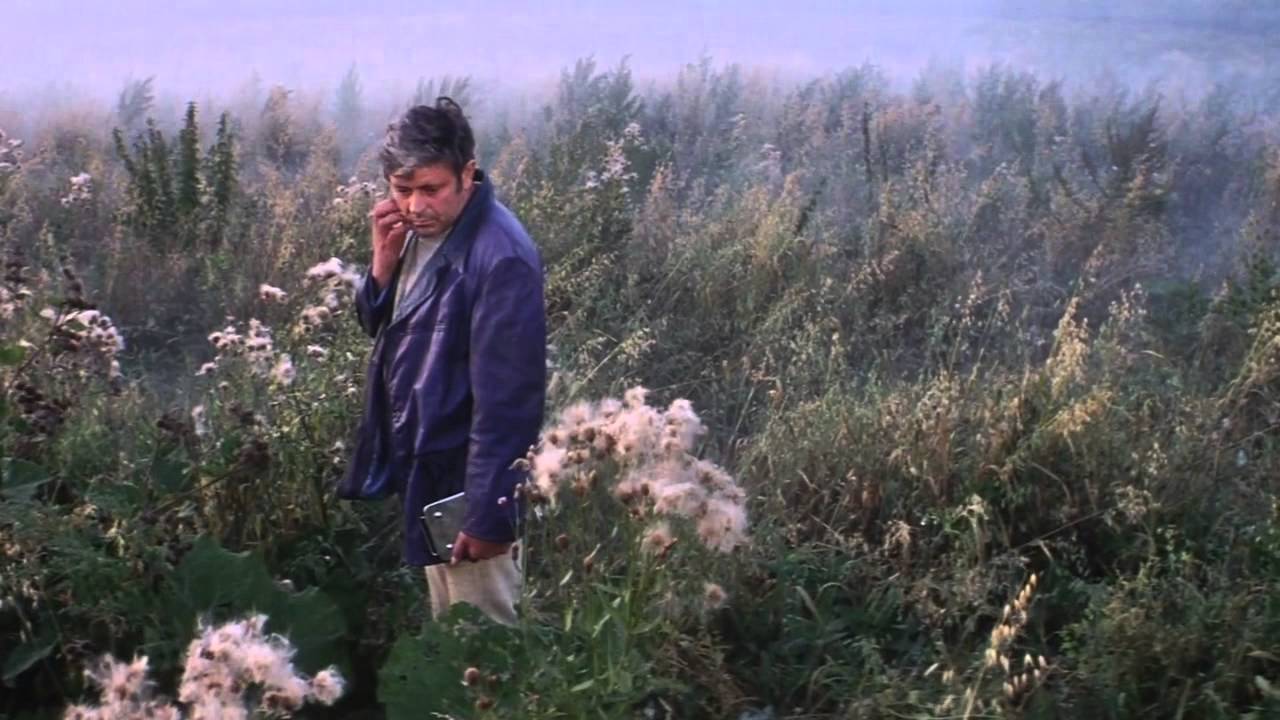
I really enjoyed seeing how Bucharest looked like in those archival images and how the blocks we take for granted today (and belittle so much), looked like back then, when they were considered luxury accommodation. It was a humbling moment of appreciation for me, as I bought my flat back in 2023 in a building created back in 1966 and I felt awkwardly conscious about it. By the same director, I also saw Gioconda fara suras / The Monalisa without a smile (1969) and I liked the cinematography of it and the freedom and social status of the main character, a female engineer with a complicated love life. I literally didn’t see any movie like it, and many movies back in that era created in a similar Nouvelle Vauge style, were geared towards the many adventures of male characters. It felt empowering to see this meditative and stylish film, especially since none of these movies directed by communist female directors were ever showcased on our Tvs (instead we got the usual diet of Miscellaneous Brigade/BD films, Liceeni/ The Graduates (1986) and Sergiu Nicolaescu films, repeated ad nauseam).
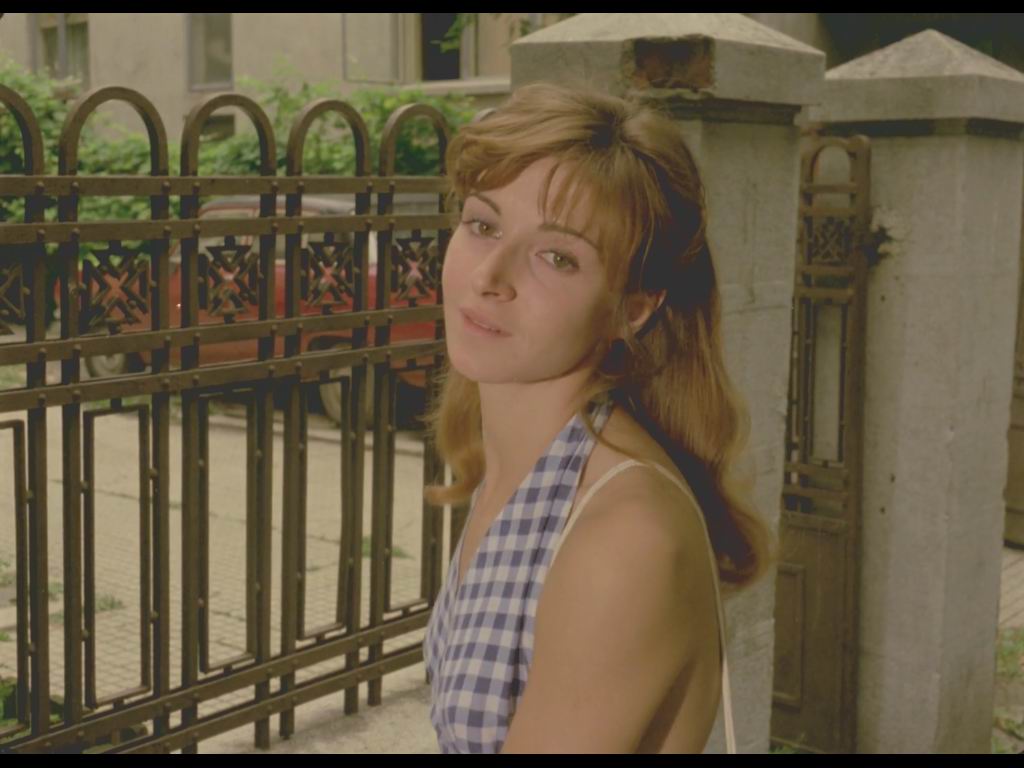
I also really liked a movie directed by Letitia Popa called Who is calling me / Cine ma striga (1979), about a topic you don’t get to see in a lot of other movies, a young woman accussed of prostitution who gets sent to a reform camp on the outskirts of a communist city. She’s operating heavy machinery on the construction site while trying to fit in with all the other workers, getting her ambitious room-mate to like her and keeping the romantic attentions of men at bay, and all throughout it she looks like an angel. It again teleported me into a world that my parents grew up in, a world I fortunately don’t get to experience myself. I also saw a movie called Diminetile unui baiat cuminte / The mornings of a good boy (1967) but although I thought the father-son conflict was compelling, it seemed to work like a forced and communist version of Rebel without a cause (1955), and I didn’t like it very much.

The highlight for me has been a movie called Angela keeps moving forward / Angela merge mai departe (1982), which I actually went twice to see, just so I could gain courage. I thought that if Dorina Lazar’s taxi-driving, rum drinking, tough woman character can find love in the sparse and grim communist landscape, then so will I one day; as long as (and just like the title says) I keep moving forward and let go of looking back in anger. July has been a really eventful month for me as I was not only very busy with work but I also saw the most movies since I needed a cool place to escape the city’s scorching heat. I saw beautiful classics like Spellbound (1945), Roman Holiday (1953) and Sunset Boulevard (1950) and the weird and funny Wild at Heart (1990). I saw the obscure These Three (1936) which I kind of enjoyed (it was also my very first Merle Oberon movie!), and the brilliant M – Eine Stadt sucht einen Mörder (1931). I was completely floored by Bette Davis’ performances All about Eve (1950) and Jezebel (1938) and sadly underwhelmed by the self-destructive, precious beauty of Margareta Paslaru in Un film cu o fata fermecatoare / A movie with a charming girl (1966).
Furthermore, movies marked most of the holidays for me this year: I spent Valentine’s Day eating cherry chocolates and watching Antoine and Antoinette (1947) create a confusing, romantic storm in their lives and then I spent Halloween in a packed cinema watching a special screening of Late Night with the Devil (2023). All in all, I think I spent 2024 not really being here, but someplace else.
After writing all of this, I kind of have the feeling that I got some sort of disparate cinematic education this year, something which in my heart, I had always wanted to achieve. I feel like the transit of Saturn in Pisces increased my cinema-going discipline and heightened my obsession with old movies, vintage films and bygone eras, who for aproximately 2 hours at a time, gave me a brief reprieve from a world which stubbornly kept reminding me, how little I am welcomed and how little I fit in. Perhaps, that’s were the Neptune magic lies: I’ll help you forget who you are by pushing you to escape into the stories of other people, so you may finally find yourself as you will inevitably separate from them once the movies end. Just like astrologer Liz Green writes in her seminal book, Neptune and the Quest for Redemption (2000) :
This protean power to identify with the psyche of the other, and to effortlesly become that which the other secretly longs for, is one of the greatest artistic and therapeutic gifts of the Neptunian temperament. But if an essential core of integrity and self-honesty is lacking (…) then the gift becomes a great danger (p.118)
After all 2024, was a year of moving images for me, the original meaning of the word ‘film’; moving images which told human stories, and from these stories my inner child was learning what to keep and what to let go of, especially as some of these moving images impacted my memory and helped it dive deep in order to bring out some old fragments from the past which I needed to re-analyse. By transit, Neptune (almost perfectly conjunct my Sun) made me into a memory diver and by keeping me in a dark fog throughout this year, by obscuring my Ego and my sense of personal value and power, Neptune had therefore allowed me the freedom to just exit, beyond the limitations of who I thought I was. It was strangely difficult to be held in such uncertainty, and still am as the fog hasn’t completely lifeted now that Neptune turned direct. But slowly, as Saturn will shift from Pisces and into Aries in 2025, the time will come to start embodying this new version of the Self created out of the debris of Neptune’s cleansing escapism. And that will mark the time of a real psychological re-birth in my life, one which I am looking forward to. But for the time being ‘ssshhhh, the movie is starting’…
With universal love,
Lexi
 The Spiritual Social
Leave a Reply