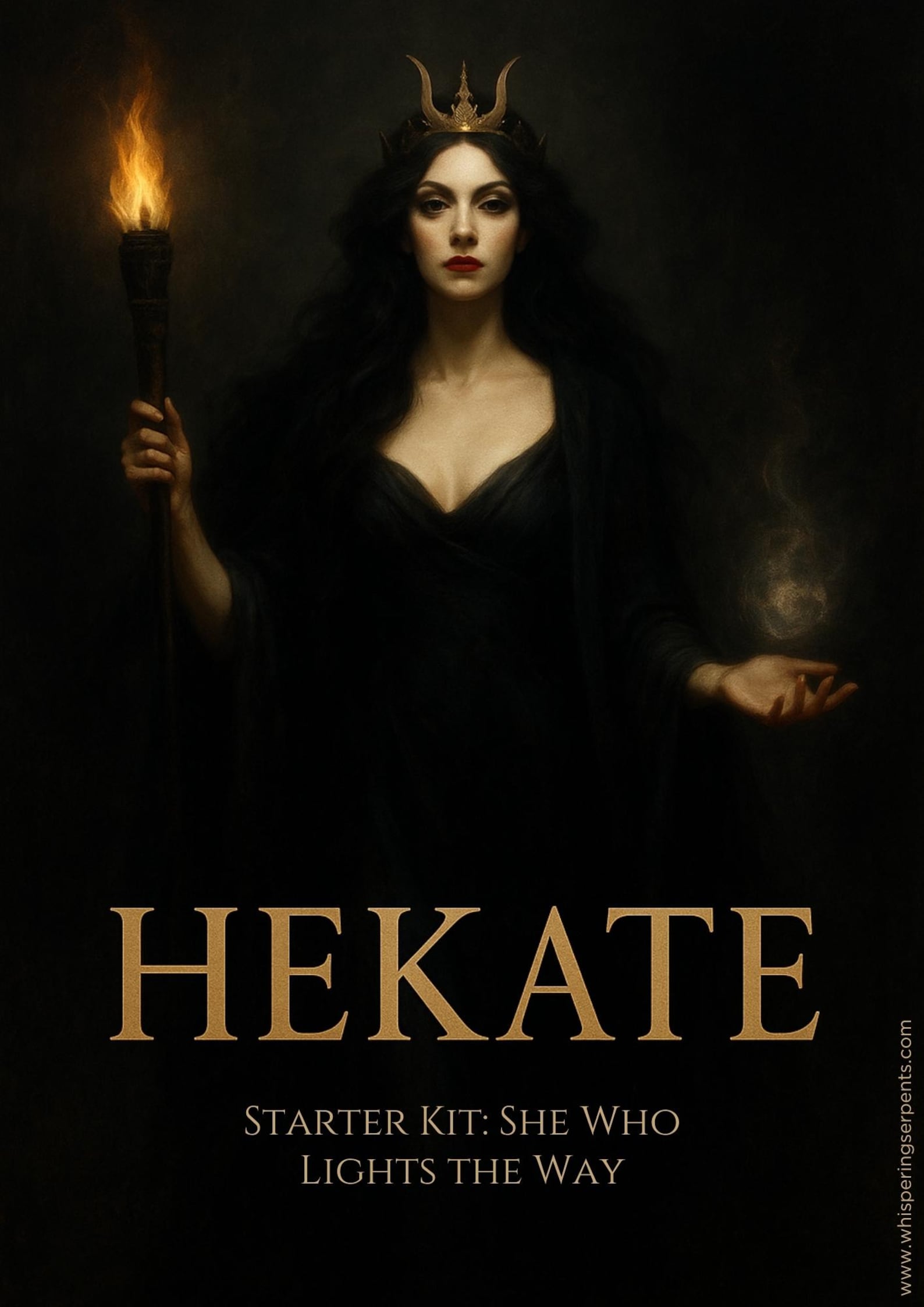

I’m gradually waking up from being under the spell of two games in the last weeks, and these are the newly released Tenebris Somnia and Silver Pines. I don’t have the guts to play them myself but I watched the full gameplays on channels like TheSavchyngames and CJUGames on Youtube and I highly recommend that you give them a try. Instead of falling asleep to a movie each night, I would make a cup of cocoa and watch one hour of each game until dreams eventually overtook me. I must admit I had some fascinating dreams after each game, which then transformed into paintings (but more about this in an upcoming post).
Tenebris Somnia (or dark dreams in Latin) is described on Steam as a “retro survival horror adventure game with live action cutscenes created by an award-winning film crew from Argentina. Unveil the depths of a disturbing story by solving puzzles and fighting horrible creatures. …What if they aren’t just nightmares?“. I don’t know why, but the atmosphere of the game is reminiscent to me of the movies “The Headless Woman” and “Santa Sangre“, two weird gems of Argentine cinema that have been haunting me ever since I saw them.
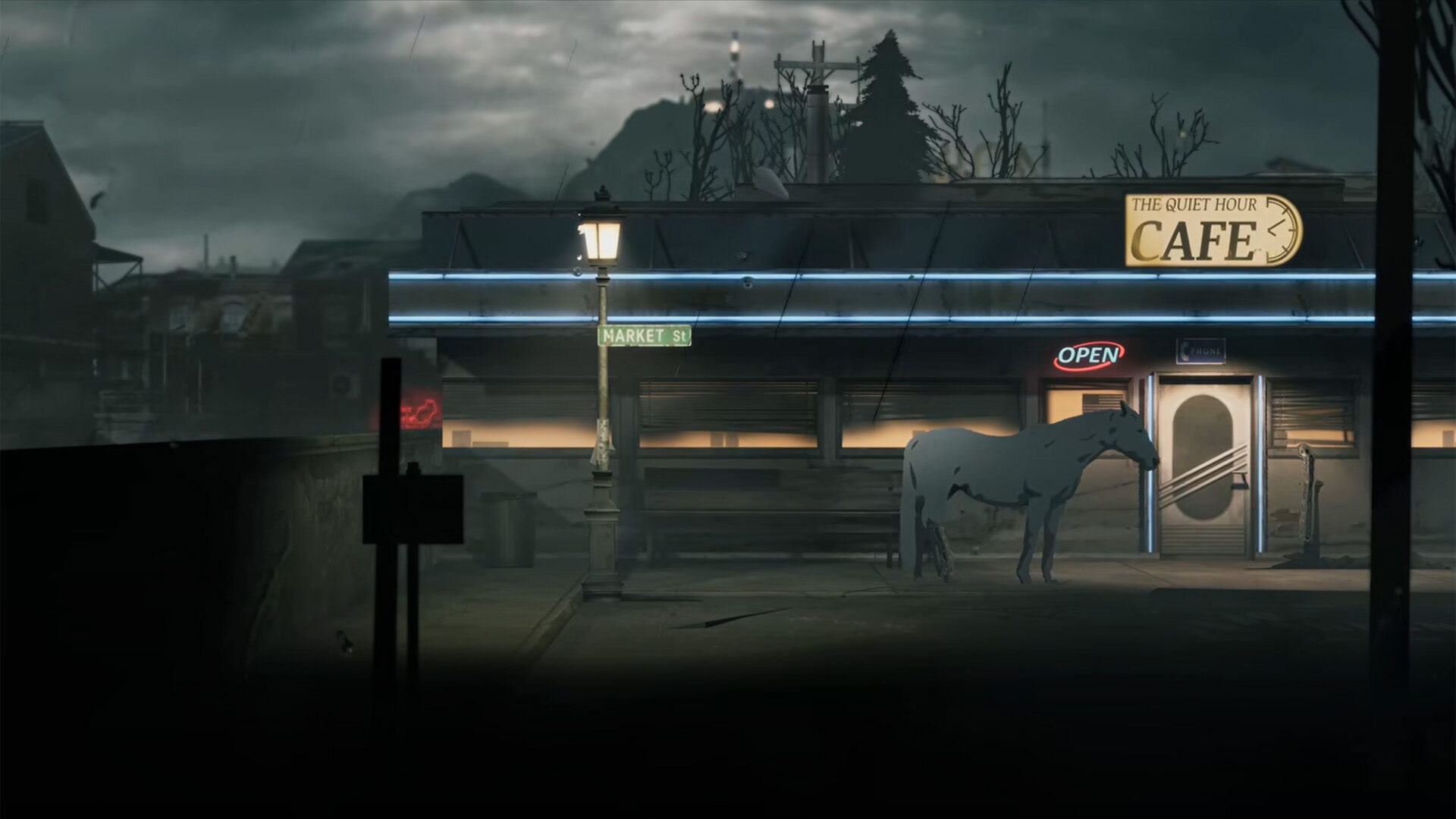
On the other hand, Silver Pines is reminiscent more of “Twin Peaks” and “Silent Hill 2” with their heavy, brooding atmospheres and detective-like dynamics. The game was created by a team of Nordic developers and is described on Steam as “a survival horror metroidvania set in small town America. Fight nightmarish terrors and solve puzzles, while carefully managing your scarce resources as you uncover the mysteries that could hold the key to redemption.” Silver Pines has been nominated for best horror game of the year, although 2026 is a tough year for competitive horror games, seeing as we began the year with the masterpiece that is Resident Evil Requiem.
The Pull of the Unconscious
Both games have multiple endings and *spoiler alert* these are the aspects that I would like to unpack in this post which isn’t only about my sheer love for thoughtful horrors games but also about the psychological underpinnings of the protagonists’ stories, as they are revealted in their endings. And the endings revolve around an ex in one case and the past and the consequences of a man’s actions in another. These two themes are brought into foreground by the current and overlapping Mercury retrograde in Scorpio and Venus retrograde in Libra, helping collective energies to scavage through their romantic past.
In Tenebris Somnia, Julia is persecuted by nightmares about her ex-boyfriend Ivan, and after failing to reach him she decides to use the apartment key she still was holding on to, in order to check up on him and see if he is alright. There are a number of red flags already at hand and I guess you can tell that one of the endings will involve Julia just looking at the key and deciding not to use it and not to check on her ex (which is exactly what I would’ve done, to be completely honest). I keep saying this to my clients that “an ex is an ex for a very good reason” but what would be the fun in listening to reason in a horror game, right?
At the beginning of Tenebris Somnia, we are thrown into this kind of funny and slapstick, retro vintage gaming world, until the first real-action cut scene introduces us to a zombie-like creature who lunges at Julia with a forked tongue, and we are snapped into the brutal reality of the story. Julia seems eerily entranced throughout the game. She needs to find Ivan and find out what happened to him but she doesn’t know why she is doing this.
In a similar vein, the detective of Silver Pines, Red Walker, has been hired by a mysterious man to find a musician named Eddie Velvet and as we later find out, is tasked with murdering him. Red is desperately searching for Velvet through the horrors of an abandoned town, soon to be besieged by a storm, without understanding exactly why he feels the compulsion to find this man. Both Red and Julia are gripped by their unconscious which pulls them to confront their fears, presented in each game as terrifying and creative-looking monsters.
In the later parts of the game it becomes increasingly evident that Eddie and Red are the same man (watch as they share a fear of dogs, for example) and that Silver Pines is a projection of Red’s fractured psyche in the wake of an accident he had suffered which led to the death of his girlfriend. Red’s mysterious employer is the voice of his Ego, who drenched in self-hatred wants to keep him repressed and split off from finding the truth and awknowledging his guilt, at having caused the death of an innocent woman.
In my view both of these fascinating characters, Julia and Red are symbols of the human Ego struggling to understand the unconscious. Often in our lives, we feel compelled or obsessed with certain activities or certain people without fully comprehending why. These are usually pivotal moments when important content from the unconscious wants to make itself known to our conscious mind in order for deep healing, somatic release and psychological growth to take place.
Although, it needs to be said that such a quest, when undertaken with a view to fight and destroy the unconscious rather than to seek to understand it, will lead to the actual death or gradual psychic destruction of the person involved.
And we see this theme of being overcome by nigredo (the darkening) or a retreat into psychological repression and fear, in both Julia’ s case in her Magnum Opus ending (where she kills the Relicta and fights Ivan only to obliterate her Shadow at his command), but also in the ending in which Red Walker finds Eddie Velvet and shoots him in the back, thereby completing his mission and never fully understanding the story he had been immersed in. Killing in both of these games carries the symbolic meaning of splitting apart, because after all, the greatest suffering happens in life when we separate parts of ourself and deny our whole being a right to exist freely. Splitting also happens when trauma occurs, which I will unpack below.

In these so-called ‘bad’ endings, Julia becomes afraid of the world and suspicious of every man as she retreats from her true Self and into the arms of her controlling and abusing ex-boyfriend, while Red continues to drive on endlessly into a night so dark that not even the moon can illuminate it. Both characters are doomed to remain in perpetual darkness, as nigredo extends indefinitely and cannot ascend to the clarity of the albedo stage or the warmth of the citrinitas/rubedo fulfillment, to use the alchemical words Jung has employed to describe the psychic development towards individuation.
Haunting dreams seek our Attention
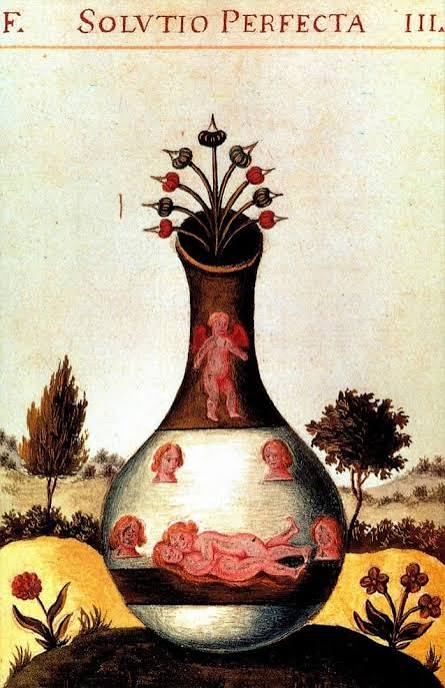
Tenebris Somnia felt deeper and more meaningful as a story-line to me, because it dealt with domestic violence and I grew up with a controlling person who benefited from keeping me trapped and anxious. Therefore, I have intimate knowledge of how Julia must have felt in her relationship to Ivan, and empathized with her throughout the game. It was also fascinating to see that the so called ‘good ending of the game’ was titled ‘solve et coagula‘ (dissolve and coagulate), terms used by Carl Jung in his work on psychology and alchemy.
In Tenebris Somnia, Julia’s journey can be seen as the process of solve et coagula which maps onto a woman’s quest for individuation through psychological transformation. In the bad ending (Magnum Opus), Julia slaughters her Relicta fragments with the Aurifer, a golden knife she creates through magic. Psychologically, killing is an act of violent psychic repression—she kills off parts of herself to survive, returning to reality permanently marked by her trauma (ex. the scar on her forehead remains but only in her mirrored reflection). In this version of her chosen reality, she remains bound to the archetype of her abuser, perpetuating the trauma cycle rather than escaping it.
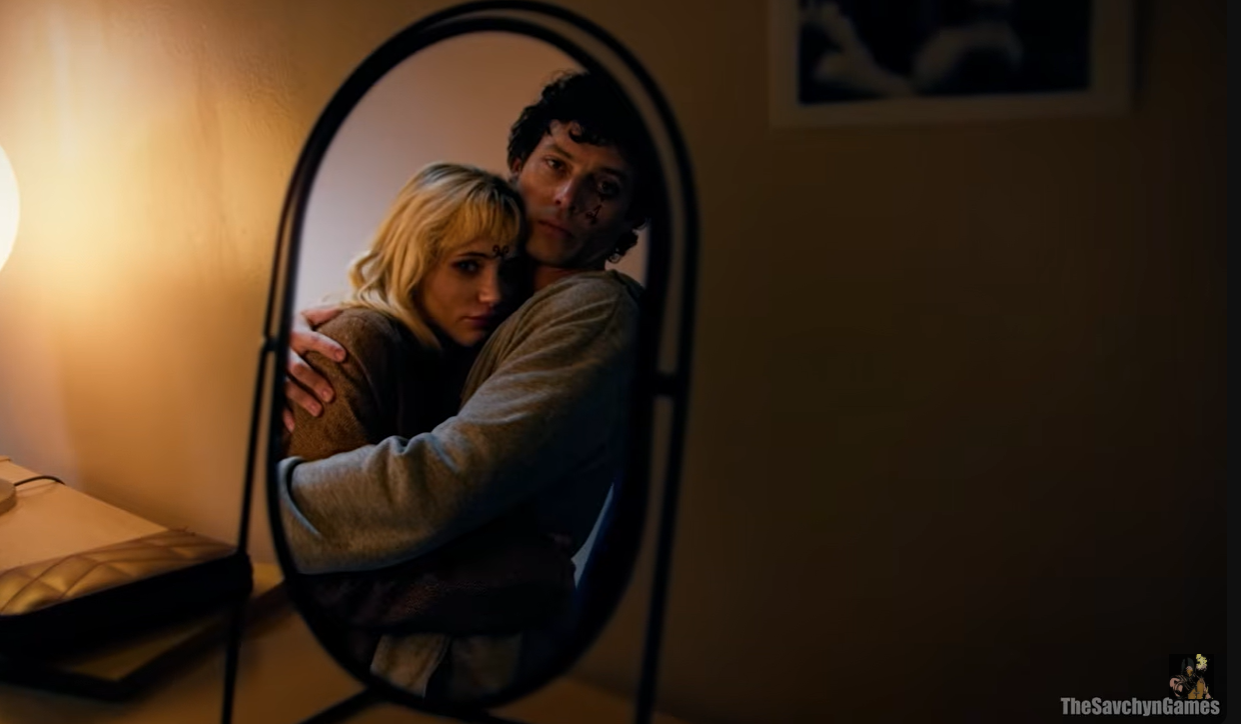
On the other hand, by choosing the Solve et Coagula ending, she allows the old, victimized Ego structure to dissolve completely (solve). By refusing to attack her Shadow, she stops treating her internal trauma as an external enemy (she pulls her projection back). The final merging with the collapsing nightmare (coagula) is a raw, terrifying depiction of assimilating her Shadow. She doesn’t escape her history, rather she internalizes it to become whole, and I especially liked how tender she was with her Shadow when she met herself in the final boss battle, a sign that she has learned to be compassionate with the hurtful things she has chosen for herself in the past.
In the epilogue, Julia channels a newfound raw and integrated psychic energy into her creative life as a filmmaker. She films a short-movie and debuts it at a premiere. Her film-making style is clearly different than that of her ex, Ivan, whose somber film-making contributed to her nightmarish psychic journey. In contrast, Julia’s work is funny, colourful and humane, and we see this through the way that the audience reacts to her film. I have to admit this final scene brought happy tears to my eyes, because I was so proud of her!
In the Magnum opus ending, I was struck by how violent the relicta of Ivan was when she confronts him in the end and we see the true rage monster that was hiding inside the man she loved. The violence of Ivan’s relicta is a profound clinical depiction of what Jung called an autonomous complex bursting into consciousness with primal fury. Because Julia had suppressed the reality of Ivan’s abuse, that psychic energy didn’t vanish—it weaponized itself in her unconscious. When it finally manifested, it unleashed raw, unmitigated rage which she then problematically, turned against her Shadow rather than towards escaping Ivan and letting him go.
We know by now that there are two halves of Julia’s reality, influenced by her decisions throughout the game, something that is aptly mirrored by the game’s shift between pixel art and live-action video. In the standard loop or the Magnum Opus ending, Julia’s psychic defenses are working against her: terrified of the outside world, her ego projects the internal threat (the danger of being harmed or controlled) onto innocent men in the public (like that guy in the subway).
Because the trauma of Ivan’s abuse is unresolved, her psyche perceives the entire world as hostile. Paralyzed by this projected fear, she runs back to Ivan’s apartment. In trauma bonds, the abuser becomes the “safe harbor” from the very terror they created. Psychologically, Julia trades the unpredictable threat of the unknown world, for the predictable, familiar torment of her abuser. It is a regressive retreat to the root of her complex.
In the empowered conclusion or the Solve et Coagula ending, her psychological orientation undergoes a deep change. The difference in her behavior is a textbook example of an integrated Shadow. True bravery in Jungian terms is not the elimination of fear, nor is it turning into the aggressor. In the bad ending, she attacks her fragments, becoming the abuser in order to survive.
In the good ending, her refusal to harm her captors (symbolising aspects of her Self) shows that she has broken the cycle of victimization. She no longer needs to use violent defense mechanisms. By facing the monsters without attacking them, she looks at her trauma directly. And in turn, this robs the autonomous complexes of their stealth power over her psyche.
Complexes or fears lose their terrifying grip on her because they are no longer hidden in the dark—they are acknowledged components of her history. By the end, she isn’t running back to the ruined apartment. She can exist in the live-action, objective world because she is no longer projecting her inner monsters onto random people around her. The outside world ceases to be a house of horrors the moment she cleanses her inner house.
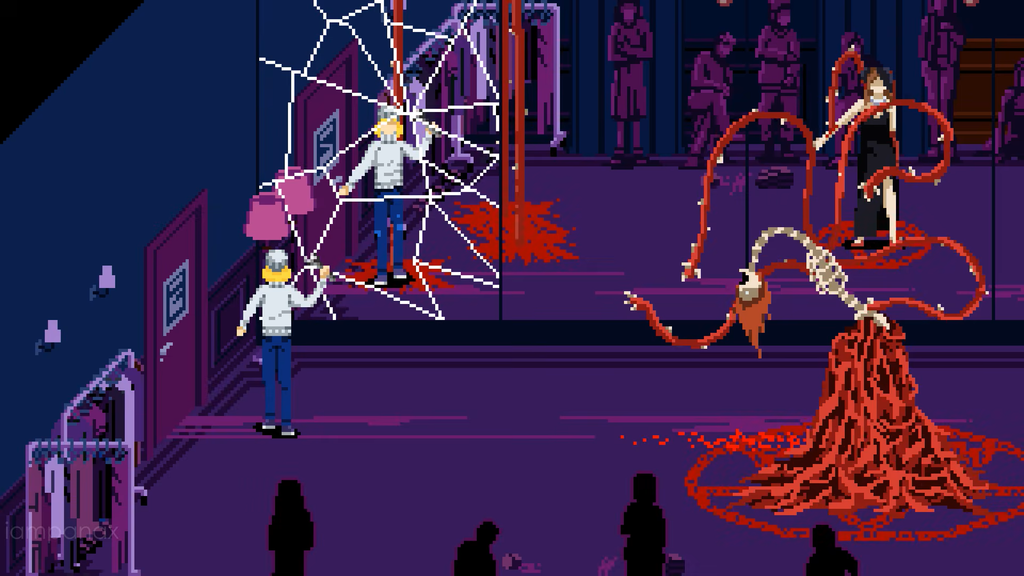
I liked how vulnerable she was being depicted during the premiere of her short film. We could see and feel her anxiety and her compulsion to project this anxiety on the public, like she would’ve done in the past, when her anxieties held her back and pushed her into a connection with a dominant and controlling man (Ivan). But she took a deep breath and held the tension and then suddenly the situation changed. The crowd started laughing because of the funny actor in her short film. All her worries of being perceived in a negative way or criticised by others were dispelled when her creative work touched the public.
There was an immediate collective release of tension which was mirroring her own personal breakthrough: instead of falling into a past pattern, Julia stood her ground just by breathing, she held her anxiety and was brave enough to show up at her premiere and just see what happen. It shows that in time, through such repeated experiences, she will become a very strong woman, capable of controlling her own life (like a director) instead of projecting her control onto a domineering lover who may abuse her. This was the exact moment of Jung’s transcendent function manifesting in waking life, rather than just in her dreams or the pixelated unconscious of the game.
What Julia is experiencing during the premiere of her short film is the shift from an unconscious compulsion to repeat the trauma loop to the conscious endurance of the “crucible.” Sometimes, to truly heal we need to hold and stay strong among uncomfortable feelings. In Jungian analysis, growth rarely looks like the permanent erasure of anxiety, rather it is a change in our relationship to that anxiety. We don’t get rid of our feelings, we transform them.
In alchemy, this is maintaining the heat of a vessel without letting it crack. She allows the anxiety to exist within her body without reacting to it or offloading it onto others.Because Julia holds her internal tension, she creates the psychological space for reality to surprise her. By enduring these moments, Julia transitions from a passive actor trapped in Ivan’s abusive, black-and-white film to the author and director of her own and colourful psychic reality. This is a process that takes time and repetition. Each time she stands her ground in the face of her anxiety without retreating into the arms of a controller, she strengthens the new Ego she is carefully building for herself. She transforms her vulnerability from a liability into the very wellspring of her creative sovereignty.
Learning from THESE GAMES For Future ThErapeutic Work
As a training analyst, I kept wondering what would I do in such a case, if a patient like Red Walker or Julia walks into my office? I was especially stuck at that scene of Julia’s premiere and marvelled at her subtle growth. I guess that when I would observe patients reaching this “premiere” stage in their own lives—where they face the terrifying choice between an old, toxic coping mechanism and a brave new path—I would think about what kind of clinical containment or support I could enact to help them hold that tension without collapsing back into the past.
Since a patient has reached this advanced stage in their therapy, I don’t believe a maternal-like containment is necessary as this would be more appropriate for someone who is still possessed by a complex, but Julia emerged outside of it and may now need just some gentle nudging in the direction of courageous decisions. So I would offer her validating compliments based on her decisions to show up and hold the anxiety and I would continue to re-affirm the necessity of maintaing a strong connection to reality and to understand that she doesn’t have to be perfect, she just needs to be present and continue with the good work she is already doing.
In my view, I would shift from the maternal, containing matrix (necessary for holding a fractured Ego together) to the paternal/transformative function of encouraging the ego to step out into the world with agency. After all, over-containing a patient at Julia’s stage can accidentally infantilize them or mirror the very dependency they are trying to escape. By offering validating compliments and focusing on presence over perfection,I can act as a steady witness to her emergent strength rather than a protector she must lean on.
With universal love,
Lexi